
Anosmia

Disclaimer: Disclaimer: This leaflet provides general information and is intended for educational purposes only. It should not be used as a substitute for professional medical advice, diagnosis, or treatment. Always seek the advice of a qualified healthcare professional for any health concerns or before making any decisions related to your health or treatment.
This leaflet may contain links to external websites or resources (e.g. YouTube) for demonstration purposes; however, these links are provided for information only. Clinicol.co.uk is not affiliated with, does not endorse, and is not responsible for the content, accuracy, or copyright compliance of these external sources. Use of these external links is at your own discretion and risk.
Overview
Your sense of smell is a vital part of how you experience the world. It helps you enjoy the flavour of your food, alerts you to dangers like smoke or gas, and connects you to memories and emotions. When this sense is lost or changed, it can feel isolating and frustrating. Problems with your sense of smell are actually quite common, affecting about one in five people in the general population. For a smaller group of adults, this can be a significant issue that impacts daily life.
There are several terms used to describe these changes. Anosmia is the complete loss of your sense of smell. Hyposmia refers to a reduced ability to smell, while parosmia means your sense of smell is distorted—for example, things might smell unpleasant or different than they should. Finally, phantosmia is when you smell things that are not actually there, such as phantom odours. While these conditions can be worrying, understanding what is happening is the first step toward managing your health.
Symptoms and Causes
Changes in your sense of smell often happen alongside other issues in your nose or sinuses. Because your sense of smell and your sense of taste are closely linked, you may find that food seems bland or lacks its usual depth of flavour. This is because much of what we call "taste" is actually the aroma of food reaching the back of your nose while you eat.
Symptoms
The most obvious sign is a noticeable change in your ability to detect odours. You might find that you can no longer smell familiar scents like coffee, flowers, or perfume. Other symptoms often include:
- A feeling of blockage or congestion in your nose.
- A persistent runny nose or post-nasal drip (mucus dripping down the back of your throat).
- Distorted smells, where familiar items suddenly have a foul or chemical odour.
- Smelling things that aren't there, such as burning or rotting scents.
- Reduced enjoyment of meals due to a loss of flavour.
Causes
There are many reasons why your sense of smell might change. Often, it is the result of a common illness, such as a cold, the flu, or COVID-19. In these cases, the inflammation caused by the virus can temporarily block or damage the delicate nerve endings responsible for smell.
Other common causes include:
- Sinusitis: Long-term inflammation of the sinuses, which are the air-filled spaces behind your forehead and cheeks.
- Allergies: Conditions like hay fever can cause swelling that prevents scents from reaching the top of your nose.
- Nasal Polyps: These are soft, painless growths on the lining of your nose or sinuses that can physically block the path of air.
- Head Injury: A knock to the head can sometimes disrupt the nerves that carry smell signals to the brain.
- Aging: It is natural for our senses to become less sharp as we get older.
- Medications: Certain drugs can have side effects that alter your sense of smell.
- Underlying Health Conditions: In rarer cases, conditions like Parkinson’s disease, Alzheimer’s, or issues with your thyroid, liver, or kidneys can be linked to smell loss.
Diagnosis and Investigations
If you are concerned about your sense of smell, it is important to speak with a healthcare professional. They will work with you to find the root cause and determine the best path forward.
Diagnosis
Your doctor will start by asking about your medical history and any other symptoms you might have. They will want to know if you have a blocked nose, if you have had a recent viral infection, or if you have noticed any changes in your vision or balance. They will look for "red flags," which are warning signs that require more urgent attention. These include things like a blockage on only one side of your nose, bleeding, or new lumps in your neck.
Investigations
To get a clearer picture, your doctor may perform a physical examination of your nose. They might use a small camera to look inside your nasal passages. In some cases, they may order blood tests to rule out underlying conditions like diabetes or thyroid issues. If they suspect a more complex problem, they might arrange for a scan of your sinuses or a referral to an ear, nose, and throat (ENT) specialist for a more detailed assessment.
Management and Treatment
The treatment for smell loss depends entirely on what is causing it. If your loss of smell is due to an infection or allergies, the goal is to reduce the inflammation in your nose.
Common management strategies include:
- Nasal Sprays: Steroid nasal sprays or drops are often prescribed to reduce swelling in the nasal passages, especially if you have nasal polyps or chronic sinusitis.
- Saline Rinses: Using a saltwater solution to wash out your nose can help clear away mucus and irritants, which is particularly helpful for infections or allergies.
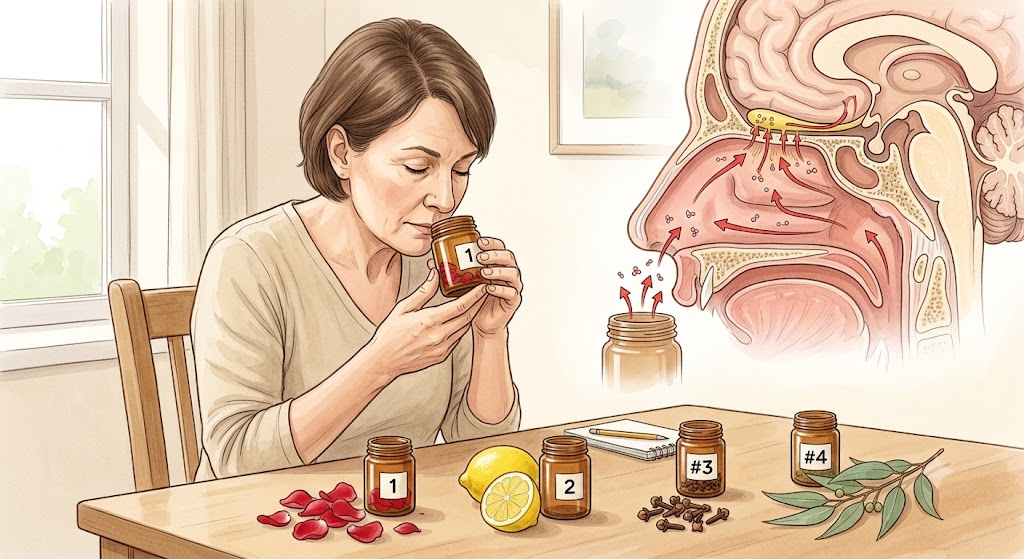
- Smell Training: This is a highly recommended technique where you intentionally sniff specific, strong scents (like rose, lemon, clove, and eucalyptus) daily for several months. This helps "retrain" your brain and the nerves in your nose to recognise and process smells again.
- Lifestyle Adjustments: Stopping smoking can significantly improve your overall nasal health.
- Supplements: Some people find that supplements like Omega-3 or Vitamin A drops are helpful, though these are considered low-risk options with varying levels of evidence.
If your smell loss is related to a chronic condition like sinusitis, your doctor may discuss long-term management, which might include regular use of nasal sprays or, in some cases, surgery to remove polyps and open up the nasal passages.
Prevention
While you cannot always prevent a loss of smell—especially when it is caused by a virus—you can take steps to keep your nose as healthy as possible. Managing allergies effectively with appropriate medication can prevent long-term inflammation. Keeping your home environment clean and avoiding known irritants can also help. If you have a cold or flu, resting and allowing your body to recover fully is the best way to give your senses the best chance of returning to normal.
Outlook / Prognosis
It is important to remain hopeful. For many people, the sense of smell returns naturally within a few weeks or months, especially after a viral infection like a cold or COVID-19. Even when the loss is more persistent, the olfactory system (the part of your body responsible for smell) has a remarkable ability to regenerate and heal over time.
While you are experiencing a loss of smell, your safety is the most important priority. Because you may not be able to detect warning signs, it is essential to ensure you have working, mains-powered smoke and gas alarms in your home. Be extra cautious with food; check sell-by dates carefully and avoid eating anything that looks or feels suspicious, as you may not be able to smell if it has spoiled.
Living with a change in your sense of smell can be challenging, but many people find that with time, patience, and techniques like smell training, they can adapt and see improvements. If your symptoms persist for more than a few months without an obvious cause, do not hesitate to seek further advice from your GP or an ENT specialist to ensure you are receiving the right support.
Need Expert Advice?
Book a consultation with Mr Ahmad Hariri to discuss your symptoms and treatment options.
Book a Consultation