
Bell's Palsy

Disclaimer: Disclaimer: This leaflet provides general information and is intended for educational purposes only. It should not be used as a substitute for professional medical advice, diagnosis, or treatment. Always seek the advice of a qualified healthcare professional for any health concerns or before making any decisions related to your health or treatment.
This leaflet may contain links to external websites or resources (e.g. YouTube) for demonstration purposes; however, these links are provided for information only. Clinicol.co.uk is not affiliated with, does not endorse, and is not responsible for the content, accuracy, or copyright compliance of these external sources. Use of these external links is at your own discretion and risk.
Overview
This condition is a temporary weakness or paralysis that affects one side of your face. It happens when the facial nerve—the nerve that controls the muscles in your face—stops working properly for a short time. It is the most common cause of sudden facial weakness, affecting about 25 to 35 people out of every 100,000. While it can be a frightening experience, it is important to know that for the vast majority of people, the condition is temporary and most will make a full recovery.
It can affect anyone, but it is most common in adults. Because it changes how your face looks and moves, it is natural to feel worried or self-conscious. Please be reassured that this is a well-recognised medical condition, and there are clear steps you can take to protect your health and support your recovery while your nerve heals.
Symptoms and Causes
The condition usually comes on quite suddenly, often developing over a few hours or appearing overnight. It happens because the facial nerve becomes inflamed or swollen. Because this nerve runs through a narrow, bony tunnel in your skull, even a small amount of swelling can put pressure on the nerve, preventing it from sending signals to your facial muscles correctly.
Symptoms
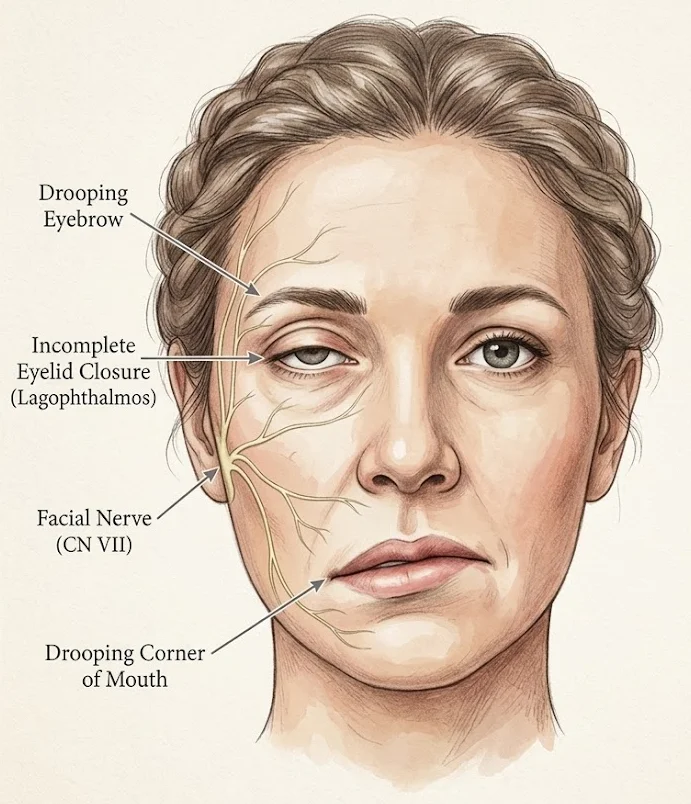
Because the facial nerve controls almost all the muscles on one side of your face, you may notice several changes:
- Facial drooping: One side of your face may look saggy, making it difficult to smile or show expression.
- Eye issues: You may find it hard to blink or fully close one eye. This can lead to the eye feeling very dry, or sometimes it may water excessively as a reaction to the dryness.
- Mouth and eating: You might notice drooling, or find that food collects in the side of your mouth when you eat. You may also have difficulty speaking clearly.
- Sensory changes: Some people notice a change in their sense of taste, or find that everyday sounds seem much louder or more sensitive than usual.
- Pain: It is common to feel some discomfort or pain around the ear on the affected side.
Causes
In most cases, the exact cause is unknown. However, it is widely believed that the inflammation of the nerve is triggered by a viral infection. The body’s immune system may react to a virus, causing the nerve to swell. It is not a sign of a stroke, though it can look similar. Unlike a stroke, where you can usually still wrinkle your forehead, this condition affects the entire half of the face, including the brow.
Diagnosis and Investigations
If you notice sudden facial weakness, it is very important to see a doctor quickly. They will need to rule out other, more serious conditions to ensure you get the right care.
Diagnosis
A doctor will diagnose this condition by carefully examining you and taking a full history of your symptoms. They will look for specific signs, such as your inability to raise your eyebrow or close your eye. They will also check for other neurological signs, such as weakness in your arms or legs, or difficulties with your speech, to confirm that the issue is limited to the facial nerve and is not a stroke or another neurological problem.
Investigations
There is no single test that confirms this condition; it is a "diagnosis of exclusion," which means the doctor confirms it by ruling out other possibilities. Depending on your specific symptoms, they might perform a physical examination of your ears and mouth to check for signs of infection or other issues. In some cases, they may order blood tests to check for underlying conditions like diabetes or infections. If your symptoms are unusual, or if you have other health concerns, they may refer you to a specialist to ensure a thorough assessment.
Management and Treatment
The most important thing to remember is that treatment is most effective if started within 72 hours of your symptoms beginning. If you act quickly, you have a much better chance of a full recovery.
- Steroid medication: Doctors often prescribe a course of steroid tablets, such as prednisolone, for about 10 days. This helps to reduce the inflammation and swelling around the nerve, which gives it the best chance to recover.
Day | Day 1-5 | Day 6 | Day 7 | Day 8 | Day 9 | Day 10 | Day 11 |
Prednisolone Dose | 60mg | 50mg | 40mg | 30mg | 20mg | 10mg | STOP |
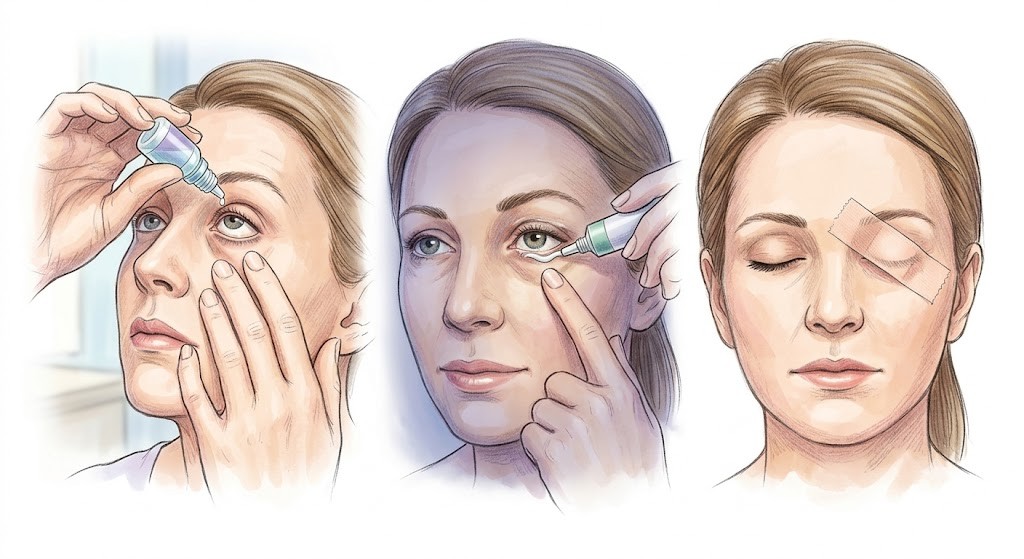
- Eye care: This is the most critical part of your daily routine. Because you may not be able to close your eye fully, it is at risk of drying out or becoming damaged. You should use lubricating eye drops throughout the day and a thicker eye ointment at night. Your doctor may also advise you to use surgical tape to gently keep your eyelid closed while you sleep.
- Antiviral medicine: While steroids are the main treatment, your doctor might discuss whether antiviral medication is appropriate for you, though it is not always necessary for everyone.
- Facial exercises: As your movement begins to return, you might find gentle facial exercises helpful. This could include things like trying to wrinkle your nose, flare your nostrils, or gently smile in front of a mirror.
- General health: Resting and eating a healthy, balanced diet can help your body focus its energy on healing.
Prevention
Because the exact cause is often unknown, there is no specific way to prevent this condition from happening. It is not something you have done to yourself. However, maintaining a healthy lifestyle and managing any underlying health conditions, such as diabetes, can help keep your immune system strong. If you have had this condition before, it is very rare for it to recur, but if you notice any similar symptoms in the future, you should seek medical advice promptly.
Outlook / Prognosis
The outlook for this condition is generally very positive. Most people start to see improvements within a few weeks, and the majority of individuals make a full recovery within three to six months. Even if your recovery takes a little longer, most people regain normal or near-normal facial function.
In some cases, recovery can take up to nine months. A small number of people may experience some long-term effects, such as persistent weakness, changes in taste, or a condition called synkinesis, where moving one part of your face causes another part to move unintentionally. If you find that your symptoms are not improving after three months, your doctor may refer you to a specialist who can offer further support, such as physiotherapy or specific exercises to help retrain your facial muscles.
Living with facial weakness can be challenging, and it is normal to feel frustrated or upset. Please remember that you are not alone, and your medical team is there to support you through the recovery process. Focus on your eye care, take your medication as prescribed, and give your body the time it needs to heal.
Need Expert Advice?
Book a consultation with Mr Ahmad Hariri to discuss your symptoms and treatment options.
Book a Consultation