
Chronic Cough

Disclaimer: Disclaimer: This leaflet provides general information and is intended for educational purposes only. It should not be used as a substitute for professional medical advice, diagnosis, or treatment. Always seek the advice of a qualified healthcare professional for any health concerns or before making any decisions related to your health or treatment.
This leaflet may contain links to external websites or resources (e.g. YouTube) for demonstration purposes; however, these links are provided for information only. Clinicol.co.uk is not affiliated with, does not endorse, and is not responsible for the content, accuracy, or copyright compliance of these external sources. Use of these external links is at your own discretion and risk.
Symptoms and Causes
A chronic cough is defined as a cough lasting eight weeks or longer. It's often described as a dry, irritating, or tickly cough, although some people may produce phlegm (mucus). The cough can be triggered by various
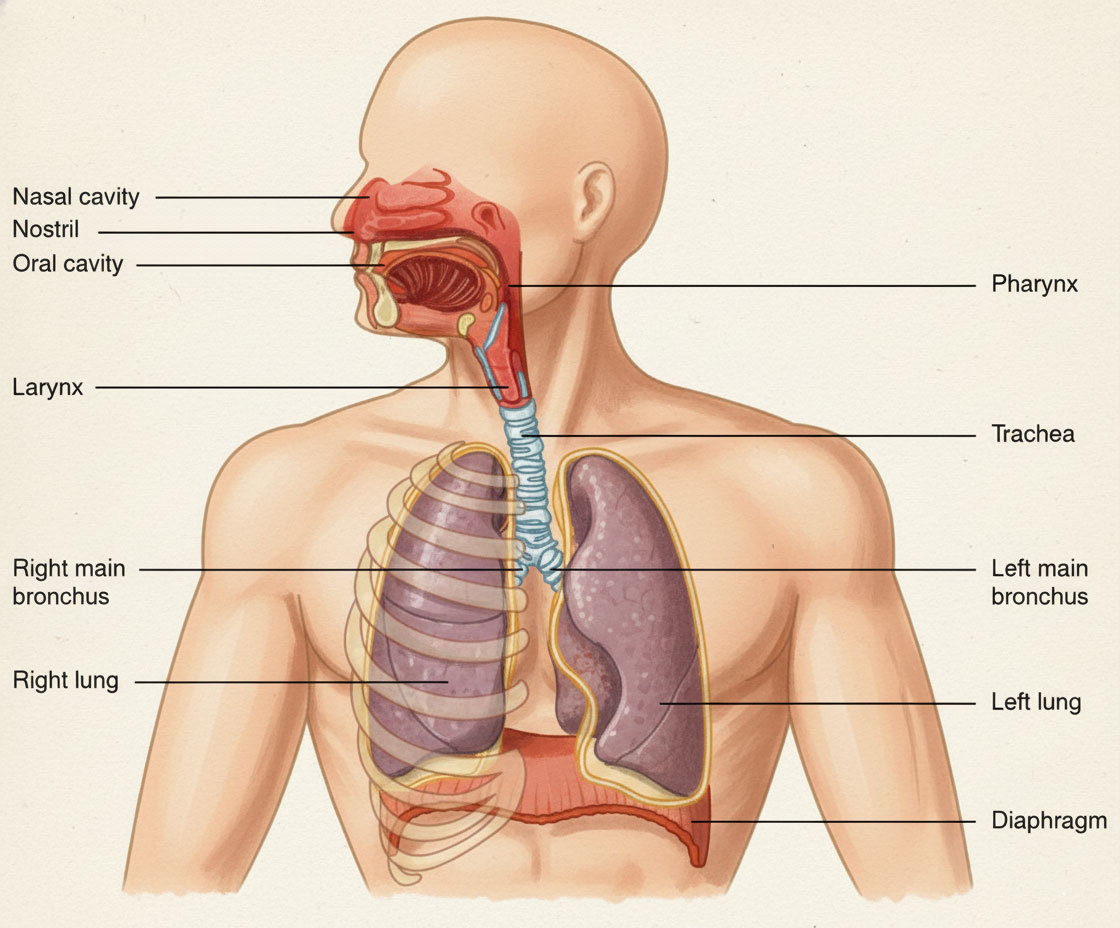
factors, including:
- Talking or laughing
- Changes in temperature
- Exposure to certain smells or fumes
- Physical exercise
- Dryness
Several underlying conditions can cause a chronic cough:
- Post-nasal drip: Excess mucus from the nose or sinuses drips down the back of the throat, causing irritation and the urge to cough.
- Acid reflux: Stomach acid flows back up into the oesophagus (food pipe) and can irritate the vocal cords, leading to coughing.
- Asthma: Coughing may be a symptom of asthma, especially when triggered by cold air, allergens, or irritants.
- Infections: A cough can persist for weeks after a respiratory infection, such as a cold or flu, even after other symptoms have resolved.
- Medications: Some medications, particularly ACE inhibitors used to treat high blood pressure, can cause a chronic cough as a side effect.
- Chronic Bronchitis: Long term condition that inflames the airways.
- Other less common causes: These include bronchiectasis, lung cancer, and certain other lung conditions.
Diagnosis and Investigations
Diagnosing a chronic cough involves finding the underlying cause. A doctor will typically:
- Take a detailed medical history: This includes asking about your symptoms, how long you've had the cough, any other medical conditions, medications you're taking, and lifestyle factors (e.g., smoking).
- Perform a physical examination: This may involve listening to your chest with a stethoscope, examining your throat, and checking your nose and sinuses.
- Order investigations (if necessary): Depending on the suspected cause, the following tests may be ordered:
- Chest X-ray: To check for lung problems.
- Spirometry: A breathing test to assess lung function, particularly helpful for diagnosing asthma.
- Peak flow monitoring: A simple test where you blow into a device to measure how quickly you can exhale; often used to monitor asthma.
- Allergy testing: To identify potential allergens that may be triggering the cough.
- pH monitoring or endoscopy: If acid reflux is suspected, these tests can measure the amount of acid in your oesophagus.
- CT scan of the sinuses: To check for chronic sinusitis.
- Bronchoscopy: A thin, flexible tube with a camera is inserted into the airways to visualize them directly; this is less commonly needed.
- Swallow assessment: If there are concerns about aspiration (food or liquid going into the lungs).
Management and Treatment
The management of chronic cough focuses on two main aspects:
- Treating the underlying cause.
- Suppressing the cough itself.
Treating the Underlying Cause
The specific treatment will depend on the underlying cause identified:
Post-nasal drip:
- Saline nasal sprays: Available over-the-counter (OTC), these help rinse the nasal passages and thin mucus.
- Decongestant nasal sprays: (e.g., oxymetazoline) Available OTC, but should only be used for a short time (3-5 days) to avoid rebound congestion.
- Antihistamines: (e.g., cetirizine, loratadine) Available OTC, these can help if allergies are contributing to post-nasal drip.
- Steroid nasal sprays: (e.g., fluticasone, mometasone) Available OTC or by prescription, these reduce inflammation in the nasal passages.
Acid reflux:

- Lifestyle changes: Avoiding trigger foods (e.g., spicy foods, caffeine, alcohol), eating smaller meals, not lying down for 2-3 hours after eating, and elevating the head of the bed.
- Antacids: (e.g., Gaviscon, Rennie) Available OTC, these neutralize stomach acid.
- Proton pump inhibitors (PPIs): (e.g., esomeprazole, lansoprazole) Available OTC at lower doses and by prescription at higher doses, these reduce acid production in the stomach.
- H2 receptor blockers: (e.g., famotidine) Available OTC and by prescription, these also reduce acid production.
Asthma:
- Inhaled corticosteroids: (e.g., beclomethasone, budesonide) These are prescription medications that reduce inflammation in the airways.
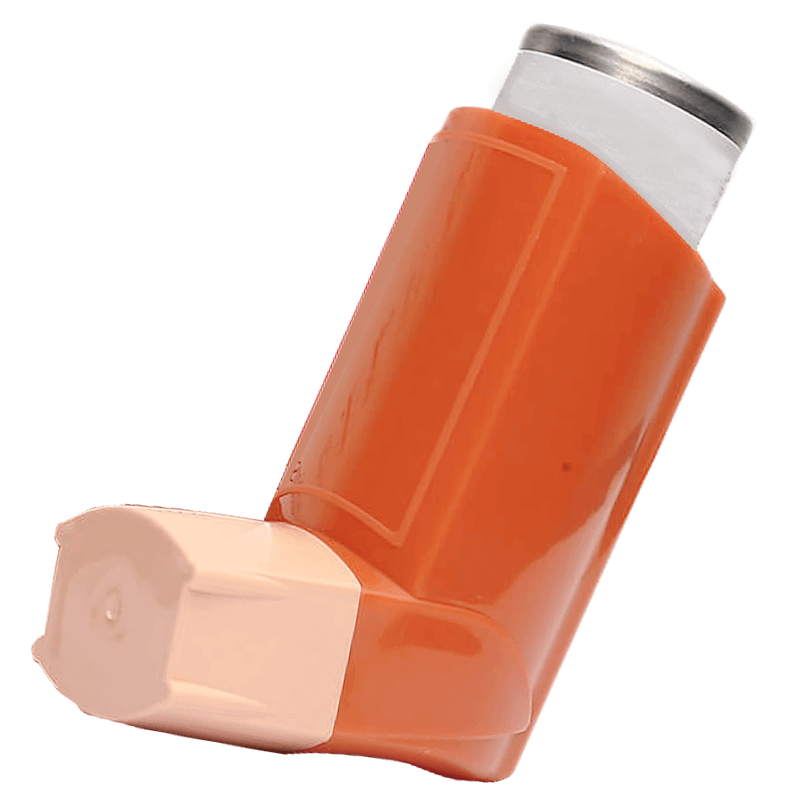
- Bronchodilators: (e.g., salbutamol) These are prescription medications that relax the muscles around the airways, making it easier to breathe. They can be short-acting (for quick relief) or long-acting (for ongoing control).
- Combination inhalers: These contain both a corticosteroid and a long-acting bronchodilator.
Infections:
- Most post-infectious coughs will resolve on their own, but cough suppressants may be used for symptom relief. If a bacterial infection is present, antibiotics may be prescribed.
Medications:
- If a medication is suspected to be causing the cough, the doctor may consider changing the medication or adjusting the dose.
Cough Suppression Techniques
These techniques can help reduce the frequency and severity of coughing, especially for dry, irritating coughs.

1. The Stop Cough Exercise:
This technique, based on the work of Dr. Konstantin Buteyko, aims to reduce the over-sensitivity of the cough reflex.
- At the first sign of a tickle or urge to cough, cover your mouth with your hand.
- Swallow once.
- Take a small breath in and out through your nose. If possible, pinch your nose.
- Hold your breath for 5-10 seconds.
- Release your nose (if pinched) but keep your hand over your mouth.
- Breathe gently and slowly through your nose for 30 seconds, resisting the urge to cough.
- Take a normal breath in and out.
- Repeat the process until the tickle subsides.
2. Breathing Control:
- Nose breathing: Breathe through your nose as much as possible, especially at rest and during light activity. This helps to warm, moisten, and filter the air, reducing irritation to the airways.
- Diaphragmatic breathing: Practice gentle, "tummy" breathing, where your abdomen rises and falls with each breath, rather than your chest. This promotes relaxation and reduces the urge to cough.
- Controlled breathing pattern: Aim for a slow, rhythmical breathing rate of 10-15 breaths per minute at rest.
3. Hydration:
- Drink plenty of fluids: Aim for at least two litres of water per day (unless you have a medical condition that requires fluid restriction). This helps to keep the airways moist and thin mucus.
- Sip water frequently: Carry a water bottle and take small sips throughout the day.
4. Other Techniques:
- Swallowing: Swallow instead of coughing whenever possible.
- Hard sweets/lozenges: Sucking on hard sweets (avoiding menthol-flavoured ones) or lozenges can help soothe the throat and reduce the urge to cough.
- Throat clearing alternatives: Instead of forcefully clearing your throat, try a "huff" (a forceful breath out) or a hard swallow.
- Humidifier: Using a humidifier, especially at night, can add moisture to the air and reduce throat irritation.
- Avoid irritants: Minimize exposure to smoke, dust, fumes, and other irritants that can trigger coughing.
5. Productive Cough (Wet Cough) Management: If you have a productive or wet cough, the following breathing exercises can help clear the phlegm.
- Breathing control: 20-30 seconds.
- Deep breathing: Take a steady, long breath in through your nose. Hold the breath for a few seconds. Sigh the air out through your mouth fully. Repeat 5 times.
- Breathing control: 20-30 seconds.
- Deep breathing: Take a steady, long breath in through your nose. Hold the breath for a few seconds. Sigh the air out through your mouth fully. Repeat 5 times.
- Breathing control: 20-30 seconds.
- Deep breathing: Take a steady, long breath in through your nose. Hold the breath for a few seconds. Sigh the air out through your mouth fully. Repeat 5 times.
- Breathing control: 20-30 seconds.
- Huffing followed by coughing: Huffing is a technique to move mucus.
- Breathing control: 20-30 seconds.
Important Note: If your cough is worsening, producing coloured mucus, or you suspect a chest infection, discontinue these exercises and seek medical advice.
Prevention
While not all chronic coughs are preventable, some measures can reduce your risk:
- Avoid smoking and exposure to second-hand smoke: This is the most important change that smokers and those exposed to second-hand smoke, can make.
- Manage underlying conditions: Get treatment for conditions like allergies, asthma, and acid reflux.
- Practice good hygiene: Wash your hands frequently to prevent respiratory infections.
- Stay hydrated.
- Avoid known triggers: If you know certain substances or situations trigger your cough, try to avoid them.
- Review medications: Discuss any medications you're taking with your doctor to see if they could be contributing to your cough.
Outlook / Prognosis
The outlook for chronic cough depends on the underlying cause. Many cases can be effectively managed with appropriate treatment and cough suppression techniques. However, it's important to work closely with a doctor to identify the cause and develop a personalised treatment plan. With consistent effort and practice, most people can significantly reduce their coughing and improve their quality of life.
Need Expert Advice?
Book a consultation with Mr Ahmad Hariri to discuss your symptoms and treatment options.
Book a Consultation