
CSF Leak

Disclaimer: Disclaimer: This leaflet provides general information and is intended for educational purposes only. It should not be used as a substitute for professional medical advice, diagnosis, or treatment. Always seek the advice of a qualified healthcare professional for any health concerns or before making any decisions related to your health or treatment.
This leaflet may contain links to external websites or resources (e.g. YouTube) for demonstration purposes; however, these links are provided for information only. Clinicol.co.uk is not affiliated with, does not endorse, and is not responsible for the content, accuracy, or copyright compliance of these external sources. Use of these external links is at your own discretion and risk.
Overview
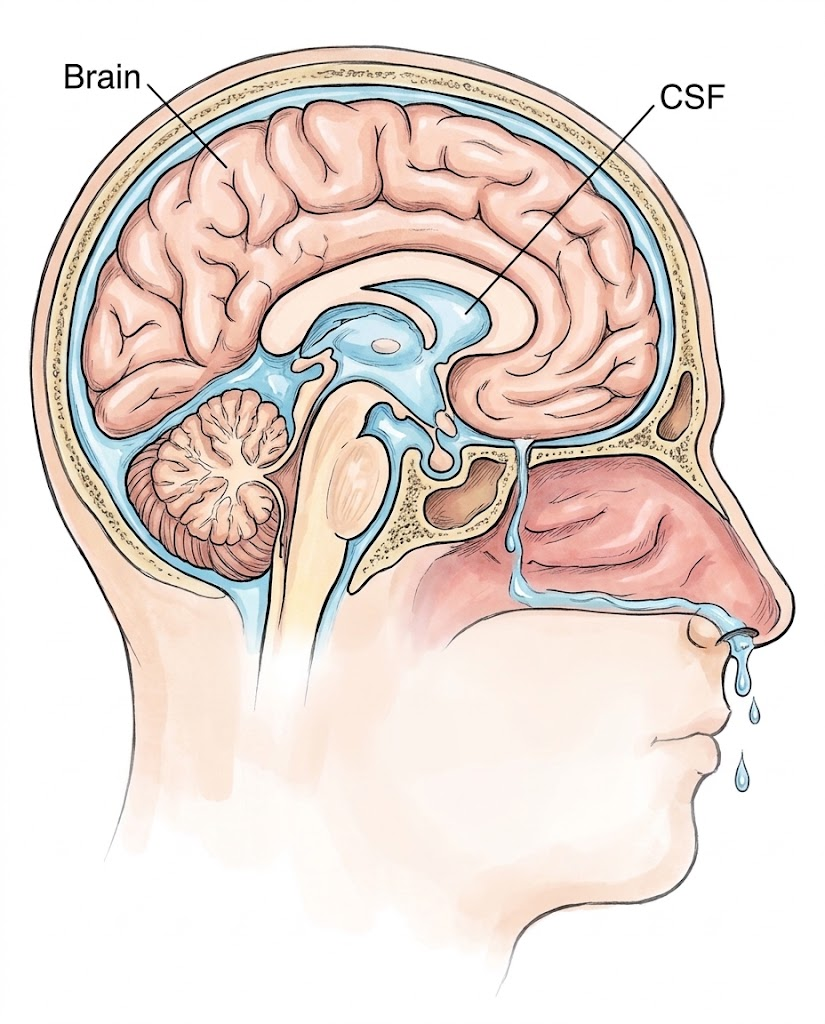
Your brain and spinal cord are cushioned by a clear, watery liquid known as cerebrospinal fluid (CSF). This fluid acts like a protective shock absorber, keeping your brain safe within your skull. A CSF leak happens when there is a small tear or hole in the dura mater—the tough, protective membrane that holds this fluid in place. When this happens, the fluid can escape through the nose, which is known as a sinonasal CSF leak.
This condition can be quite worrying, but it is important to know that it is a recognised medical issue that specialists are well-equipped to manage. It can affect people of all backgrounds, sometimes occurring after an injury or surgery, and other times appearing without a clear external cause. Because this fluid is meant to stay inside your head to protect your brain, it is vital to have the leak identified and repaired by a medical team to prevent the risk of infection, such as meningitis (a serious infection of the protective membranes covering the brain and spinal cord).
Symptoms and Causes
Understanding why a leak happens and how it feels can help you feel more in control of your health. While the symptoms can be disruptive to your daily life, they are clear signals that your body is trying to tell you something is wrong.
Symptoms
The most common sign of a sinonasal CSF leak is having clear, watery fluid dripping from one side of your nose. You might notice that this dripping gets worse when you strain, bend over, or lift something heavy. Because the fluid is clear and thin, it is often mistaken for a simple runny nose or allergies, but it does not behave like normal mucus.
When the fluid leaks out, the pressure inside your skull can drop, which is known as intracranial hypotension. This can lead to a variety of other symptoms, including:
- Severe headaches: These often feel much worse when you are standing up and get better when you lie flat.
- Pressure sensations: A feeling of fullness or pressure inside the head.
- Sensory changes: You might experience ringing in the ears (tinnitus), blurred vision, or dizziness.
- Physical discomfort: Neck and shoulder pain are common, as well as nausea or vomiting.
- Cognitive changes: Many people describe feeling "brain fog," where it is difficult to think clearly or concentrate.
- General fatigue: Feeling physically drained or experiencing muscle spasms.
Causes
There are several reasons why a tear in the protective membrane might occur. Sometimes it is caused by trauma, such as a head or spine injury, or even a whiplash incident. It can also happen as a result of medical procedures, such as surgery in the nose or near the skull base, or spinal procedures like a lumbar puncture (a test where a needle is inserted into the lower back to collect fluid).
In other cases, the leak is "spontaneous," meaning it happens without a direct injury. This is often linked to high pressure inside the skull, known as idiopathic intracranial hypertension. Being overweight can also be a factor in these spontaneous cases. Additionally, some people with connective tissue disorders, such as Ehlers-Danlos Syndrome (a group of conditions that affect the body's structural tissues), may be more prone to these leaks because their tissues are naturally more fragile.
Diagnosis and Investigations
If you suspect you have a CSF leak, it is essential to see an ENT (Ear, Nose, and Throat) specialist as soon as possible. Getting an accurate diagnosis is the first step toward feeling better.
Diagnosis
Your doctor will start by asking you detailed questions about your symptoms, such as when the fluid started and what makes it worse. They will perform a thorough physical examination, which includes looking inside your nose. Because a CSF leak can sometimes be linked to other health conditions, your specialist may work with a team of experts, including neurologists (brain specialists) and ophthalmologists (eye specialists), to get a complete picture of your health.
Investigations
To confirm that the fluid is indeed cerebrospinal fluid, your doctor may collect a sample of the liquid from your nose to be tested in a laboratory. Imaging studies are also a crucial part of the process. You will likely have a CT scan or an MRI scan. These are painless, non-invasive ways for doctors to take detailed pictures of your head and skull base, which helps them pinpoint exactly where the hole or tear is located. These tests are vital for planning the best way to fix the leak.
Management and Treatment
The goal of treatment is to stop the leak, relieve your symptoms, and protect you from infection. For some people, the leak may stop on its own with conservative management. This involves resting, avoiding any straining, and managing constipation to ensure you do not put unnecessary pressure on your head. Your doctor might suggest weight loss if that is a contributing factor, or they may prescribe stool softeners to make sure you do not have to strain when using the toilet.
If the leak does not stop, or if it is significant, surgery is often the best option. Modern techniques allow surgeons to repair the leak using an endoscopic approach. This means the surgeon works through the nostrils using a tiny camera, which avoids the need for any cuts on your face. The procedure usually takes one to two hours under a general anaesthetic (where you are put to sleep). After the surgery, you will typically stay in the hospital for a night or two to ensure you are healing well.
Prevention
While you cannot always prevent a spontaneous leak, you can take steps to support your recovery and reduce the risk of complications. If you have been diagnosed with high pressure in the skull, it is important to follow your specialist’s advice regarding medication or lifestyle changes to keep that pressure at a healthy level. Maintaining a healthy weight and avoiding heavy lifting or intense straining can also help keep pressure on your skull base to a minimum. If you have a known condition that affects your connective tissues, regular check-ups with your medical team are the best way to stay ahead of any potential issues.
Outlook / Prognosis
The long-term outlook for most people with a CSF leak is very positive, especially once the defect has been successfully repaired. After your surgery, you will need to take things easy for a while. You will likely be advised to stay on bed rest for the first two days, followed by a week of limited activity. Most people find they can return to driving after about two weeks and can get back to exercise after six weeks. It is generally recommended that you sleep on your back for the first four weeks to help the area heal properly.
Full recovery usually takes about six to eight weeks. During this time, your medical team will monitor you closely to ensure the area is healing well and that there are no signs of infection or recurring leaks. By following your doctor’s guidance and attending your follow-up appointments, you can expect to return to your normal daily activities. While the condition can feel overwhelming at first, prompt diagnosis and the right care are highly effective in resolving the issue and helping you get back to feeling like yourself again.
Need Expert Advice?
Book a consultation with Mr Ahmad Hariri to discuss your symptoms and treatment options.
Book a Consultation