
Deviated Nasal Septum

Disclaimer: Disclaimer: This leaflet provides general information and is intended for educational purposes only. It should not be used as a substitute for professional medical advice, diagnosis, or treatment. Always seek the advice of a qualified healthcare professional for any health concerns or before making any decisions related to your health or treatment.
This leaflet may contain links to external websites or resources (e.g. YouTube) for demonstration purposes; however, these links are provided for information only. Clinicol.co.uk is not affiliated with, does not endorse, and is not responsible for the content, accuracy, or copyright compliance of these external sources. Use of these external links is at your own discretion and risk.
Overview
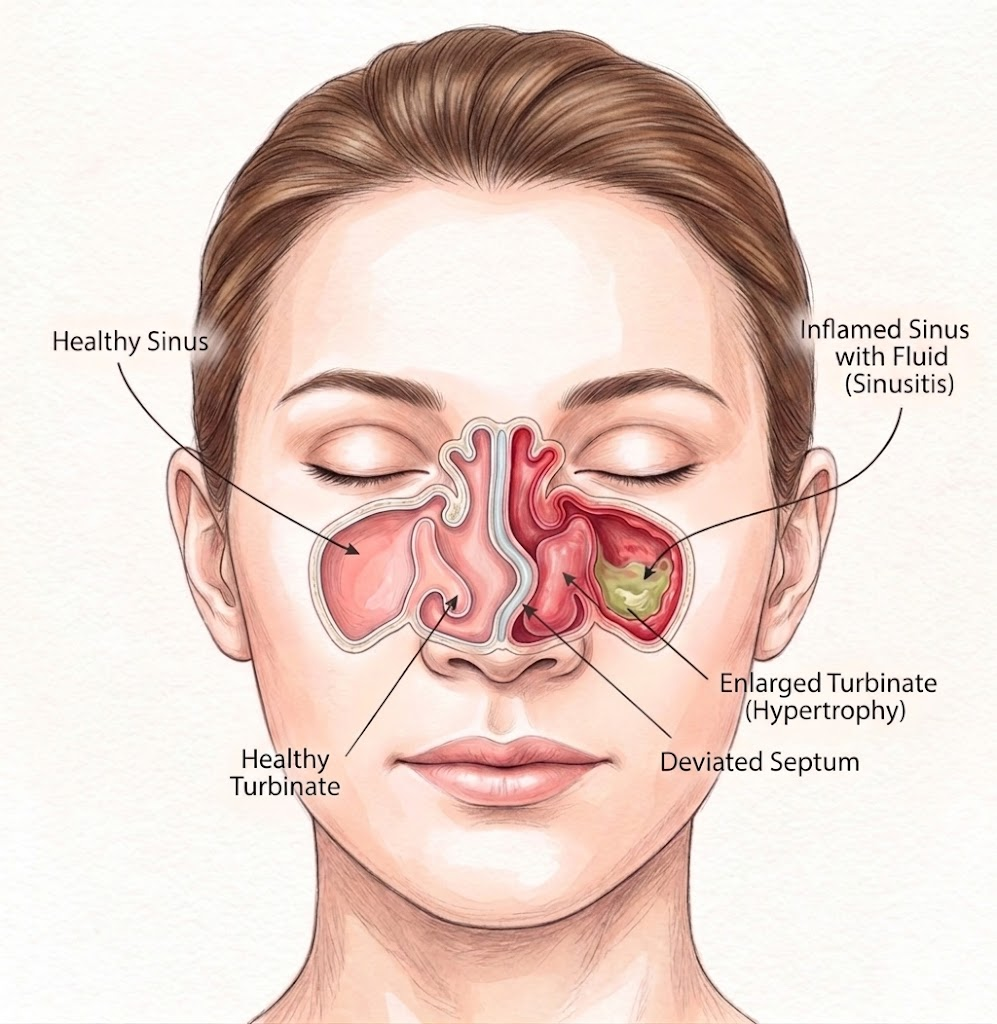
Your nose is divided into two separate passages by a thin wall called the nasal septum. This septum is made up of both cartilage (a flexible tissue) and bone. Ideally, it should run straight down the middle, creating two equally sized nasal passages. However, for many people, this wall isn't perfectly straight; it might be twisted, bent, or off-centre. When this happens, it's known as a deviated nasal septum.
A deviated nasal septum is a very common condition. It can develop naturally as you grow, meaning it's present from childhood or adolescence. Alternatively, it can be the result of an injury or trauma to the nose at any point in life. While many people have a deviated septum, it's important to know that not everyone experiences symptoms. In fact, a significant number of individuals with a deviated septum live their lives without any noticeable problems.
When the septum is significantly bent or twisted, it can narrow one or both of your nasal passages. This narrowing can lead to a blocked nose and make it harder to breathe through your nose. Beyond just breathing difficulties, a deviated septum can also affect the normal drainage of your sinuses (the air-filled spaces behind your cheekbones, forehead, and eyes). When sinus drainage is impaired, it can contribute to recurrent sinus infections, which can have a significant impact on your overall health and quality of life.
Symptoms and Causes
Understanding why a deviated nasal septum occurs and how it might affect you is key to managing the condition. While some people live with a deviated septum without any issues, for others, it can cause a range of bothersome symptoms.
Symptoms
The main symptom of a deviated nasal septum is a blocked nose, also known as nasal obstruction. Here's what you might experience:
- Persistent Nasal Blockage: This often affects one side of the nose more than the other (unilateral obstruction), but occasionally both sides can feel blocked (bilateral obstruction). If your nasal blockage changes throughout the day or varies from one side to the other, it's less likely to be solely due to a deviated septum, and other factors might be at play.
- Breathing Difficulties: A continuous blocked nose can make it hard to breathe comfortably, especially during physical activity, when sleeping, or even just walking. This can significantly impact your daily activities.
- Recurrent Nosebleeds (Epistaxis): Sometimes, the bent septum can cause the lining of the nose to become dry and irritated, leading to frequent nosebleeds.
- Recurrent Sinus Infections (Sinusitis): As mentioned, a deviated septum can block the natural drainage pathways of your sinuses. This can lead to repeated sinus infections, which can cause a range of symptoms including:
These symptoms can significantly affect your quality of life, sometimes even more than other long-term illnesses. They can also impact your mental health, with some people experiencing depression, and can reduce your productivity at work. - Poor sleep and fatigue (feeling very tired).
- Facial pain or pressure.
- Loss of smell.
- A persistent blocked nose.
Causes
A deviated nasal septum can develop for two main reasons:
- Natural Growth (Developmental): In many cases, the septum simply grows unevenly as a person develops. This means it can be present from childhood or become more noticeable during adolescence. It's just how your nose has formed naturally.
- Injury or Trauma: A direct blow or injury to the nose can cause the septum to shift out of place. This can happen during sports, accidents, or falls.
Diagnosis and Investigations
If you are experiencing symptoms that suggest a deviated nasal septum, your doctor will need to examine your nose and potentially arrange some tests to confirm the diagnosis and understand the extent of the problem.
Diagnosis
The diagnosis of a deviated nasal septum typically begins with a thorough discussion about your symptoms and medical history. Your doctor will ask about:
- How long you've had symptoms.
- Which side of your nose is affected.
- How your symptoms impact your daily life, sleep, and activities.
- Any history of nosebleeds or sinus infections.
- Any past injuries to your nose.
Following this discussion, a physical examination of your nose will be performed. This usually involves:
- Examination with a Light or Otoscope: Your doctor will use a small light or an otoscope (a handheld instrument with a light, commonly used to look in ears, but also useful for the front of the nose) to look inside your nostrils.
- Anterior Rhinoscopy: This is a more detailed look inside the front part of your nose using a special instrument to gently widen the nostril.
- Nasoendoscopy: If needed, an ENT specialist (Ear, Nose, and Throat doctor) may perform a nasoendoscopy. This involves carefully inserting a thin, flexible tube with a light and a tiny camera on the end into your nose. This allows the doctor to see further back into your nasal passages and assess the deviation more clearly, as well as check for any other problems.
During these examinations, the doctor will be looking to see how much your septum is bent and if it's blocking your nasal passages. They will also check for any other conditions that might be causing your symptoms.
As part of the diagnostic process, your doctor may also recommend a trial of medical treatment for at least three months. This helps to see if your symptoms improve with conservative measures before considering other options.
Investigations
To get a complete picture of your condition and help decide on the best treatment, several investigations may be recommended:
- Patient Reported Outcome Measures (PROMs): These are questionnaires that help measure how much your symptoms affect your daily life. A common one used for nasal obstruction is the NOSE (Nasal Obstruction Symptom Evaluation) questionnaire. You will be asked to complete this before and potentially after any treatment. A score greater than 50 on the NOSE questionnaire often indicates a significant impact on your quality of life due to nasal obstruction.
- Allergy Testing: This may be recommended to see if allergies are contributing to your nasal symptoms, as allergies can cause swelling inside the nose.
- Peak Nasal Inspiratory Flow (PNIF) Measurements: This test measures how quickly you can inhale air through your nose. It helps to objectively assess the severity of your nasal obstruction.
- CT Scan of the Sinuses: A CT scan (Computed Tomography scan) is a special type of X-ray that creates detailed images of your sinuses and nasal structures. This scan is usually performed if your doctor suspects you might have other problems with your sinuses, or if they can't get a clear view of the back of your nasal passages during the examination.
- Pre-assessment Clinic for Surgery: If surgery is being considered, you will attend a pre-assessment clinic. Here, you'll undergo various checks to ensure you are fit for a general anaesthetic (where you are completely asleep during the operation). These checks may include:
- MRSA Screening: A swab test to check for a common type of bacteria.
- Blood Tests: To check your general health.
- ECG (Electrocardiogram): A simple test to check your heart's electrical activity.
- You will also be given instructions about fasting (not eating or drinking) before your general anaesthetic.
Management and Treatment
The approach to managing a deviated nasal septum depends on how much it affects you. Not everyone with a deviated septum needs treatment, especially if they don't have symptoms. For those who do, treatment options range from simple sprays to surgical procedures.
Initial Medical Management (Conservative Measures)
The first step in managing symptoms is usually a trial of medical treatments aimed at reducing swelling inside your nose. This can often improve your breathing and may help you avoid the need for surgery. These treatments include:
- Saline Nasal Sprays: Products like Sterimar nasal spray contain a salt-water solution that helps to clean and moisturise the inside of your nose. This can help to reduce irritation and clear mucus.
- Nasal Steroid Sprays or Drops: These are medicines that you spray or drop into your nose. They work by reducing inflammation and swelling of the internal structures in your nose, particularly the turbinates (small, shelf-like bones covered by soft tissue that warm and humidify the air you breathe). By reducing this swelling, they can help to open up your nasal airway.
You will typically be advised to use these sprays for at least six weeks, and often for three months or more. The goal is to see if they can significantly improve your symptoms. If, after three months of using topical nasal steroid sprays and saline irrigation, your symptoms are still bothersome, a routine referral to an ENT specialist is usually indicated. It's important to remember that while sprays and drops can help with swelling and improve symptoms, only surgery can physically correct a bent septum.
Surgical Management (Septoplasty)
If conservative measures don't provide enough relief, or if your deviation is severe, surgery may be considered. The main surgical procedure to correct a deviated septum is called a septoplasty.
- What is Septoplasty? This operation aims to straighten the nasal septum. It can be performed to relieve nasal blockage caused by the bent septum, or sometimes to create more space inside the nose for other procedures, such as sinus surgery.
- The Procedure: Septoplasty is performed under a general anaesthetic, meaning you will be completely asleep during the operation. The surgeon makes small cuts (incisions) inside your nose, so there are no external scars. They then carefully reshape or remove parts of the cartilage and bone that are causing the deviation, before repositioning the septum to a straighter position.
- Combined Procedures:
- Sometimes, if the nasal bones are also affected, septoplasty may be combined with a rhinoplasty (surgery to reshape the external appearance of the nose).
- In very severe cases where the deviation significantly affects the external shape of your nose, it might be combined with a septorhinoplasty (a procedure that addresses both the internal septum and the external shape of the nose). However, it's important to understand that septoplasty alone is not intended to change the external appearance of your nose. Functional septorhinoplasty is only funded for significant nasal obstruction that requires external reshaping for functional improvement, not for cosmetic reasons.
- The surgeon may also perform surgery on the inferior turbinates if they are enlarged and contributing to your blockage.
- NHS Funding Criteria: For septoplasty to be funded by the NHS, specific criteria usually need to be met. These include:
- Recurrent nosebleeds that are clearly linked to the nasal deformity.
- Documented recurrent sinus infections that have not improved after a three-month trial of intranasal steroids and saline irrigation.
- Continuous nasal airway obstruction due to a severe septal deviation that has not responded to three or more months of conservative treatments (like sprays) and where there are no other causes for the blockage (such as rhinitis, which is inflammation of the nasal lining).
- In very rare and extremely severe cases where the deviation cannot be corrected from inside the nose, an extracorporeal (open) septoplasty (where the septum is temporarily removed, reshaped outside the nose, and then put back) may be considered for initial correction, provided you meet the standard criteria. However, revision extracorporeal septoplasty (a second open procedure) is generally considered experimental and is only funded through clinical trials.
- After the Operation:
- Most people go home on the same day as their septoplasty (it's often a day case procedure).
- You may experience some nasal blockage due to swelling and sometimes temporary packing placed inside your nose. This might mean you need to breathe through your mouth for a short while.
- You might be given nasal drops or spray and an antibiotic cream to use after surgery.
- Dissolvable stitches are typically used inside your nose, so they won't need to be removed.
- You can expect some pain for about a week, which can usually be managed with common pain relievers like paracetamol or ibuprofen.
- It's generally recommended to take at least one week off work to allow for healing.
- You will usually have a follow-up appointment to check your healing, remove any splints if they were used, and re-evaluate your symptoms using the PROMs questionnaires.
Prevention
Preventing a deviated nasal septum can be challenging, as it often develops naturally during growth or results from unexpected injuries.
- Developmental Deviations: If your deviated septum is due to natural growth, there are no specific preventative steps you can take, as it's simply how your nose has formed.
- Trauma-Related Deviations: For deviations caused by injury, the only way to prevent them is to avoid trauma to the nose. This might involve wearing appropriate protective gear during contact sports or taking precautions to prevent falls and accidents.
While you can't always prevent the condition itself, you can take steps to manage or prevent the worsening of symptoms once you have a deviated septum:
- Avoid Irritants: If you have had surgery, or if your nose is generally sensitive, avoiding dusty or smoky environments can help reduce irritation and swelling in your nasal passages.
- Manage Allergies: If allergy testing shows you have allergies, managing them effectively can help reduce nasal swelling and congestion, which might otherwise worsen the impact of a deviated septum.
Outlook / Prognosis
The long-term outlook for individuals with a deviated nasal septum varies greatly depending on whether they experience symptoms and how these symptoms are managed.
- Asymptomatic Deviations: Many people with a deviated septum never experience any symptoms. For these individuals, the condition has no impact on their quality of life, and no treatment is needed.
- Symptomatic Deviations: For those who do experience symptoms, the outlook depends on the effectiveness of treatment.
- Medical Management: Initial treatment with nasal sprays (saline and steroid) can often significantly reduce swelling inside the nose and improve breathing. For some, this conservative approach is enough to manage their symptoms effectively, allowing them to avoid surgery.
- Surgical Management (Septoplasty): If surgery is performed, the aim is to provide clearer breathing and reduce other symptoms. However, it's important to understand that surgery is not always completely successful in improving all symptoms.
- Recovery: While you might go home the same day after surgery, it can take up to three months for your nose to fully recover and for you to experience the clearest possible breathing. During this time, avoiding dusty or smoky environments is advisable.
- Potential Long-term Issues: Rarely, a slight change in the external shape of the nose, such as a small dip in the bridge, can occur after septoplasty. If this happens, it can often be corrected with further surgery. Another rare issue is a septal perforation, which is a hole in the septum. These can also be repaired surgically if they cause problems.
- Impact of Untreated Symptoms: If a significantly deviated septum is left untreated and continues to cause problems, it can have a considerable impact on your life:
- Breathing Difficulties: Continuous nasal obstruction can lead to ongoing breathing problems, affecting your sleep, exercise capacity, and general comfort.
- Recurrent Sinus Issues: Impaired sinus drainage can lead to frequent and persistent sinus infections. These can cause chronic symptoms like poor sleep, constant fatigue, facial pain, and a reduced sense of smell. The burden of chronic sinus disease can be as significant as other long-term illnesses, affecting mental health (with nearly a third of patients experiencing depression) and reducing work productivity by almost 40%.
Overall, with appropriate diagnosis and management, whether through medical treatments or surgery, most people with a symptomatic deviated nasal septum can find relief and improve their quality of life.
Need Expert Advice?
Book a consultation with Mr Ahmad Hariri to discuss your symptoms and treatment options.
Book a Consultation