
Ear Ache / Ear Pain

Disclaimer: Disclaimer: This leaflet provides general information and is intended for educational purposes only. It should not be used as a substitute for professional medical advice, diagnosis, or treatment. Always seek the advice of a qualified healthcare professional for any health concerns or before making any decisions related to your health or treatment.
This leaflet may contain links to external websites or resources (e.g. YouTube) for demonstration purposes; however, these links are provided for information only. Clinicol.co.uk is not affiliated with, does not endorse, and is not responsible for the content, accuracy, or copyright compliance of these external sources. Use of these external links is at your own discretion and risk.
Overview
Earache is a very common experience that causes discomfort or pain inside the ear. It can affect people of all ages, though it is particularly frequent in children. The pain can range from a dull ache to a sharp, burning sensation, and it may be constant or come and go. It can affect one ear or both at the same time. While earache can be distressing, it is often caused by minor infections that clear up on their own within a few days without the need for complex medical intervention.
Symptoms and Causes
Understanding why your ear hurts can help you manage the discomfort more effectively. Most earaches are the result of inflammation or infection in either the middle part of the ear (behind the eardrum) or the outer part (the ear canal).
Symptoms
The symptoms you experience can vary depending on the cause. Common signs include:
- Pain in one or both ears.
- A high temperature or fever.
- A feeling of fullness or pressure in the ear.
- Temporary hearing loss or a muffled sensation.
- Discharge or fluid leaking from the ear.
- Swelling or tenderness around the ear or the outer ear canal.
- A severe sore throat.
- Feeling sick or vomiting.
In babies and young children who cannot tell you where it hurts, look out for signs such as rubbing or pulling at their ears, being unusually irritable or restless, not responding to sounds, poor feeding, or a loss of balance.
Causes
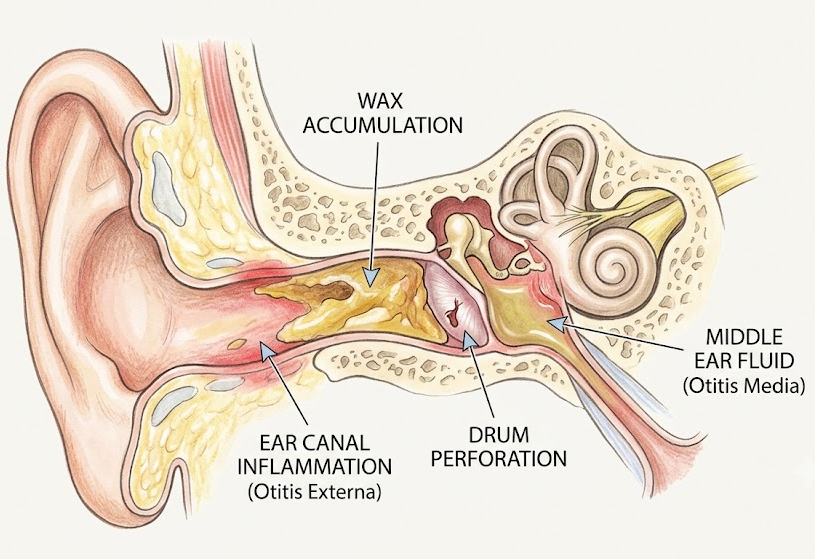
Earache is usually triggered by an underlying issue, such as:
- Middle ear infections: Often following a cold, fluid can build up behind the eardrum, causing pressure and pain.
- Outer ear infections: Often called "swimmer’s ear," this happens when the skin of the ear canal becomes infected, sometimes due to water getting trapped after swimming or using cotton buds.
- Earwax build-up: A blockage of wax can press against the eardrum or trap bacteria.
- Perforated eardrum: A small hole or tear in the eardrum, which can sometimes cause a sharp pain followed by fluid discharge.
- Foreign objects: Small items stuck in the ear canal can cause irritation and pain.
- Glue ear: A condition where the middle ear fills with a thick, glue-like fluid, which can cause temporary hearing loss.
Diagnosis and Investigations
If your earache is severe, does not improve after a few days, or is accompanied by worrying symptoms, it is important to seek professional advice from a GP or a pharmacist.
Diagnosis
A healthcare professional will typically start by asking about your symptoms, how long they have lasted, and whether you have had a recent cold or ear injury. They will look into your ear using an otoscope, which is a small, handheld device with a light and a magnifying lens. This allows them to see the ear canal and the eardrum clearly to check for signs of redness, swelling, fluid, or infection.
Investigations
In most cases, a physical examination is all that is needed. However, if the symptoms are persistent or complex, further steps may be taken. This might include a more detailed examination of the ear canal, or in some cases, a hearing test to see if the infection has affected your ability to hear. If there is a suspicion of a more serious or chronic issue, a referral to an ENT specialist may be necessary for a more thorough assessment.
Management and Treatment
Most earaches are self-limiting, meaning they will get better on their own as your body fights off the infection. You can manage the pain at home by taking over-the-counter painkillers like paracetamol or ibuprofen, following the dosage instructions on the packet. Applying a warm, clean flannel to the affected ear can also provide soothing relief.
If you have an outer ear infection, your pharmacist or GP may recommend specific ear drops to help clear the infection and reduce inflammation. It is vital to keep the ear dry while it is healing; avoid swimming and try to keep water out of your ear when showering. Do not put anything inside your ear, such as cotton buds, as this can push wax or debris deeper and potentially damage the delicate skin or the eardrum.
Antibiotics are not always necessary, as many infections are viral. However, if an infection is bacterial and not improving, or if you are at higher risk of complications, a doctor may prescribe a short course of antibiotics. Always complete the full course if prescribed.
Prevention
You can reduce the risk of future earaches by following a few simple habits:
- Keep ears dry: After swimming or showering, gently dry the outer ear with a towel. If you are prone to outer ear infections, consider using earplugs or a cotton ball coated in a little Vaseline when you swim or bathe.
- Avoid objects in the ear: Never use cotton buds, hairpins, or other objects to clean your ears. The ear is designed to clean itself, and inserting objects can cause damage or push wax into a hard plug.
- Manage colds: While you cannot always prevent a cold, maintaining good hygiene can help reduce the spread of germs that lead to ear infections.
Outlook / Prognosis
The outlook for most people with earache is excellent. The vast majority of cases resolve within a few days to a week without any lasting problems. Even if you experience a perforated eardrum, it will typically heal on its own quite quickly, and any temporary hearing loss caused by fluid or infection usually returns to normal once the ear has cleared.
If you have had a middle ear infection, you might notice a temporary muffled feeling in your ear for a short time afterwards; this is usually just residual fluid that will drain away naturally. While complications are rare, it is important to monitor your symptoms. If you notice severe pain, high fever, discharge, dizziness, or if your symptoms do not improve after three days, please seek medical advice. Early attention ensures that any potential issues are managed promptly, helping you return to full health as quickly as possible.
Need Expert Advice?
Book a consultation with Mr Ahmad Hariri to discuss your symptoms and treatment options.
Book a Consultation