
Ear Wax (Impacted Wax)

Disclaimer: Disclaimer: This leaflet provides general information and is intended for educational purposes only. It should not be used as a substitute for professional medical advice, diagnosis, or treatment. Always seek the advice of a qualified healthcare professional for any health concerns or before making any decisions related to your health or treatment.
This leaflet may contain links to external websites or resources (e.g. YouTube) for demonstration purposes; however, these links are provided for information only. Clinicol.co.uk is not affiliated with, does not endorse, and is not responsible for the content, accuracy, or copyright compliance of these external sources. Use of these external links is at your own discretion and risk.
Overview
Ear wax (medical term: cerumen) is a naturally occurring substance produced by glands in the ear canal. It is a mixture of oils, dead skin cells, hair, and dust. While many people view it as dirt, it serves several vital functions:
- Protection: It traps dust, dirt, and bacteria, preventing them from reaching the eardrum.
- Lubrication: It prevents the delicate skin of the ear canal from becoming dry, itchy, or cracked.
- Self-Cleaning: The ear has a natural "conveyor belt" mechanism. As you chew and talk, jaw movements slowly migrate the wax from deep inside the ear to the outer opening, where it dries up and falls out naturally.
The amount, colour (honey to dark brown), and consistency (dry/flaky or wet/sticky) vary from person to person. For most people, ears are self-cleaning and require no intervention.
Symptoms and Causes
Symptoms of Impacted Wax
When wax builds up and forms a hard plug (impaction) against the eardrum, you may experience:
- Hearing loss: Usually gradual, or sudden if water expands the wax (e.g., after swimming).
- Earache: Mild pain or discomfort.
- Tinnitus: Ringing, buzzing, or humming noises in the ear.
- Fullness: A sensation that the ear is blocked or "stuffed."
- Dizziness: Mild vertigo or imbalance.
- Whistling hearing aids: Feedback caused by the wax blocking the sound path.
Causes and Risk Factors
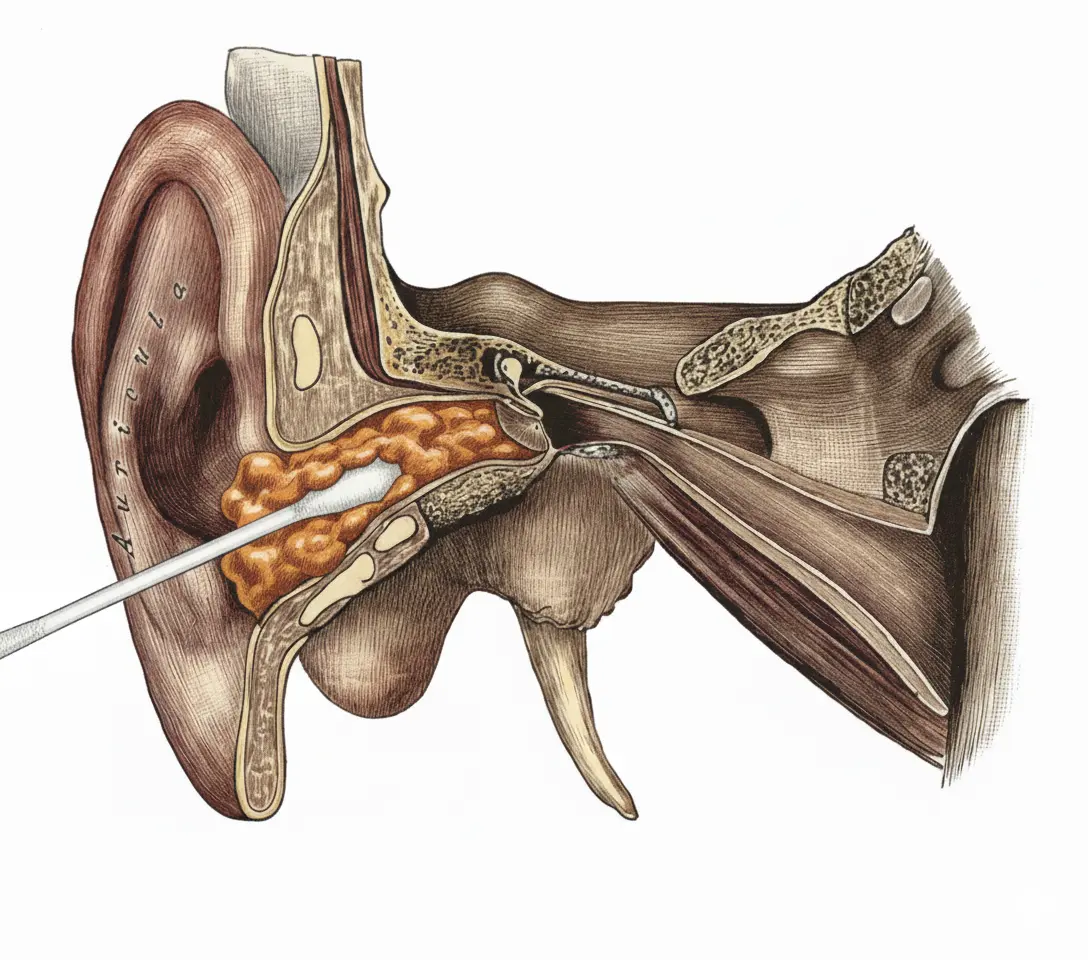
- Use of cotton buds: This is the most common cause. Inserting objects pushes wax deeper against the eardrum where it cannot exit naturally.
- Anatomy: Narrow or particularly hairy ear canals.
- Age: Older adults often have drier, harder wax; older men may have more ear hair.
- Devices: Frequent use of hearing aids, earplugs, or in-ear headphones blocks natural wax migration.
- Skin conditions: Eczema or psoriasis in the ear canal.
Diagnosis and Investigations
You can usually identify wax build-up by the symptoms above. However, a definitive diagnosis requires an examination by a healthcare professional (ENT Surgeon, GP, Nurse, or Audiologist).
- Otoscopy: The clinician uses an instrument with a light and magnifier (otoscope) to look into the ear canal. They can confirm if the drum is obscured by wax.
- Referral Criteria: In the NHS, wax removal is not always routinely available. You are more likely to be referred for specialist removal if:
- You have hearing loss caused by wax.
- The wax prevents a necessary view of the eardrum (e.g., to diagnose an infection).
- You are fitting a hearing aid.
- You have a history of ear surgery or perforation.
Management and Treatment
Important: Do not use cotton buds, hair grips, or pen lids to remove wax. This can cause trauma, infection (Otitis Externa), and permanent damage.
1. Self-Care: Ear Drops
For most patients, the first line of treatment is to soften the wax so it can leave the ear naturally.
A. Olive Oil Drops or Spray (Medical Grade or Ordinary)
- Type: Lubricant/Softener.
- Availability: OTC (Over the Counter) at pharmacies or supermarkets.
- Dosage: 2–3 drops (or 1–2 sprays) in the affected ear(s).
- Frequency: 2 times a day.
- Duration: Recommended for at least 2 to 3 weeks.
- Note: Almond oil is a suitable alternative (unless you have a nut allergy).
B. Sodium Bicarbonate Ear Drops (5%)
- Type: Disintegrator (breaks up the wax).
- Availability: OTC at pharmacies.
- Frequency: 2–3 drops, 2 times a day.
- Duration: Up to 1 week (prolonged use can cause dryness/irritation).
- Usage: Use if olive oil has failed to clear the wax.
How to use ear drops effectively:
- Warm the drops: Hold the bottle in your hand or pocket for 10 minutes (cold drops can cause dizziness).
- Position: Lie on your side with the affected ear facing the ceiling.
- Application: Pull the outer ear gently backwards and upwards to straighten the canal. Squeeze the drops in.
- Wait: Stay lying down for 5–10 minutes to let the drops soak in.
- Finish: Wipe away excess oil from the outer ear. Do not plug the ear with cotton wool, as this soaks up the oil preventing it from working.
Caution: Do not use drops if you have a perforated eardrum (hole in the ear) or current ear discharge/infection unless advised by a doctor.
2. Professional Removal
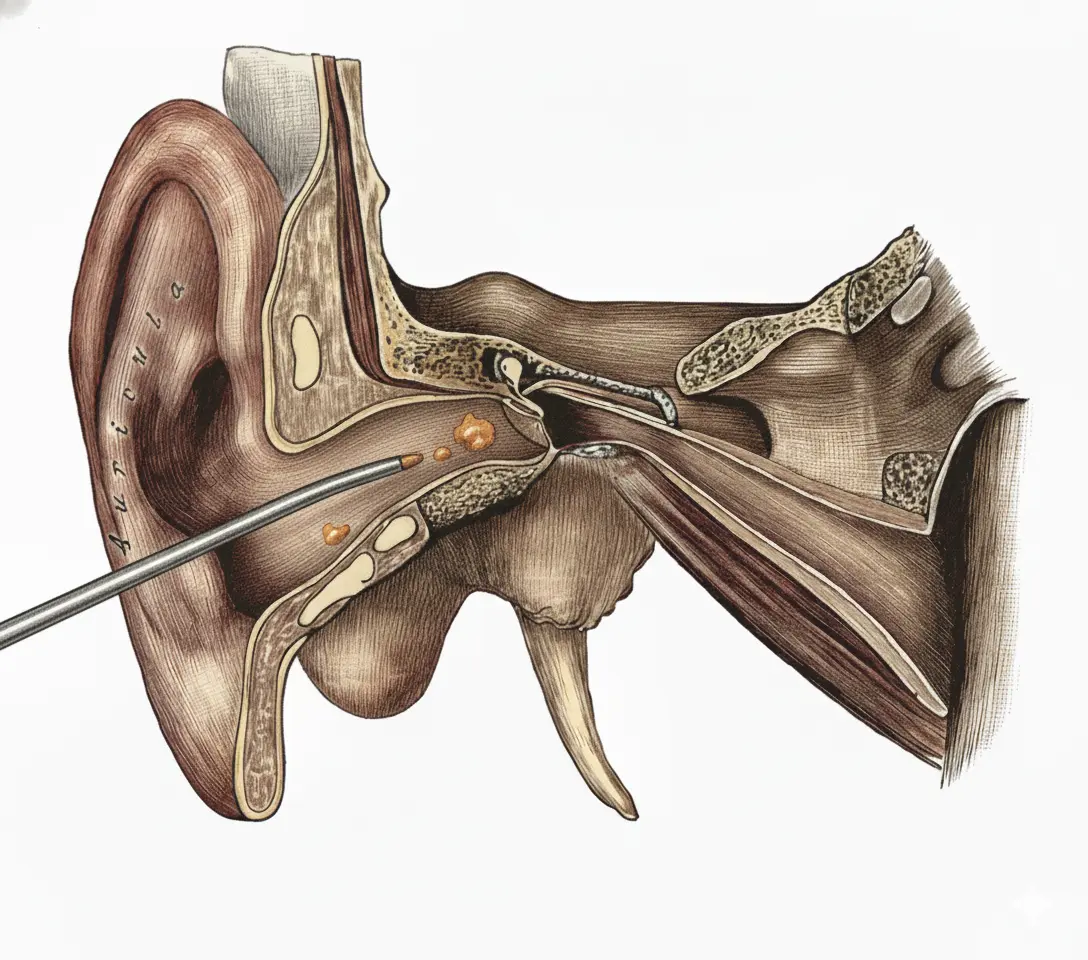
If self-care with drops does not work after 2–3 weeks, you may require manual removal. Note: Availability of these services on the NHS varies by region (ICB).
- Microsuction: A suction device and microscope are used to vacuum the wax out. It is noisy but generally painless and is the safest method, especially for those with previous ear surgery.
- Irrigation (Syringing): Flushing the ear with warm water. This is less common now due to higher risks of perforation or infection compared to microsuction.
Prevention
If you are prone to recurrent wax build-up:
- Regular Oiling: Using olive oil drops once a week or once a fortnight may help keep wax soft and encourage self-cleaning.
- Keep ears dry: When showering or swimming, use silicone swim plugs or a cotton ball coated in petroleum jelly (Vaseline) placed in the outer bowl of the ear to prevent water entry, which can irritate the canal.
- Treat skin conditions: Manage eczema or psoriasis with advice from your GP.
Outlook / Prognosis
- Resolution: In most cases, using olive oil drops for 2–3 weeks will soften the wax enough for it to come out on its own, resolving symptoms.
- Initial Worsening: It is common for hearing to get worse or for the ear to feel more blocked after the first few applications of drops. This is because the dry wax absorbs the oil and expands. This should improve as the wax softens.
- Recurrence: Ear wax build-up is often a recurring condition. Long-term management (preventative drops) is often required.
- Complications: If left untreated, hard wax can lead to infection (otitis externa). Seek urgent medical advice if you experience severe pain, discharge, bleeding, or sudden total hearing loss.
Need Expert Advice?
Book a consultation with Mr Ahmad Hariri to discuss your symptoms and treatment options.
Book a Consultation