
Glue Ear (Adults)

Disclaimer: Disclaimer: This leaflet provides general information and is intended for educational purposes only. It should not be used as a substitute for professional medical advice, diagnosis, or treatment. Always seek the advice of a qualified healthcare professional for any health concerns or before making any decisions related to your health or treatment.
This leaflet may contain links to external websites or resources (e.g. YouTube) for demonstration purposes; however, these links are provided for information only. Clinicol.co.uk is not affiliated with, does not endorse, and is not responsible for the content, accuracy, or copyright compliance of these external sources. Use of these external links is at your own discretion and risk.
Overview
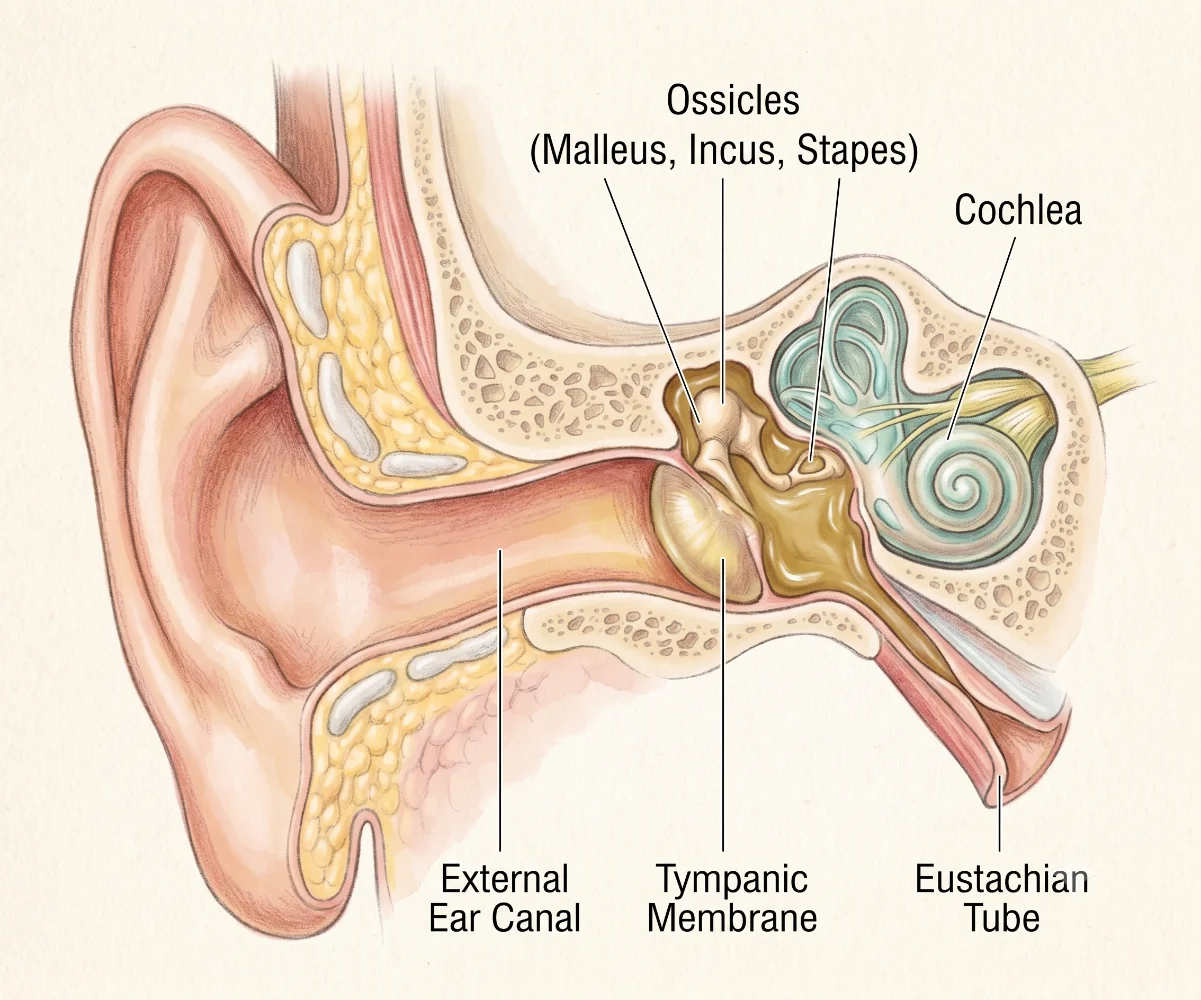
Glue ear, medically known as Otitis Media with Effusion (OME), is a condition where sticky, glue-like fluid builds up behind your eardrum in the middle ear. While it's much more common in children, adults can also develop glue ear. When it occurs in adults, it's important to understand the potential reasons behind it, as sometimes it can be a sign of something that needs closer attention.
Normally, your middle ear is filled with air. This air pressure needs to be the same as the air pressure outside your ear for you to hear clearly. A small tube called the Eustachian tube (which connects the back of your nose to your middle ear) helps to keep this air pressure balanced and drains any natural fluid away. With glue ear, this tube isn't working properly, leading to fluid collecting and becoming thick and sticky, much like glue.
Although glue ear in adults is uncommon, it can significantly affect your hearing and comfort. It often follows common illnesses like colds, flu, or other infections affecting your nose, sinuses, or ears. However, in some cases, especially if it only affects one ear, it can be a warning sign of a more serious blockage or issue with the Eustachian tube that needs prompt medical investigation.
Symptoms and Causes
Understanding the symptoms and what might cause glue ear in adults is the first step towards getting the right help. The symptoms can be frustrating and impact your daily life, but they are usually manageable once the condition is diagnosed.
Symptoms
The symptoms of glue ear in adults can vary, but they often relate to how well you can hear and how your ear feels. You might notice these symptoms in one ear (unilateral) or both ears (bilateral):
- Dulled or Temporary Hearing Loss: This is often the most noticeable symptom. Sounds might seem muffled, as if you're listening underwater or have cotton wool in your ear. This happens because the fluid behind your eardrum stops it from vibrating properly, making it harder for sound to reach your inner ear.
- Feeling of Fullness or Pressure: You might feel a constant sense of pressure or a blocked sensation in your ear, similar to how your ears feel on an aeroplane. This is due to the fluid build-up and the imbalance of pressure.
- Mild Earache or Discomfort: While not usually severe, some people experience a dull, mild ache or general discomfort in the affected ear.
- Crackling or Popping Sounds: You might hear strange crackling, popping, or squelching noises inside your ear, especially when you swallow or yawn. These sounds are caused by the fluid moving around or by attempts of the Eustachian tube to open.
- Tinnitus: This is the medical term for hearing ringing, buzzing, hissing, or other noises in your ear that aren't coming from an external source. Glue ear can sometimes trigger or worsen tinnitus.
- Balance Problems: Less commonly, some adults might experience mild issues with their balance, feeling a little unsteady.
Causes
In adults, glue ear primarily occurs when the Eustachian tube doesn't work as it should. This tube is vital for draining fluid from the middle ear and keeping the air pressure balanced. When it becomes blocked or inflamed, fluid can build up. Here are the main reasons this might happen:
- Following Infections: The most common trigger for adult glue ear is a recent viral infection, such as a cold, flu, or a sinus infection (sinusitis). These infections can cause swelling and inflammation in the lining of the Eustachian tube, making it difficult for it to open and drain properly.
- Eustachian Tube Dysfunction: This is a broad term meaning the Eustachian tube isn't functioning correctly. It might not open enough to let air in or drain fluid out, leading to a build-up. This dysfunction can be a lingering effect of an infection or sometimes occur without a clear trigger.
- Blockage or Extra Tissue: Rarely, glue ear in adults can be caused by a physical blockage of the Eustachian tube. This might be due to extra tissue growing nearby, or, in very rare but serious cases, a growth or tumour in the nasopharynx (the upper part of your throat behind your nose, where the Eustachian tube opens). This is why a thorough investigation is so important for adults, especially if the glue ear is only in one ear.
- Enlarged Adenoids: While more common in children, sometimes enlarged adenoids (soft tissues at the back of your nose) can contribute to blocking the Eustachian tube opening, leading to glue ear.
Diagnosis and Investigations
If you suspect you have glue ear, it's important to see your GP. They will listen carefully to your symptoms and carry out an initial examination. For adults, especially, a careful and prompt diagnosis is crucial to rule out any serious underlying causes.
Diagnosis
Your GP will start by asking you about your symptoms, how long you've had them, and if you've had any recent colds or infections. This is called taking a medical history. They will then perform a physical examination:
- Otoscopy: Your doctor will look inside your ear using a special instrument called an otoscope (a light with a magnifying glass). They will examine your eardrum. In glue ear, the eardrum might look dull, cloudy, or retracted (pulled inwards) instead of its usual shiny, translucent appearance. They might also try a simple test called the Valsalva manoeuvre (asking you to gently blow out with your mouth and nose closed) to see if your eardrum moves. If it doesn't move, it suggests fluid or pressure behind it.
- Tuning Fork Tests: Your GP might use tuning forks (metal instruments that vibrate to produce sound) to perform simple hearing tests. These tests can help determine if your hearing loss is 'conductive' (meaning there's a problem with sound reaching your inner ear, which is typical for glue ear) rather than 'sensorineural' (a problem with the inner ear or nerve).
If your GP suspects glue ear, especially if it has lasted for more than three months, or if there are any concerning features, they will usually refer you to a specialist, such as an Ear, Nose, and Throat (ENT) surgeon or an audiologist.
Important Note for Adults: If you have glue ear, particularly if it's only affecting one ear (unilateral), or if it's not clearly linked to a recent cold or infection, your doctor will be very cautious. This is because, in rare cases, it can be a sign of a more serious underlying issue, such as a growth or tumour in the nasopharynx. For certain high-risk adults (e.g., those over 40, smokers, or people of South-East Asian descent), your GP may refer you urgently via a '2-week wait' pathway to an ENT specialist to ensure any serious conditions are quickly ruled out.

Investigations
Once you are referred to a specialist, further tests may be carried out to confirm the diagnosis and understand the extent of the condition:
- Tympanometry: This is a common and very helpful test performed by an audiologist (a hearing specialist). It measures how your eardrum moves in response to changes in air pressure. If there's fluid behind the eardrum, it won't move as freely, and the tympanometry test will show a characteristic 'flat' reading, confirming the presence of fluid.
- Formal Hearing Tests: An audiologist will conduct a full hearing test (audiometry) to accurately measure your hearing levels and confirm the type and degree of hearing loss.
- Endoscopy: In cases where a blockage or other underlying cause is suspected, especially with unilateral glue ear, an ENT specialist might perform an endoscopy. This involves passing a thin, flexible tube with a camera on the end (an endoscope) gently through your nose to examine the back of your nose and throat, including the opening of the Eustachian tube. This helps to check for any growths or blockages.
Management and Treatment
The approach to managing adult glue ear depends on how long you've had it, how severe your symptoms are, and any underlying causes. The good news is that many cases resolve on their own.
- Watch and Wait: For many adults, the first step is often a 'watch and wait' period, typically for three to four months. This is because up to half of all adult glue ear cases clear up naturally without any specific treatment. During this time, your doctor will monitor your symptoms and hearing.
- Autoinflation Devices: If your glue ear persists, your doctor might suggest using an autoinflation device, such as the Otovent nasal balloon. This device involves blowing up a special balloon using one nostril while holding the other nostril closed. This action helps to gently push air up the Eustachian tube, which can help to open it up, drain the fluid, and equalise the pressure in your middle ear. It's a simple technique that can be very effective for some people.
- Medications (Generally Not Recommended): It's important to know that antibiotics, antihistamines, or decongestants are generally not recommended for treating glue ear in adults. This is because studies have shown they usually don't help to clear the fluid and can have side effects without proven benefit for this condition.
- Temporary Hearing Aids: If your hearing loss is significant and persistent, but surgery isn't suitable for you or you prefer not to have an operation, temporary hearing aids can be a very effective way to improve your hearing while you wait for the condition to resolve or consider other options.
- Surgical Options: If glue ear persists for a long time (typically beyond three to four months) and is causing significant symptoms, your ENT specialist may discuss surgical options.
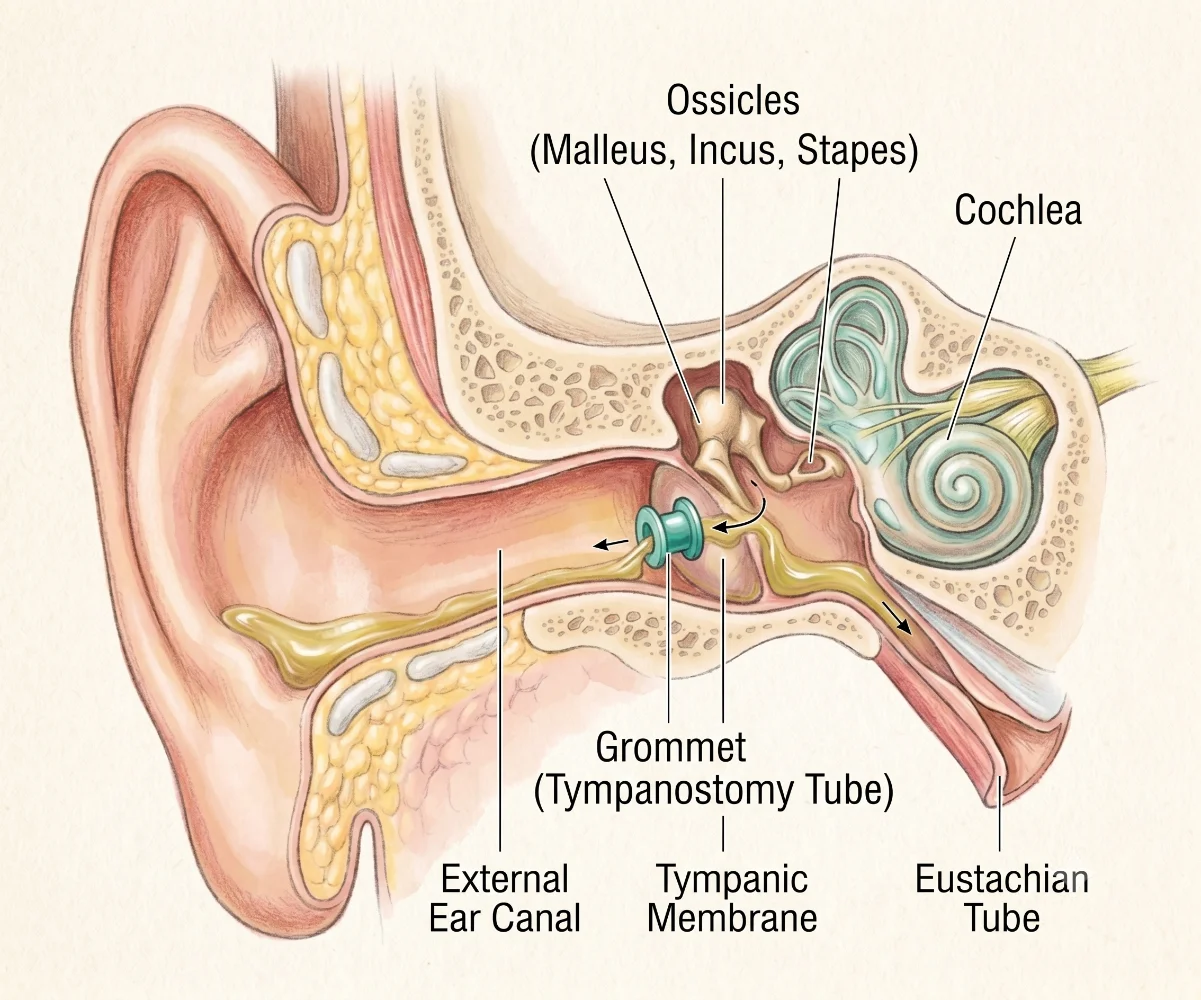
- Myringotomy and Grommet Insertion: This is the most common surgical treatment. It involves making a tiny cut in your eardrum (a myringotomy) to drain the sticky fluid. Then, a tiny ventilation tube called a grommet is inserted into the eardrum. The grommet acts like a tiny tunnel, allowing air to enter the middle ear and keeping the pressure balanced, which helps prevent fluid from building up again. Grommets usually fall out on their own after several months as the eardrum heals.
- Adenoidectomy: In rare cases, if enlarged adenoids are thought to be contributing to the Eustachian tube blockage, an operation to remove them (an adenoidectomy) might be performed at the same time as grommet insertion.
Prevention
While it's not always possible to completely prevent glue ear in adults, especially when it follows a viral infection, there are some general health practices that might help reduce your risk or the severity of related conditions:
- Manage Colds and Flu: Promptly treating and managing colds, flu, and sinus infections can help reduce inflammation that might affect your Eustachian tubes. Rest, stay hydrated, and use over-the-counter remedies for symptom relief.
- Avoid Irritants: If you smoke, quitting can improve your overall respiratory health, which may indirectly benefit your Eustachian tube function. Avoiding exposure to secondhand smoke and other airborne irritants can also be helpful.
- General Health: Maintaining a healthy lifestyle with a balanced diet and regular exercise supports your immune system, which can help your body fight off infections more effectively.
It's important to remember that glue ear can sometimes develop without a clear preventable cause, and its occurrence in adults often warrants careful investigation rather than focusing solely on prevention.
Outlook / Prognosis
The long-term outlook for adults with glue ear is generally very good. In most cases, the fluid in the middle ear clears up on its own within a few months, and hearing returns to normal without any specific treatment. This spontaneous resolution is why an initial 'watch and wait' approach is often recommended.
For those cases where the glue ear persists and causes ongoing symptoms, effective treatments are available. Autoinflation devices like the Otovent nasal balloon can help many people to clear the fluid. If these conservative measures are not successful, surgical options such as grommet insertion are highly effective at draining the fluid and restoring normal hearing. After grommets are inserted, patients typically experience a significant improvement in their hearing and a reduction in other symptoms like fullness or tinnitus.
While most adults recover fully, it's important to address persistent glue ear to prevent prolonged hearing loss. If left untreated for a very long time, persistent hearing loss can affect your quality of life and communication. However, with appropriate monitoring and intervention, whether through autoinflation, temporary hearing aids, or surgery, the aim is to ensure your hearing is restored and maintained. Even if surgery is not suitable or preferred, temporary hearing aids offer a good solution to manage hearing loss effectively.
Regular follow-up with your GP or ENT specialist is key to ensure the condition resolves and to manage any ongoing concerns, providing reassurance and support throughout your recovery.
Need Expert Advice?
Book a consultation with Mr Ahmad Hariri to discuss your symptoms and treatment options.
Book a Consultation