
Middle Ear Infection (Otitis Media)

Disclaimer: Disclaimer: This leaflet provides general information and is intended for educational purposes only. It should not be used as a substitute for professional medical advice, diagnosis, or treatment. Always seek the advice of a qualified healthcare professional for any health concerns or before making any decisions related to your health or treatment.
This leaflet may contain links to external websites or resources (e.g. YouTube) for demonstration purposes; however, these links are provided for information only. Clinicol.co.uk is not affiliated with, does not endorse, and is not responsible for the content, accuracy, or copyright compliance of these external sources. Use of these external links is at your own discretion and risk.
Overview
Otitis media is the medical term for a middle ear infection. It's an infection behind your eardrum, in the air-filled space that connects to your throat via the Eustachian tube. This infection can affect people of all ages but is more common in children. It can cause earache, temporary hearing loss, and sometimes a fever. In adults, ear infections may point to a more serious problem than in children, so it’s important to see a doctor for treatment.
Symptoms and Causes
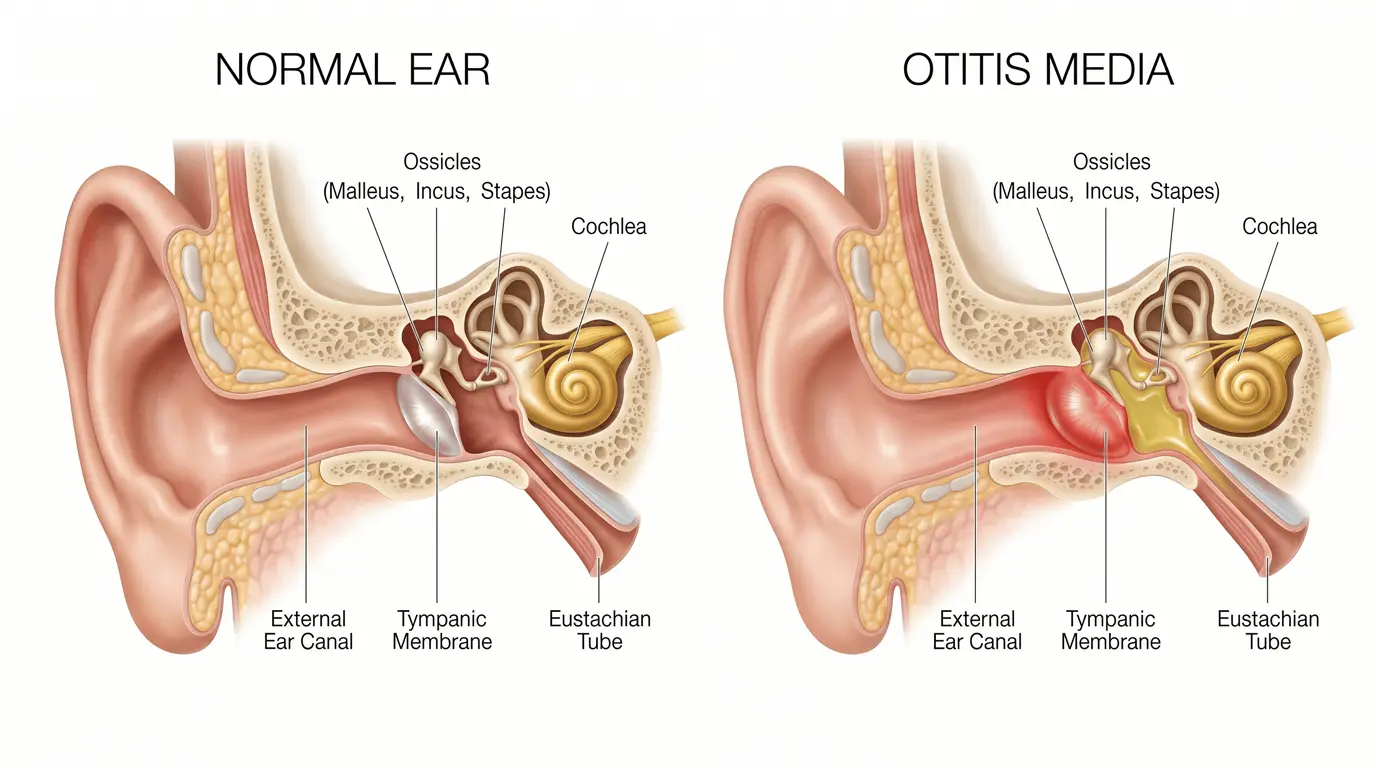
Common symptoms of otitis media include:
- Earache (otalgia) - pain can vary from mild to severe
- A feeling of fullness or pressure in the ear
- Muffled hearing or temporary hearing loss
- Fluid drainage from the ear - may be clear, yellow or pus-like (this may indicate the eardrum has ruptured)
- Fever, particularly in children
- Irritability, especially in young children
- Difficulty sleeping
Causes of otitis media:
- The most common cause is Eustachian tube dysfunction
- The Eustachian tube helps drain fluid and equalise pressure in the middle ear.
- Blockage can be caused by a cold, flu, allergies, sinus infections, or swollen adenoids (tissues at the back of the nose).
- Fluid buildup creates a breeding ground for bacteria or viruses, leading to infection.
Diagnosis and Investigations
Your GP can usually diagnose otitis media by:
- Asking about your symptoms and medical history
- Examining your ear using an otoscope (a lighted instrument) to look at your eardrum
- A pneumatic otoscope may be used to gently puff air against the eardrum to check its movement, which can indicate fluid behind the eardrum.
Further investigations are not usually necessary for simple ear infections. In cases of recurring or persistent infections, or if complications are suspected, your GP may refer you to an ENT (ear, nose, and throat) specialist for further assessment. This may include a hearing test or tympanometry (a test to measure middle ear pressure). In very rare cases imaging such as a CT or MRI scan may be necessary.
Management and Treatment
- Pain relief: Paracetamol or ibuprofen can help relieve earache and fever. Follow the instructions on the packaging or as directed by your pharmacist or GP. These medications are available over-the-counter (OTC).
- Antibiotics: Antibiotics aren't always needed for otitis media as many infections clear up on their own. Your GP may recommend a "wait-and-see" approach for a few days. Antibiotics such as amoxicillin or erythromycin (if allergic to penicillin) may be prescribed if the infection is severe, doesn't improve after a few days, or if you have other medical conditions. These are available on prescription only. Always complete the full course of antibiotics, even if your symptoms improve.
- Decongestants: Over-the-counter decongestant nasal sprays or oral medications like pseudoephedrine or phenylephrine can help open up the Eustachian tubes, but should only be used for a short period (usually no more than three days for sprays) Decongestants are not recommended for infants and young children.
- Antihistamines: If allergies are contributing to your ear infection, antihistamines like cetirizine or loratadine (prescription only in children, OTC in adults) can help reduce allergy symptoms.
- Ear drops: For pain relief, anaesthetic ear drops containing phenazone and lidocaine may be prescribed for both children and adults, though care must be taken if a perforated eardrum is suspected. Antibiotic ear drops are not routinely used for otitis media.
- Auto-insufflation: This technique involves pinching your nose and gently blowing to help open the Eustachian tubes.
- Grommets (Ear tubes): If the infection is recurring, and fluid remains in the ear causing glue ear, a minor surgical procedure to insert grommets (small tubes) into the eardrum may be considered. This helps ventilate the middle ear and prevent fluid build-up. This surgery is usually done as a day case procedure under a short general anaesthetic. The grommets usually fall out naturally after 6-12 months.
Prevention
- Treat colds and flu promptly: Addressing upper respiratory infections can help prevent the spread of infection to the middle ear.
- Manage allergies: If allergies contribute to Eustachian tube dysfunction, managing them effectively can reduce your risk of ear infections.
- Avoid exposure to cigarette smoke: Second-hand smoke can increase the risk of ear infections, especially in children.
- Vaccination: Certain vaccinations, such as the pneumococcal vaccine and the flu vaccine, can help prevent infections that can lead to otitis media.
Outlook/Prognosis
Most cases of otitis media resolve within a few days, even without antibiotics. Persistent or recurrent ear infections can sometimes lead to complications such as hearing loss, eardrum perforation, mastoiditis (infection of the bone behind the ear), or rarely more serious infections like meningitis. Following medical advice and completing the prescribed treatment can help prevent complications and ensure a full recovery.
Need Expert Advice?
Book a consultation with Mr Ahmad Hariri to discuss your symptoms and treatment options.
Book a Consultation