
Mounjaro and lump in the throat

Disclaimer: Disclaimer: This leaflet provides general information and is intended for educational purposes only. It should not be used as a substitute for professional medical advice, diagnosis, or treatment. Always seek the advice of a qualified healthcare professional for any health concerns or before making any decisions related to your health or treatment.
This leaflet may contain links to external websites or resources (e.g. YouTube) for demonstration purposes; however, these links are provided for information only. Clinicol.co.uk is not affiliated with, does not endorse, and is not responsible for the content, accuracy, or copyright compliance of these external sources. Use of these external links is at your own discretion and risk.
Overview
Many people experience a persistent feeling of a lump, tightness, or something stuck in their throat. In medical terms, this is often called “globus sensation” or “globus pharyngeus.” It is a very common reason for people to visit an ear, nose, and throat (ENT) specialist. It is important to know that this feeling is not caused by a physical blockage, such as a tumour or a foreign object, but rather by how the muscles and nerves in your throat are reacting to various triggers.
If you are currently taking Mounjaro (tirzepatide) for weight management or type 2 diabetes, you may be particularly concerned about this sensation. While Mounjaro is a highly effective medication, it is important to understand the relationship between your treatment and your throat health. This leaflet aims to explain why this sensation happens, how it is diagnosed, and what steps you can take to feel better.
Symptoms and Causes
The sensation of a lump in the throat can be unsettling, but it is usually not a sign of a serious physical obstruction. It is often linked to how we perceive sensations in our throat, which can be heightened by stress, muscle tension, or irritation from stomach acid.
Symptoms
People describe this feeling in many different ways. You might feel like there is a ball of mucus, a tight band, or a piece of food stuck in your throat. Common features include:
- A feeling of pressure or tightness in the front of the neck.
- The sensation that you need to clear your throat frequently.
- Feeling the “lump” more when you are swallowing your own saliva, rather than when you are eating or drinking.
- The sensation often disappears or improves while you are eating or drinking.
- It is typically painless.
- The feeling may come and go, often getting worse during times of stress or anxiety.
Causes
There are several reasons why this sensation occurs. Often, it is a combination of factors rather than one single cause:
- Muscle Tension: The muscles in the throat can become tense due to stress, anxiety, or even poor posture. This tension creates a feeling of tightness.
- Reflux: Gastro-oesophageal reflux disease (GORD), where stomach acid travels up into the throat, can irritate the delicate lining of the throat, leading to a sensation of a lump.
- Medication Side Effects: Mounjaro works by slowing down your digestion, which can sometimes lead to increased burping, bloating, and acid reflux. This reflux can irritate the throat and trigger the globus sensation.
- Sensitivity: Sometimes, the nerves in the throat become overly sensitive, making normal sensations feel like a physical lump.
- Thyroid Concerns: While rare, it is important to be aware that Mounjaro carries a warning regarding thyroid health. Animal studies have shown a potential link to thyroid C-cell tumours. Because of this, any new lump or swelling in the neck, persistent hoarseness, or difficulty swallowing must be reported to your doctor immediately to rule out any thyroid-related issues.
Diagnosis and Investigations
Because the sensation of a lump can be caused by many different things, your doctor will want to perform a thorough assessment to ensure nothing serious is being missed.
Diagnosis
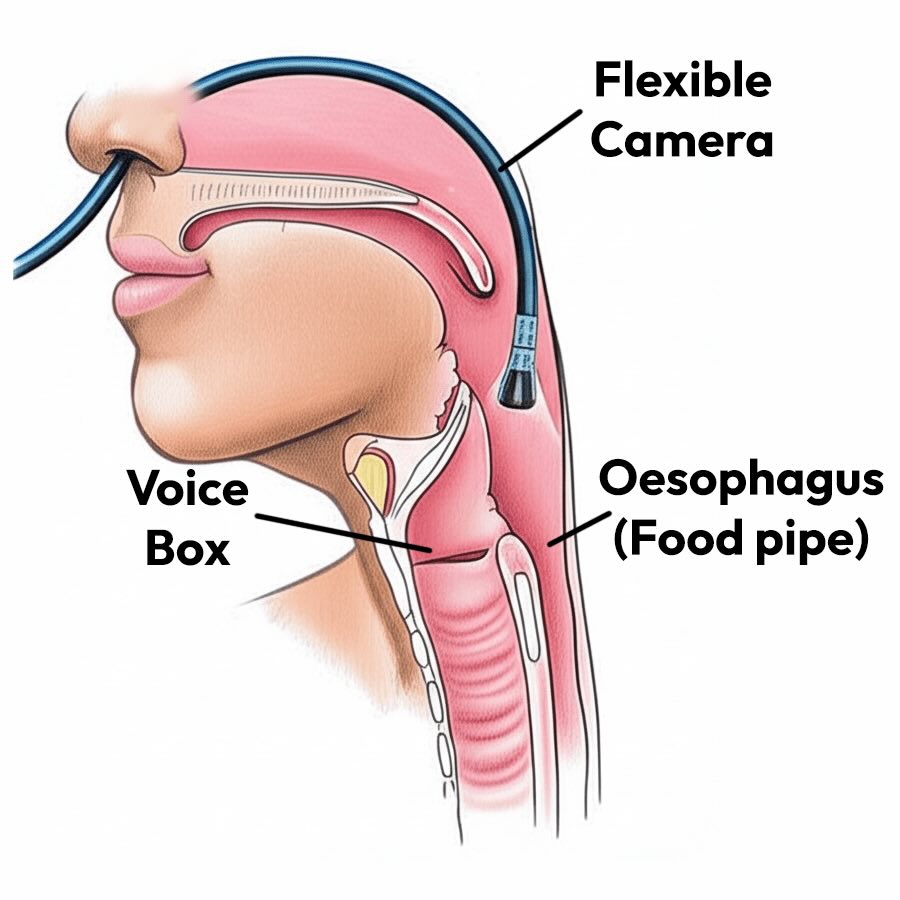
Your doctor will start by taking a detailed history of your symptoms. They will ask how long you have felt the lump, whether it affects your ability to swallow food or liquids, and if you have any other symptoms like weight loss or hoarseness. They will also perform a physical examination of your neck to check for any visible or palpable (able to be felt) swellings.
Investigations
To be certain of the cause, your specialist may perform a nasolaryngoscopy. This is a simple, quick procedure where a thin, flexible tube with a tiny camera on the end is passed through your nose to look directly at your throat and voice box. This allows the doctor to see if there is any redness, swelling, or signs of reflux. In most cases, this examination shows that the throat is clear and healthy, which can be very reassuring. If there is any concern about your thyroid, your doctor may also suggest blood tests or an ultrasound scan of your neck.
Management and Treatment
Managing this sensation is often about addressing the underlying triggers. If your doctor confirms that the cause is not a physical obstruction, they may suggest the following:
- Reflux Management: If acid reflux is the culprit, your doctor may prescribe proton pump inhibitors (PPIs), which are medications that reduce the amount of acid your stomach produces.
- Lifestyle Adjustments: Small changes can make a big difference. Try to eat slowly, chew your food thoroughly, and avoid lying down immediately after a meal. Reducing your intake of caffeine, alcohol, and fizzy drinks can also help reduce irritation.
- Hydration: Drink at least 1.5 litres of water throughout the day. Sip it slowly rather than gulping it down. This helps keep the throat moist and relaxed.
- Speech and Language Therapy: A therapist can teach you specific exercises to relax the muscles in your neck and shoulders, and help you stop the habit of constant throat clearing.
- Stress Reduction: Since stress is a major trigger, finding ways to relax—such as deep breathing exercises or gentle physical activity—can significantly reduce the sensation.
- Medication Review: If you are taking Mounjaro, discuss your symptoms with your prescribing team. They may be able to offer advice on managing the gastrointestinal side effects that might be contributing to your throat discomfort.
Prevention
Preventing the return of this sensation often involves maintaining good “vocal hygiene” and managing your overall health:
- Stop Throat Clearing: Every time you clear your throat, the vocal cords slam together, which causes more irritation. When you feel the urge to clear your throat, take a small sip of water instead.
- Dietary Habits: Avoid foods that trigger your reflux, such as spicy or very fatty foods.
- Quit Smoking: Smoking is a major irritant to the throat lining and should be avoided.
- Stay Consistent: If you are on medication for reflux, take it exactly as prescribed, even if you start to feel better.
Outlook / Prognosis
For the vast majority of people, the sensation of a lump in the throat is a benign (non-harmful) condition that improves with time and the right management. It is important to be patient, as it can take several weeks or even months for the throat tissues to fully settle down, especially if reflux has been a long-term issue.
Living with this condition is entirely manageable. By focusing on lifestyle changes and addressing the root causes, most people find that the sensation fades away. However, you should always seek medical advice if you notice any “red flag” symptoms. These include difficulty or pain when swallowing, unexplained weight loss, a persistent change in your voice (hoarseness), or a new, visible lump in your neck. If you are taking Mounjaro, it is vital to keep your healthcare team informed of any new neck symptoms so they can monitor your health appropriately. With the right support and care, you can successfully manage this condition and return to your normal daily activities.
Need Expert Advice?
Book a consultation with Mr Ahmad Hariri to discuss your symptoms and treatment options.
Book a Consultation