
Oropharyngeal Cancer (HPV Positive)

Disclaimer: Disclaimer: This leaflet provides general information and is intended for educational purposes only. It should not be used as a substitute for professional medical advice, diagnosis, or treatment. Always seek the advice of a qualified healthcare professional for any health concerns or before making any decisions related to your health or treatment.
This leaflet may contain links to external websites or resources (e.g. YouTube) for demonstration purposes; however, these links are provided for information only. Clinicol.co.uk is not affiliated with, does not endorse, and is not responsible for the content, accuracy, or copyright compliance of these external sources. Use of these external links is at your own discretion and risk.
Overview
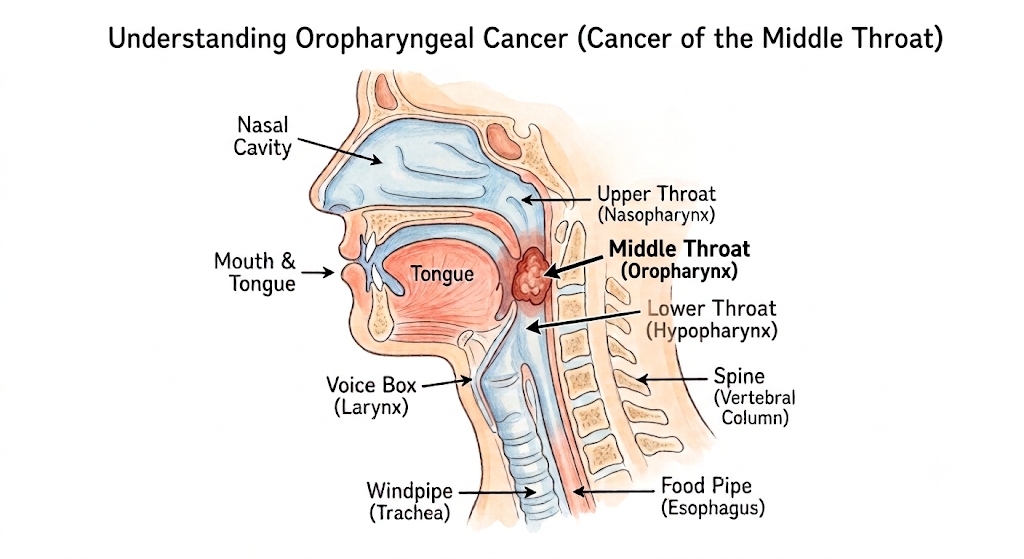
Oropharyngeal cancer is a type of cancer that develops in the middle part of your throat, known as the oropharynx. This area includes your tonsils, the back third of your tongue, the soft part of the roof of your mouth, and the side and back walls of your throat. When we say a cancer is "HPV-positive," it means that the cells of the tumour contain the Human Papillomavirus (HPV).
This condition is becoming more common in the UK. It is important to know that while this diagnosis can feel overwhelming, HPV-positive oropharyngeal cancer is distinct from other types of throat cancer. It often affects people who are otherwise healthy, and it generally responds very well to treatment. Because of the way these cells behave, patients with this specific type of cancer often have a better chance of a successful recovery compared to those with other forms of throat cancer.
Symptoms and Causes
Understanding why this condition happens and what to look out for is the first step in taking control of your health. While the thought of cancer is frightening, being aware of the signs allows for early detection, which is the most important factor in achieving a good outcome.
Symptoms
The symptoms of oropharyngeal cancer can sometimes be subtle, which is why it is vital to see a doctor if you notice anything unusual that does not go away. Common signs include:
- A persistent sore throat: A feeling of soreness that lasts for several weeks and does not improve with standard care.
- A lump in the neck: You might feel a swelling or a firm lump on the side of your neck that does not seem to be shrinking.
- Difficulty swallowing: You may feel like food is getting stuck in your throat or experience pain when you swallow.
- Voice changes: Your voice might sound different, perhaps more muffled or hoarse, for a long period.
- Ear pain: Sometimes, pain from the throat can be felt in the ear, even if there is nothing wrong with the ear itself.
If you have any of these symptoms for more than a few weeks, you should visit your GP or dentist. They can perform an initial check and, if necessary, refer you to a specialist for a closer look.
Causes
The primary cause of this condition is a persistent infection with high-risk types of the Human Papillomavirus (HPV), most commonly HPV type 16. HPV is a very common virus that most people will encounter at some point in their lives. It is spread through close skin-to-skin contact, typically during sexual activity. In the vast majority of people, the body’s immune system clears the virus naturally without any issues.
However, in a small number of people, the virus remains in the body for many years. Over time, this long-term presence can cause changes in the cells of the throat, which may eventually lead to cancer. Other factors, such as smoking tobacco and drinking alcohol, can also increase the risk of developing throat cancers. While HPV-positive patients are often younger and may not be smokers or heavy drinkers, avoiding these habits is still a very important way to protect your overall health.
Diagnosis and Investigations
If you are referred to a specialist, they will guide you through a series of tests to get a clear picture of what is happening. This process is designed to be thorough so that your medical team can create the best possible plan for you.
Diagnosis
Your specialist will start by asking about your medical history and your symptoms. They will perform a physical examination of your mouth and throat. This often involves using a small, flexible camera (a nasendoscope) passed gently through your nose to get a clear view of the back of your throat. They will also feel your neck to check for any enlarged lymph nodes (the small glands that help fight infection).
Investigations
To confirm the diagnosis, several tests are required:
- Biopsy: This is the most important test. A small sample of tissue is taken from the affected area in your throat so it can be examined under a microscope.
- HPV Testing: Once the biopsy confirms cancer, the tissue is tested for HPV. This is done using a protein test called p16, followed by a more specific test to confirm the presence of the virus. Knowing your HPV status is essential because it helps your team choose the most effective treatment.
- Imaging scans: You will likely have an MRI scan to look at the primary site of the cancer in detail, and a CT scan to check your neck and chest. A PET-CT scan—a special scan that uses a mild radioactive tracer to highlight active cancer cells—is also commonly used to help plan your treatment and check how well you are responding later on.
- Examination under anaesthetic: You may be asked to have a brief procedure while asleep so that your specialist can examine your throat very carefully and take any necessary tissue samples in a controlled environment.
Management and Treatment
Your treatment plan will be decided by a multidisciplinary team—a group of experts including surgeons, oncologists (cancer specialists), and radiologists—who work together to ensure you get the best care. Because HPV-positive cancer responds well to treatment, the goal is to provide the most effective therapy while maintaining your quality of life.
Treatment options often include:
- Radiotherapy: This uses high-energy beams to destroy cancer cells. It is often used as a primary treatment.
- Surgery: In some cases, especially for smaller tumours, surgery may be used to remove the cancer. This is often done through the mouth using specialised instruments (transoral surgery). Your surgeon may also need to check or remove lymph nodes in your neck.
- Chemotherapy: This involves using medication to kill cancer cells. It is often combined with radiotherapy to make the treatment more effective.
Your team will discuss which combination is right for you. They will also support you with any side effects, such as difficulty swallowing or changes in taste, by involving speech and language therapists and dietitians to ensure you are eating and drinking safely.
Prevention
The most effective way to prevent HPV-related cancers is through vaccination. The NHS offers the HPV vaccine to children aged 12 to 13, and it is also available to certain groups of young people who may have missed it. The vaccine is highly effective at preventing the types of HPV that are most likely to cause cancer.
Beyond vaccination, you can reduce your overall risk by following general health advice. This includes stopping smoking and keeping your alcohol intake within the recommended limits (no more than 14 units per week). Maintaining a healthy lifestyle helps your immune system stay strong, which is your body's best natural defence against persistent viral infections.
Outlook / Prognosis
The outlook for people with HPV-positive oropharyngeal cancer is generally very positive. Because these cancers are biologically different from those not linked to the virus, they are much more sensitive to treatments like radiotherapy and chemotherapy. This means that many patients achieve a full recovery and go on to live long, healthy lives after their treatment is finished.
After your treatment, you will have regular follow-up appointments. These are important for checking your progress, managing any lingering side effects, and ensuring you have the support you need to return to your normal daily activities. While the recovery process can take time, your medical team will be with you throughout the journey. It is normal to feel anxious during this time, but remember that the high success rates for this type of cancer are a very encouraging sign for your future.
Need Expert Advice?
Book a consultation with Mr Ahmad Hariri to discuss your symptoms and treatment options.
Book a Consultation