
Outer Ear Infection (Otitis Externa)

Disclaimer: Disclaimer: This leaflet provides general information and is intended for educational purposes only. It should not be used as a substitute for professional medical advice, diagnosis, or treatment. Always seek the advice of a qualified healthcare professional for any health concerns or before making any decisions related to your health or treatment.
This leaflet may contain links to external websites or resources (e.g. YouTube) for demonstration purposes; however, these links are provided for information only. Clinicol.co.uk is not affiliated with, does not endorse, and is not responsible for the content, accuracy, or copyright compliance of these external sources. Use of these external links is at your own discretion and risk.
Overview
Otitis externa, also known as "swimmer's ear", is an inflammation or infection of the outer ear canal, the tube that runs from your eardrum to the outside of your head. It can be quite uncomfortable, but it's usually easily treated.
Symptoms and Causes
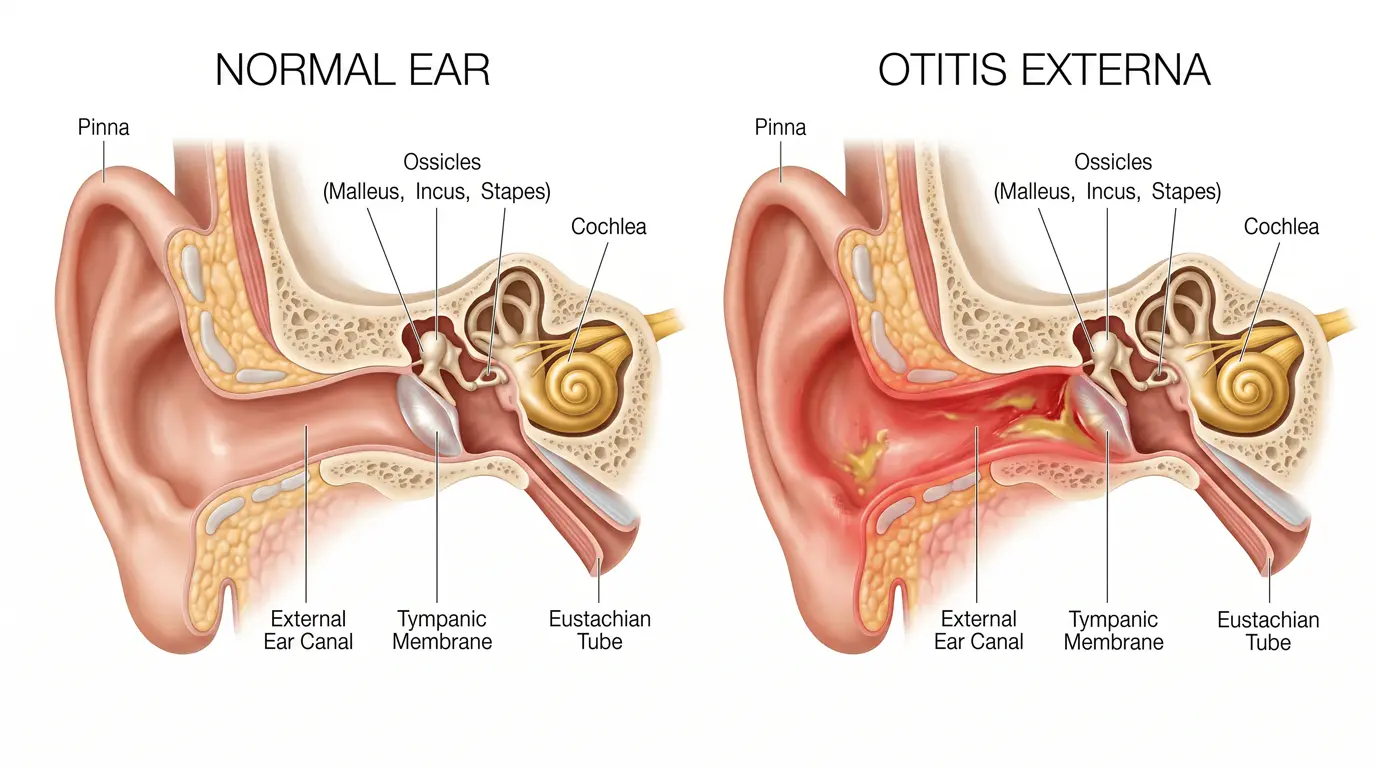
Common symptoms of otitis externa include:
- Itching in the ear canal
- Ear pain, sometimes extending to the jaw
- A feeling of fullness or blockage in the ear
- Temporary muffled hearing
- Discharge from the ear, which can be clear, yellowish, or sometimes bloody
Several things can trigger otitis externa:
- Water exposure: Frequent swimming or showering can trap water in the ear canal, creating a moist environment ideal for bacterial or fungal growth. This is why it's sometimes called "swimmer's ear."
- Skin irritation: Scratching the ear canal with fingers, cotton buds, or other objects can damage the delicate skin, making it vulnerable to infection.
- Skin conditions: Eczema, psoriasis, or seborrheic dermatitis in the ear canal can predispose to otitis externa.
- Allergies: Reactions to hair products, shampoos, or earrings can irritate the ear canal.
Diagnosis and Investigations
Usually, I can diagnose otitis externa based on your symptoms and by looking into your ear canal with an otoscope. Sometimes, I may take a small sample of the discharge to identify the specific bacteria or fungus causing the infection, especially if it's severe or not responding to initial treatment.
Management and Treatment
Most cases of otitis externa clear up with eardrops. These usually contain:
- An antibiotic: To fight bacterial infection (e.g., Ciprofloxacin 0.3% + Fluocinolone 0.025% ear drops, available by prescription as Ciloxan).
- A steroid: To reduce inflammation and relieve itching (e.g., Beclometasone 0.025% ear drops, available by prescription as Audicort).
How to use eardrops:
- Lie on your side with the affected ear facing up.
- Gently pull your earlobe back and upwards to straighten the ear canal.
- Instil the prescribed number of drops into the ear canal.
- Remain lying down for a few minutes to allow the drops to reach the eardrum.
- Gently press the tragus (the small flap of cartilage at the front of the ear canal) a few times to help the drops penetrate further.
In some cases, I may prescribe:
- Painkillers: Such as paracetamol or ibuprofen, which are available over the counter (OTC), to help manage pain.
- Oral antibiotics: If the infection is severe or has spread beyond the ear canal.
- Ear wick: If the ear canal is very swollen, a small wick made of gauze or sponge may be inserted to help deliver the eardrops deeper into the canal. This is usually done in the clinic.
Prevention
Here are some tips to help prevent otitis externa:
- Keep ears dry: Dry your ears thoroughly after swimming or showering. Use a towel to gently pat the outer ear, or a hairdryer on a low setting. Avoid using cotton buds, as these can push debris further into the canal and damage the skin.
- Use earplugs when swimming: Especially in lakes, rivers, or pools. Opt for non-silicone earplugs.
- Avoid scratching: Don't insert fingers, cotton buds, or other objects into the ear canal.
- Manage skin conditions: If you have eczema, psoriasis, or other skin conditions affecting the ear canal, follow your dermatologist's advice to keep the area healthy.
Outlook / Prognosis
With proper treatment, most cases of otitis externa improve within a week or two. If your symptoms don't improve or worsen after a few days of treatment, please contact us to arrange a follow-up appointment. In rare cases, complications can occur, such as a spread of infection to surrounding tissues. If you experience severe pain, fever, swelling around the ear, or facial weakness, seek immediate medical attention.
Need Expert Advice?
Book a consultation with Mr Ahmad Hariri to discuss your symptoms and treatment options.
Book a Consultation