
Papillary Thyroid Cancer

Disclaimer: Disclaimer: This leaflet provides general information and is intended for educational purposes only. It should not be used as a substitute for professional medical advice, diagnosis, or treatment. Always seek the advice of a qualified healthcare professional for any health concerns or before making any decisions related to your health or treatment.
This leaflet may contain links to external websites or resources (e.g. YouTube) for demonstration purposes; however, these links are provided for information only. Clinicol.co.uk is not affiliated with, does not endorse, and is not responsible for the content, accuracy, or copyright compliance of these external sources. Use of these external links is at your own discretion and risk.
Overview
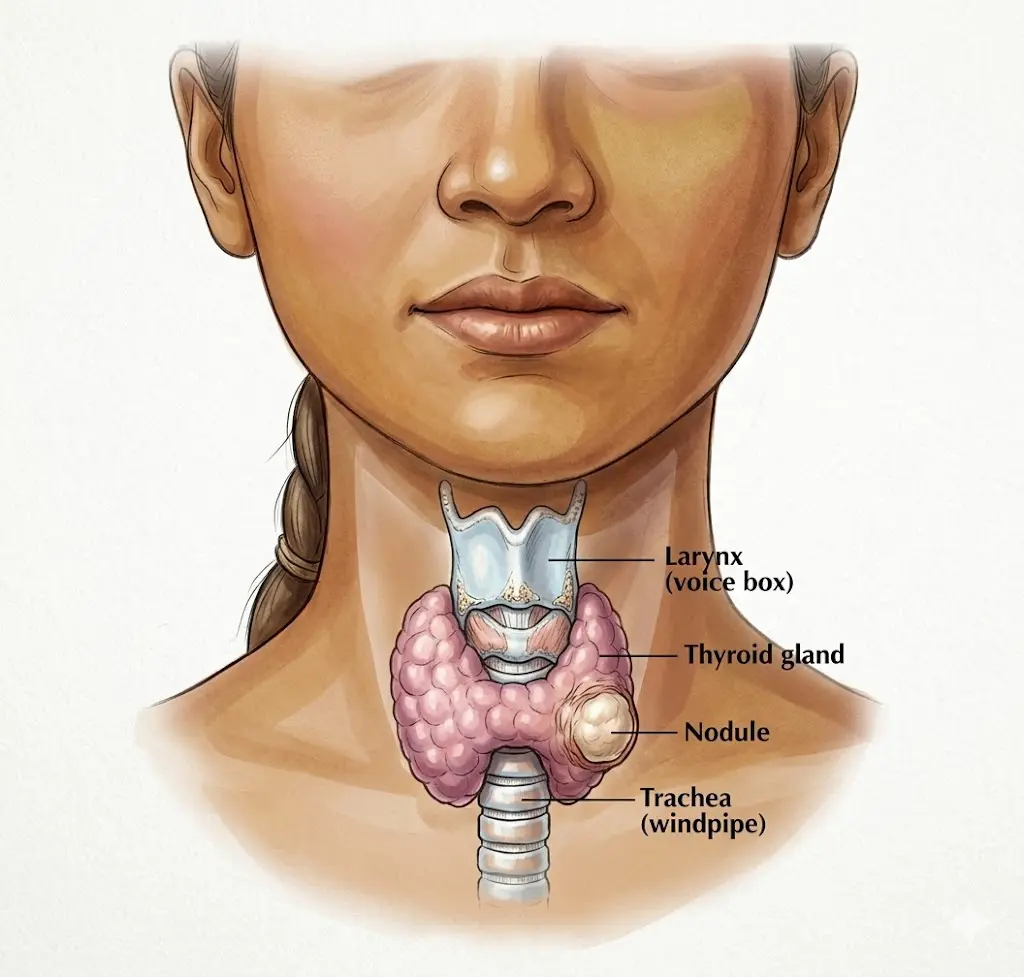
Papillary thyroid cancer is the most common form of thyroid cancer. The thyroid is a small, butterfly-shaped gland located at the base of your neck. Its main job is to produce hormones that control how your body uses energy, which is known as your metabolism. Papillary thyroid cancer belongs to a group called “differentiated thyroid cancers.” This means that the cancer cells still look and behave very much like normal, healthy thyroid cells. Because of this, it is often a very treatable condition, and most people who are diagnosed with it go on to live full, healthy lives.
Symptoms and Causes
It is natural to feel worried when you hear the word “cancer,” but it is important to know that this condition often grows very slowly. Many people do not notice any changes at all in the early stages, and the condition is frequently found during routine check-ups or when investigating other neck issues.
Symptoms
While many early-stage cases do not cause any discomfort, you should see a doctor if you notice any of the following changes in your neck:
- A lump in the neck: This is the most common sign. It might feel like a firm or growing bump near the base of your throat.
- Voice changes: If you notice your voice becoming hoarse or raspy and this does not go away after a few weeks, it should be checked.
- Difficulty swallowing: You might feel as though food is getting stuck or that there is a persistent “lump” in your throat when you try to eat or drink.
- Rapid growth: Any noticeable or quick change in the size of your neck or a visible swelling (goitre) requires a professional assessment.
Causes
In most cases, the exact reason why someone develops papillary thyroid cancer is unknown. It is not something you have done to cause it. However, there are a few factors that can increase the risk:
- Previous radiation: If you had radiation treatment to the head or neck area earlier in your life, this can slightly increase your risk.
- Family history: Having close family members who have had thyroid cancer can sometimes play a role, though this is less common.
- General health: While these factors can contribute, most people diagnosed with this condition have no clear “trigger,” and it is simply a random occurrence in the body’s cells.
Diagnosis and Investigations
If you visit your GP with concerns about a neck lump, they will perform a physical examination and ask about your medical history. If they feel it is necessary, they will refer you to a specialist team who are experts in head and neck conditions.
Diagnosis
The specialist will examine your neck carefully to feel the size and texture of the thyroid gland. They will ask you about your symptoms, such as how long the lump has been there and if you have noticed any changes in your breathing or swallowing. They will also review your general health to plan the best way to investigate the area.
Investigations
To get a clear picture of what is happening, the medical team will use several tests:
- Blood tests: These check your thyroid hormone levels to see how well your gland is working.
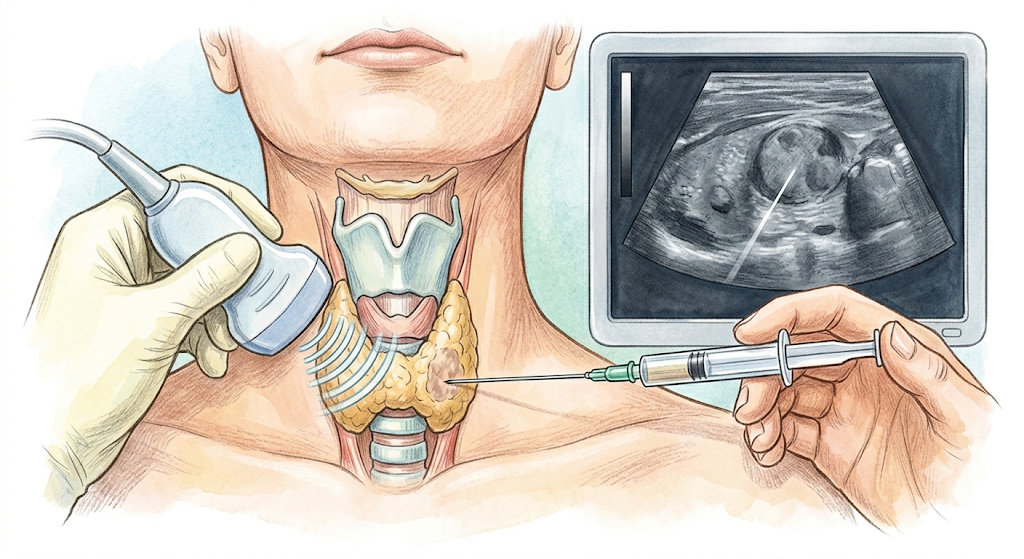
- Ultrasound scan: This uses sound waves to create an image of your thyroid. It is very good at showing the size of any lumps and whether they look suspicious.
- Fine Needle Aspiration Cytology (FNAC): If the ultrasound shows a lump that needs closer inspection, a doctor will use a very thin needle to take a tiny sample of cells from the thyroid. These cells are then looked at under a microscope to see if they are cancerous.
- Further imaging: In some cases, if the doctors need more detail, they might use an MRI or CT scan. These provide detailed “slice-by-slice” pictures of the neck area.
Management and Treatment
The treatment plan is always tailored to your specific situation, including the size of the cancer and your overall health. A team of different specialists, known as a multidisciplinary team, will meet to decide the best path forward for you.
The primary treatment is usually surgery to remove either part of the thyroid (hemithyroidectomy) or the entire gland (total thyroidectomy). If there is any concern that the cancer has spread to nearby lymph nodes (small glands that are part of your immune system), these may also be removed during the same operation.
After surgery, you may need to take daily hormone tablets. These tablets replace the hormones your thyroid used to make, ensuring your metabolism stays balanced. In some cases, you may be offered radioactive iodine (RAI) therapy. This involves swallowing a capsule containing a small amount of radioactive iodine. The thyroid cells—including any remaining cancer cells—absorb this iodine, which then destroys them. This is a very targeted way to clear up any microscopic cells left behind after surgery.
If you have any questions about your treatment, your dedicated nurse specialist is there to support you and explain each step of the process.
Prevention
Because the exact cause of papillary thyroid cancer is often unknown, there is no specific way to prevent it. However, maintaining good general health is always beneficial. If you have a known family history of thyroid conditions, it is a good idea to mention this to your GP so they can keep an eye on your neck health during routine check-ups. If you notice any new lumps or changes in your voice, seeking medical advice early is the best way to ensure that any issues are caught and managed quickly.
Outlook / Prognosis
The outlook for papillary thyroid cancer is very positive. Because it is a “differentiated” cancer, it responds very well to treatment. In fact, about 90% of people are cured, and for those with low-risk disease, this figure can be as high as 98%. Even if the cancer has spread to nearby lymph nodes, the success rate for treatment remains high.
Living with this condition involves regular follow-up appointments. These will include blood tests to measure a protein called thyroglobulin, which acts as a marker for thyroid cells, and regular thyroid function tests to make sure your hormone replacement dose is correct. You will also have periodic neck ultrasound scans to ensure everything remains clear. While the diagnosis can feel overwhelming, remember that you are being monitored by a specialist team whose goal is to keep you healthy and catch any changes early. Most patients return to their normal daily activities and lead full, active lives after their treatment is complete.
Need Expert Advice?
Book a consultation with Mr Ahmad Hariri to discuss your symptoms and treatment options.
Book a Consultation