
Snoring & Sleep Apnoea

Disclaimer: Disclaimer: This leaflet provides general information and is intended for educational purposes only. It should not be used as a substitute for professional medical advice, diagnosis, or treatment. Always seek the advice of a qualified healthcare professional for any health concerns or before making any decisions related to your health or treatment.
This leaflet may contain links to external websites or resources (e.g. YouTube) for demonstration purposes; however, these links are provided for information only. Clinicol.co.uk is not affiliated with, does not endorse, and is not responsible for the content, accuracy, or copyright compliance of these external sources. Use of these external links is at your own discretion and risk.
Overview
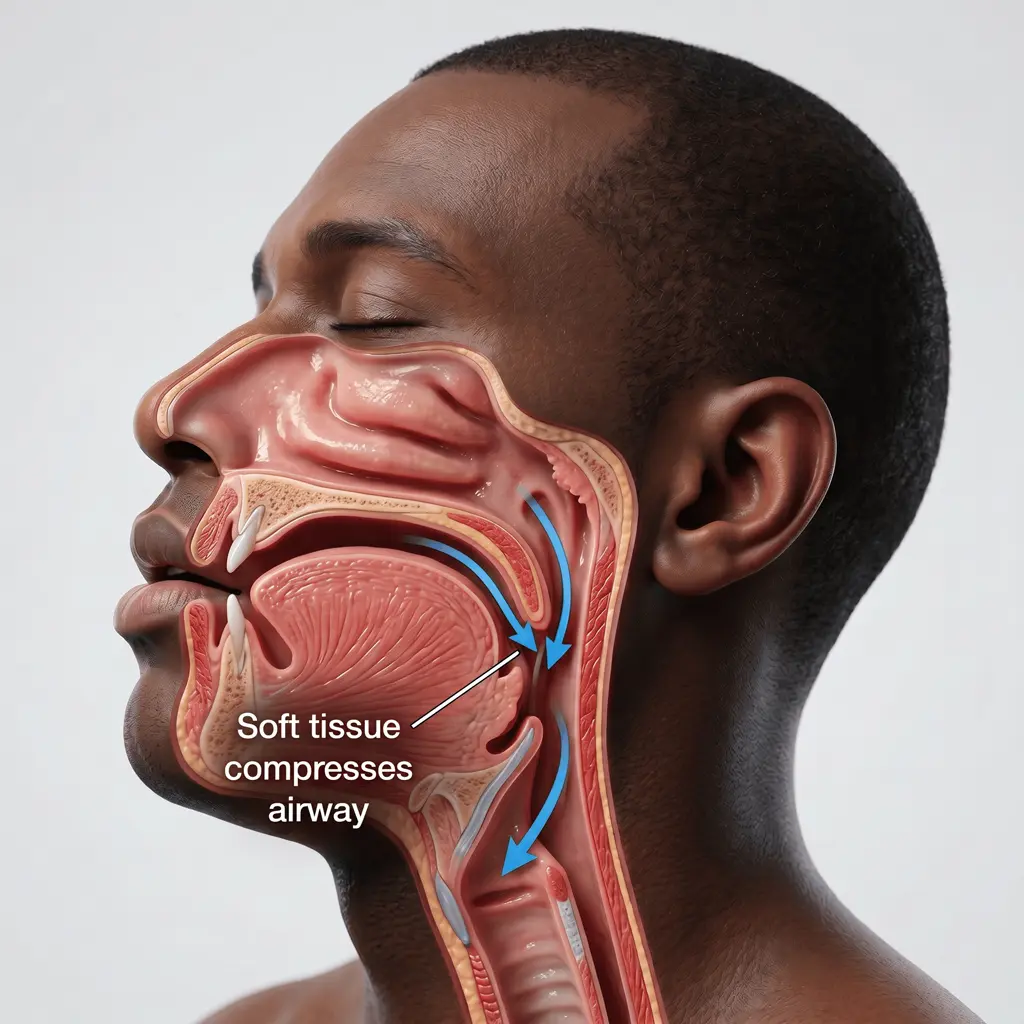
Snoring is the hoarse or harsh sound that occurs when air flows past relaxed tissues in your throat, causing them to vibrate as you breathe. Nearly everyone snores occasionally, but for some people, it can be a chronic problem. Sometimes, snoring can also be a sign of a serious sleep disorder called obstructive sleep apnoea (OSA).
Obstructive sleep apnoea occurs when the muscles that support the soft tissues in your throat, such as your tongue and soft palate, temporarily relax. When these muscles relax, your airway is narrowed or closed, and breathing is momentarily cut off. This can happen hundreds of times a night, disrupting sleep and depriving your body of adequate oxygen.
Symptoms and Causes
Snoring Symptoms:
- Loud snoring that may be heard even through closed doors
- Gasping or choking during sleep
- Excessive daytime sleepiness
- Morning headaches
- Difficulty concentrating
- Irritability
- High blood pressure
- Sore throat or dry mouth upon awakening
Obstructive Sleep Apnoea Symptoms:
- All of the above snoring symptoms
- Pauses in breathing during sleep, witnessed by another person
- Waking up suddenly with shortness of breath
- Loud gasping or snorting sounds as breathing resumes
Causes of Snoring and OSA:
- Anatomy: Some people have a naturally narrow throat, enlarged tonsils or adenoids, or a long soft palate or uvula, making them more prone to snoring and OSA.
- Obesity: Excess weight can put pressure on the throat, narrowing the airway.
- Alcohol Consumption: Alcohol relaxes the throat muscles, increasing the likelihood of snoring and OSA.
- Smoking: Smoking irritates the nasal passages and throat, increasing inflammation and mucus production, which can contribute to snoring and OSA.
- Nasal Congestion: A stuffy nose can make it difficult to breathe through your nose, leading to mouth breathing and snoring.
- Allergies: Allergic reactions can cause inflammation and swelling in the nasal passages and throat, contributing to snoring and OSA.
- Medications: Certain medications, such as sedatives and muscle relaxants, can relax the throat muscles and worsen snoring and OSA.
- Sleeping Position: Sleeping on your back can make the tongue and soft palate fall back into the throat, narrowing the airway.
- Age: Snoring becomes more common with age as throat muscles lose tone.
- Family History: There may be a genetic predisposition to snoring and OSA.
- Medical Conditions: Certain medical conditions, such as hypothyroidism and acromegaly, can contribute to snoring and OSA.
Diagnosis and Investigations
If you suspect that you or your partner has OSA, it is essential to consult a healthcare professional. They will review your medical history and symptoms, conduct a physical examination, and may recommend one or more of the following tests:
- Polysomnography (PSG): This is an overnight sleep study conducted in a sleep lab. It monitors various aspects of your sleep, including brain waves, eye movements, heart rate, breathing patterns, and blood oxygen levels. PSG is considered the gold standard for diagnosing OSA.
- Home Sleep Apnoea Testing (HSAT): This is a simplified version of PSG that can be done at home. It usually measures breathing patterns, blood oxygen levels, and airflow. HSAT is less comprehensive than PSG but can be a convenient option for some people.
- Imaging Studies: X-rays, CT scans, or MRI scans of the head and neck may be done to evaluate the structure of the airway and identify any anatomical abnormalities.
- Endoscopy: A flexible endoscope may be inserted through the nose or mouth to visualize the throat and airway directly.
Management and Treatment
Treatment for snoring and OSA depends on the severity of the condition and underlying causes. Options may include:
Lifestyle Changes:
- Weight Loss: Losing even a small amount of weight can significantly reduce snoring and OSA symptoms.
- Avoiding Alcohol and Smoking: These habits relax throat muscles and worsen snoring and OSA.
- Treating Nasal Congestion: Using nasal decongestants, nasal saline sprays, or allergy medications can improve airflow through the nose and reduce snoring.
- Changing Sleep Position: Sleeping on your side can help prevent the tongue and soft palate from collapsing into the throat.
- Regular Exercise: Exercise can improve overall health, including sleep quality and muscle tone, which can help reduce snoring.
Medical Devices:
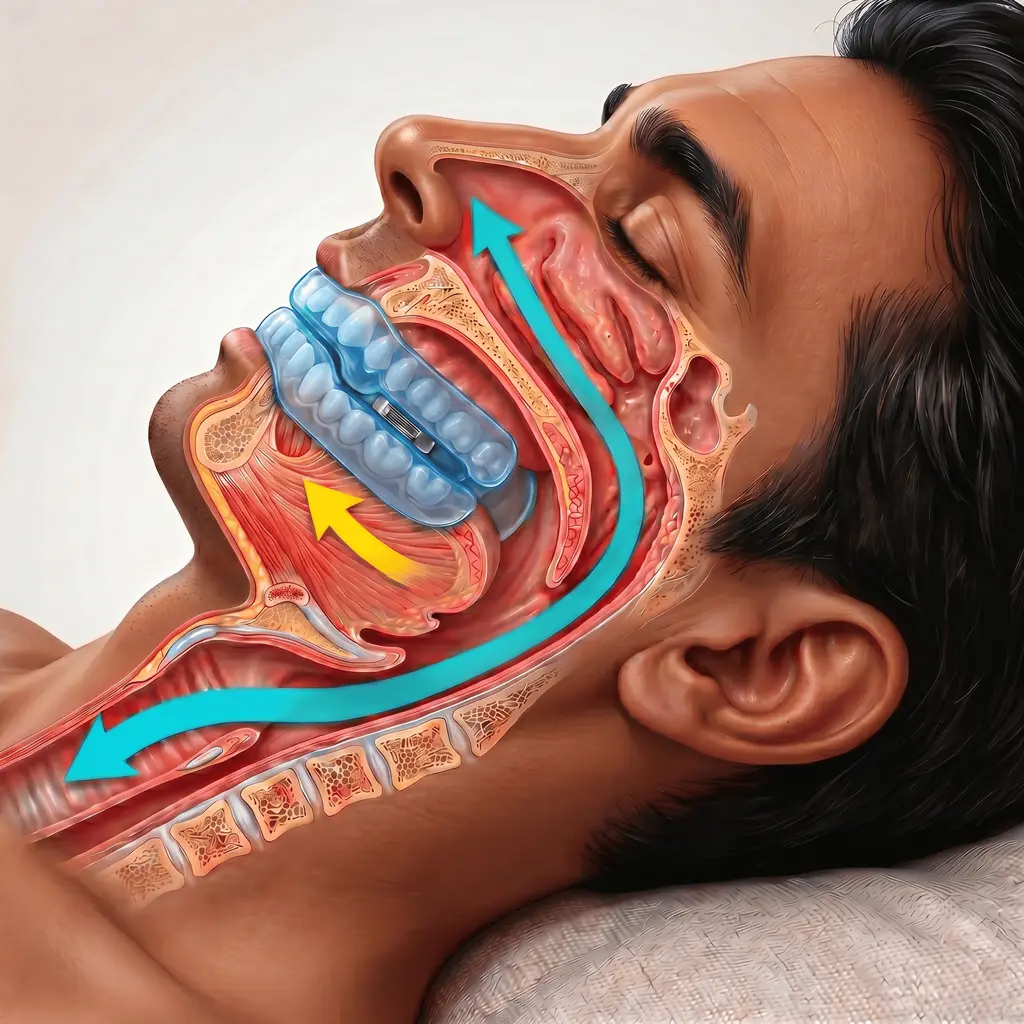
- Oral Appliances: These custom-fit devices are worn in the mouth during sleep to reposition the jaw and tongue, keeping the airway open.
- Continuous Positive Airway Pressure (CPAP) Machine: This is the most effective treatment for moderate to severe OSA. A CPAP machine delivers a constant stream of pressurized air through a mask worn over the nose or nose and mouth, keeping the airway open during sleep.
- Bilevel Positive Airway Pressure (BiPAP) Machine: This is similar to CPAP but delivers two different levels of pressure: a higher pressure when you inhale and a lower pressure when you exhale. BiPAP can be more comfortable for some people than CPAP.
- Adaptive Servo-Ventilation (ASV) Machine: This is a newer type of machine that automatically adjusts the air pressure based on your breathing patterns.
Surgery:
Surgery may be an option in some cases, such as when there are anatomical abnormalities in the throat or nose. Surgical procedures may include:
- Uvulopalatopharyngoplasty (UPPP): This procedure removes excess tissue in the throat, such as the uvula, soft palate, and tonsils.
- Tonsillectomy and/or Adenoidectomy: This involves removing the tonsils and/or adenoids, which can be enlarged and obstruct the airway.
- Septoplasty: This corrects a deviated septum, which is a crooked wall between the nostrils.
- Turbinate Reduction: This reduces the size of the turbinates, which are bony structures inside the nose that can be enlarged and obstruct airflow.
- Maxillomandibular Advancement (MMA): This is a more complex procedure that involves moving the upper and lower jaws forward to enlarge the airway.
- Hypoglossal Nerve Stimulation (HNS): This newer procedure involves implanting a device that stimulates the hypoglossal nerve, which controls the tongue muscles, keeping the airway open during sleep.
Prevention
Many of the lifestyle changes mentioned above can also help prevent snoring and OSA. These include:
- Maintaining a healthy weight
- Avoiding alcohol and smoking
- Treating nasal congestion
- Sleeping on your side
- Regular exercise
Outlook / Prognosis
The outlook for snoring and OSA depends on the severity of the condition and whether it is treated. Mild snoring may not require any treatment, while severe OSA can have serious health consequences if left untreated.
With appropriate treatment, most people with snoring and OSA can significantly improve their sleep quality and reduce their risk of complications. Lifestyle changes and medical devices can be very effective in managing these conditions. Surgery may be necessary in some cases, but it is generally reserved for people who do not respond to other treatments. It's crucial to consult with a healthcare professional for diagnosis and personalised treatment recommendations.
Need Expert Advice?
Book a consultation with Mr Ahmad Hariri to discuss your symptoms and treatment options.
Book a Consultation