
Thyroid Cancer

Disclaimer: Disclaimer: This leaflet provides general information and is intended for educational purposes only. It should not be used as a substitute for professional medical advice, diagnosis, or treatment. Always seek the advice of a qualified healthcare professional for any health concerns or before making any decisions related to your health or treatment.
This leaflet may contain links to external websites or resources (e.g. YouTube) for demonstration purposes; however, these links are provided for information only. Clinicol.co.uk is not affiliated with, does not endorse, and is not responsible for the content, accuracy, or copyright compliance of these external sources. Use of these external links is at your own discretion and risk.
Overview
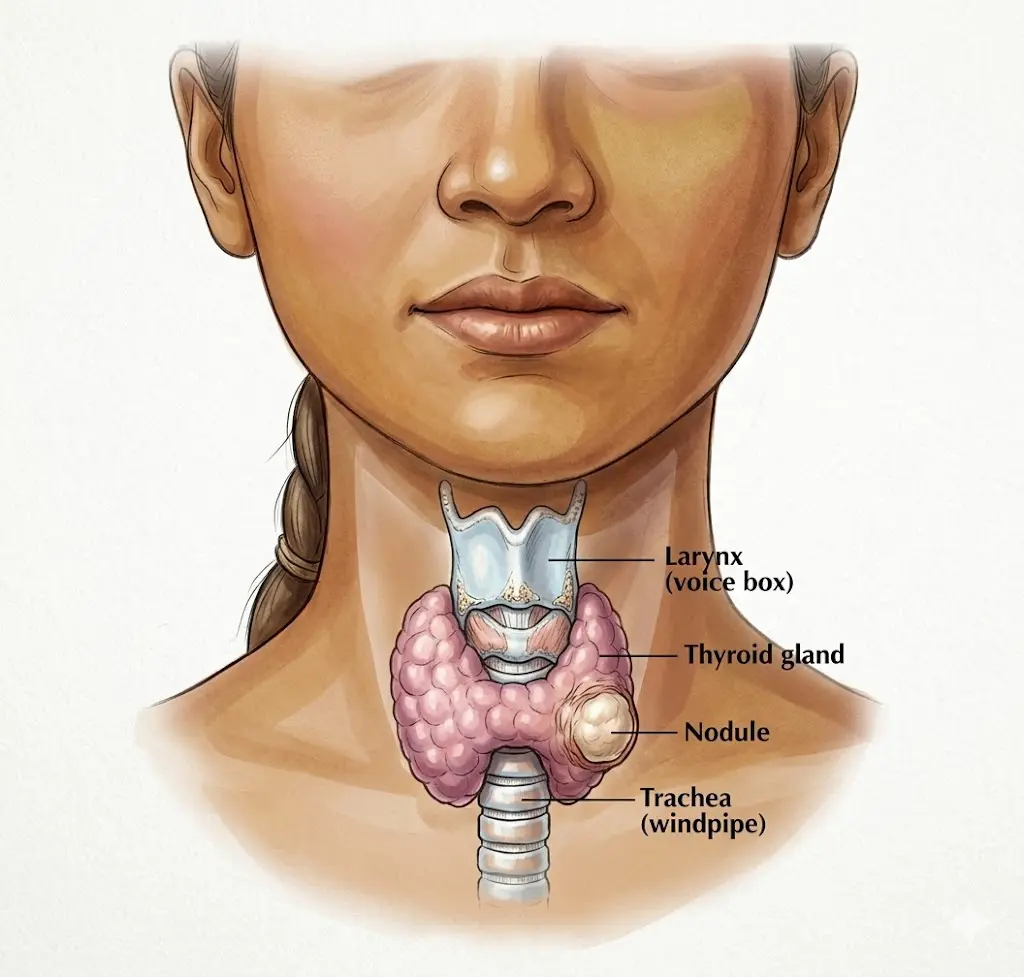
The thyroid is a small, butterfly-shaped gland located at the base of your neck. Its main job is to produce hormones that help control your body’s metabolism, which is how your body turns food into energy. Thyroid cancer happens when cells in this gland begin to grow in an abnormal, uncontrolled way. While the word "cancer" can be very frightening, it is important to know that thyroid cancer is relatively uncommon. In the vast majority of cases, thyroid lumps are benign, meaning they are not cancerous. In fact, only about one in every twenty thyroid lumps turns out to be cancer. For most people, the outlook is very positive, and the condition is highly treatable.
Symptoms and Causes
Thyroid cancer often develops slowly, and in the early stages, it may not cause any noticeable changes at all. Because the thyroid is located near important structures in your neck, symptoms usually appear as the growth begins to press against or affect these nearby areas.
Symptoms
The most common sign of thyroid cancer is a lump or swelling in the front of your neck. This lump is usually painless and may grow slowly over time. Other symptoms that you might notice as the condition progresses include:
- A persistent hoarse voice or changes in how your voice sounds.
- Difficulty swallowing, which might feel like food is getting stuck in your throat.
- A feeling of pressure or difficulty breathing.
- Pain in the front of your neck or throat that does not go away.
- Swollen lymph glands in the neck, which may feel like small, firm bumps under the skin.
Causes
We do not always know exactly why thyroid cancer develops in a specific person. However, there are certain factors that can increase your risk. These include having had radiotherapy (a treatment using high-energy rays) to the neck area in the past. A family history of certain types of thyroid cancer, such as medullary thyroid cancer, can also play a role, as this is sometimes linked to specific genes passed down through families. Other factors that may slightly increase your risk include being overweight or, in rare cases, not having enough iodine in your diet. It is important to remember that having these risk factors does not mean you will get cancer; they are simply things that doctors look at when assessing your overall health.
Diagnosis and Investigations
If you find a lump in your neck, it is very important to see a doctor. While it is likely to be something harmless, a medical professional will need to examine you to be sure. The diagnostic process is designed to be thorough so that you get the right answers as quickly as possible.
Diagnosis
Your doctor will start by asking about your symptoms and your medical history. They will want to know how long the lump has been there, if it has changed in size, and if you have any other symptoms like voice changes. They will perform a physical examination, gently feeling your neck to check the size and texture of the thyroid gland and checking for any swollen lymph nodes.
Investigations
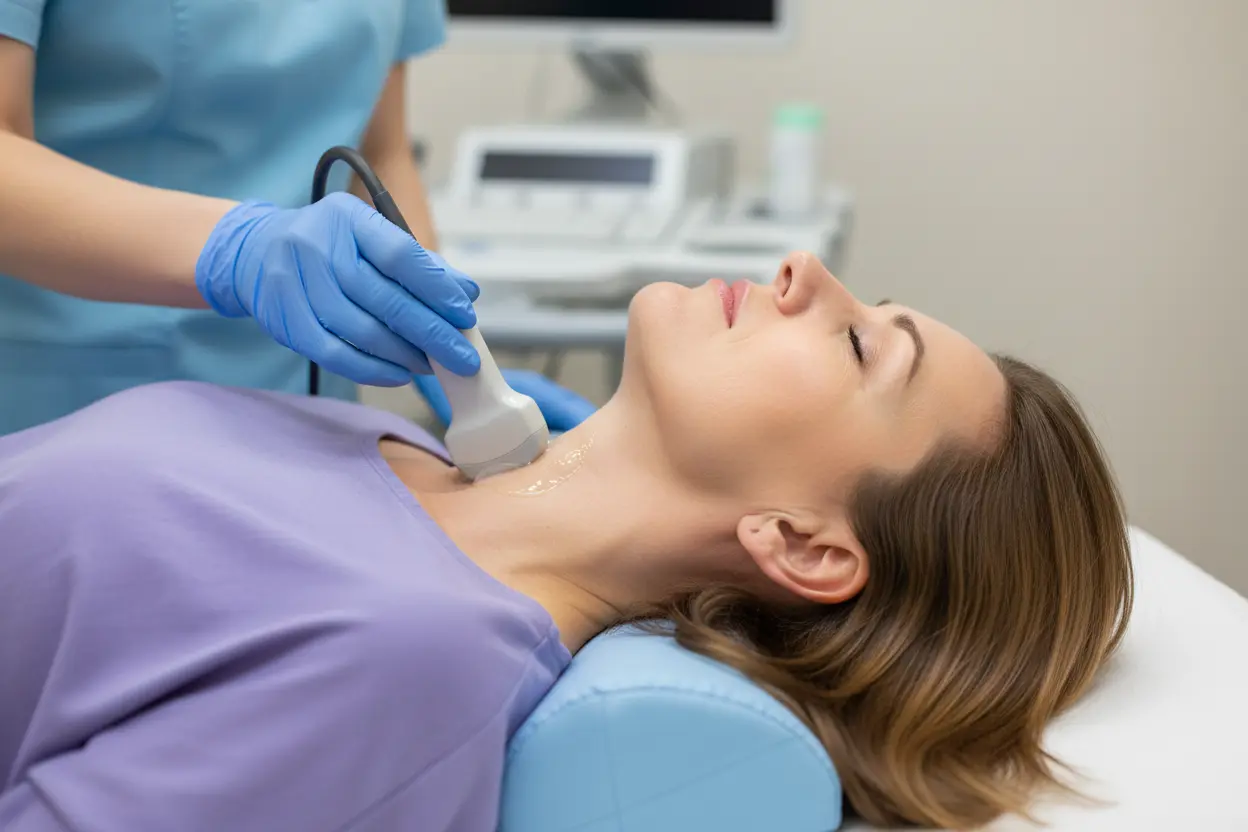
To get a clear picture of what is happening, your doctor will likely arrange for an ultrasound scan. This uses sound waves to create a detailed image of your thyroid gland on a screen, allowing the doctor to see the size and shape of any nodules (small growths). If the ultrasound shows that a nodule has features that need a closer look, the doctor may perform a fine needle aspiration cytology (FNAC). This involves using a very thin needle to take a tiny sample of cells from the nodule, which are then sent to a laboratory to be checked under a microscope. In some cases, your doctor might also order a CT or MRI scan, which are detailed pictures of the inside of your neck, to see if the growth has spread to nearby areas. If a specific type of thyroid cancer is suspected, you may also have blood tests to check hormone levels or specific markers.
Management and Treatment
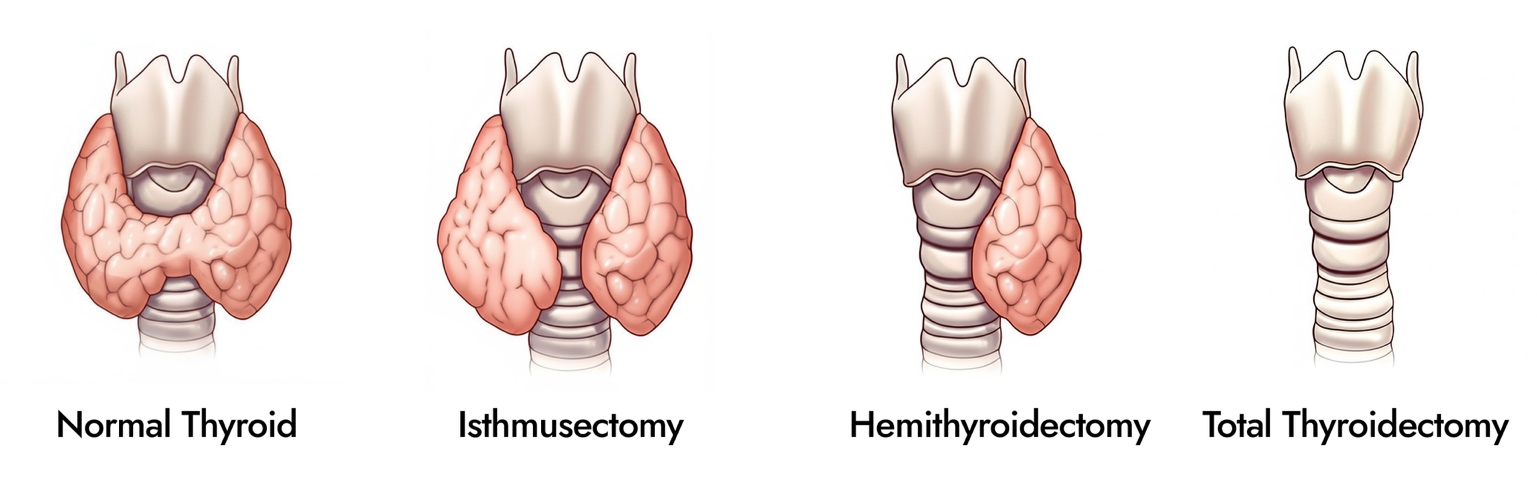
Treatment for thyroid cancer is tailored to the individual, depending on the type of cancer and how far it has grown. The primary treatment is usually surgery to remove all or part of the thyroid gland. This might be a hemithyroidectomy (removing one half of the gland) or a total thyroidectomy (removing the entire gland). After surgery, some patients may need radioactive iodine (RAI) therapy. This involves swallowing a capsule containing a small amount of radioactive iodine, which is absorbed by any remaining thyroid cells and helps to destroy them. In some situations, external beam radiotherapy—where high-energy beams are directed at the neck—may be used. If your thyroid gland is removed, you will need to take daily hormone replacement medication, such as levothyroxine, to provide your body with the hormones your thyroid used to make. Your medical team will monitor your blood levels regularly to ensure you are on the right dose and to keep your hormone levels stable.
Prevention
There is no guaranteed way to prevent thyroid cancer, as many cases occur without a clear, avoidable cause. However, maintaining a healthy lifestyle is always beneficial. If you have a known family history of thyroid conditions, your doctor may suggest genetic screening to see if you carry any specific genes that increase your risk. If you are concerned about a lump in your neck, the best form of "prevention" is early detection. Do not ignore a new or growing lump; getting it checked by a professional early on ensures that if there is a problem, it can be managed at the earliest possible stage.
Outlook / Prognosis
The outlook for most people diagnosed with thyroid cancer is very positive. Because many types of thyroid cancer grow slowly and respond well to treatment, the majority of patients go on to live full and active lives. Recovery involves regular check-ups with your medical team, where they will monitor your progress through blood tests and scans to ensure you remain healthy. While anaplastic thyroid cancer is a rare and more serious form of the disease, most common types, such as papillary or follicular thyroid cancer, have a very high success rate with treatment. Living without a thyroid gland is very manageable with daily medication, and most people find that once their hormone levels are balanced, they feel just as they did before their diagnosis. Your healthcare team will be there to support you throughout your recovery, helping you adjust to your treatment and ensuring you have the information you need to manage your long-term health.
Need Expert Advice?
Book a consultation with Mr Ahmad Hariri to discuss your symptoms and treatment options.
Book a Consultation