
Thyroiditis

Disclaimer: Disclaimer: This leaflet provides general information and is intended for educational purposes only. It should not be used as a substitute for professional medical advice, diagnosis, or treatment. Always seek the advice of a qualified healthcare professional for any health concerns or before making any decisions related to your health or treatment.
This leaflet may contain links to external websites or resources (e.g. YouTube) for demonstration purposes; however, these links are provided for information only. Clinicol.co.uk is not affiliated with, does not endorse, and is not responsible for the content, accuracy, or copyright compliance of these external sources. Use of these external links is at your own discretion and risk.
Overview
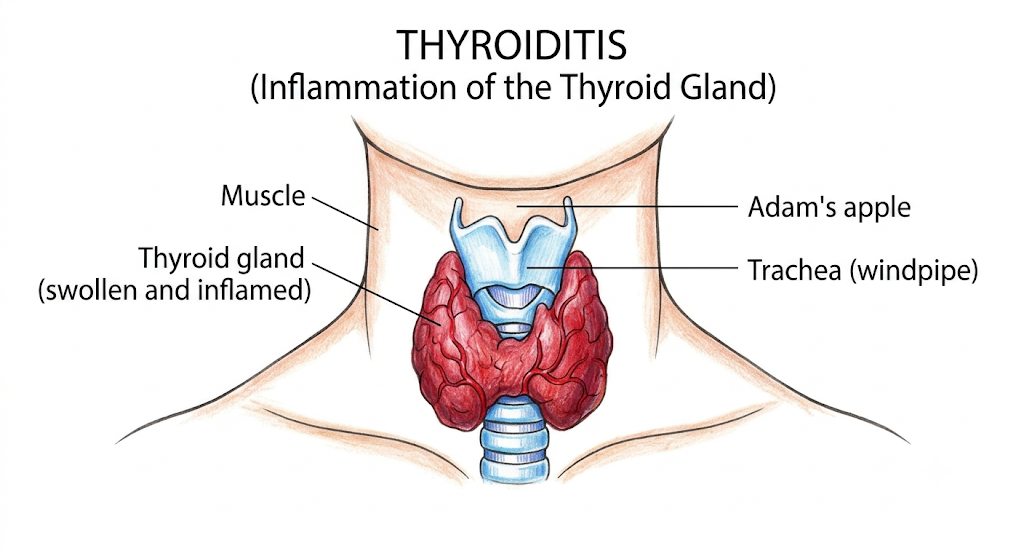
Thyroiditis is a term used to describe inflammation of the thyroid gland. The thyroid is a small, butterfly-shaped gland located at the front of your neck. Its main job is to produce hormones that control how your body uses energy. When this gland becomes inflamed, it can release too much or too little of these hormones into your bloodstream, which can make you feel quite unwell.
This condition can affect people of all ages. Depending on the type of inflammation, it may be a temporary issue that clears up on its own, or it may be a long-term condition that requires ongoing care. Because the thyroid affects so many different parts of your body—from your heart rate to your energy levels—it is important to understand what is happening and how to manage it effectively.
Symptoms and Causes
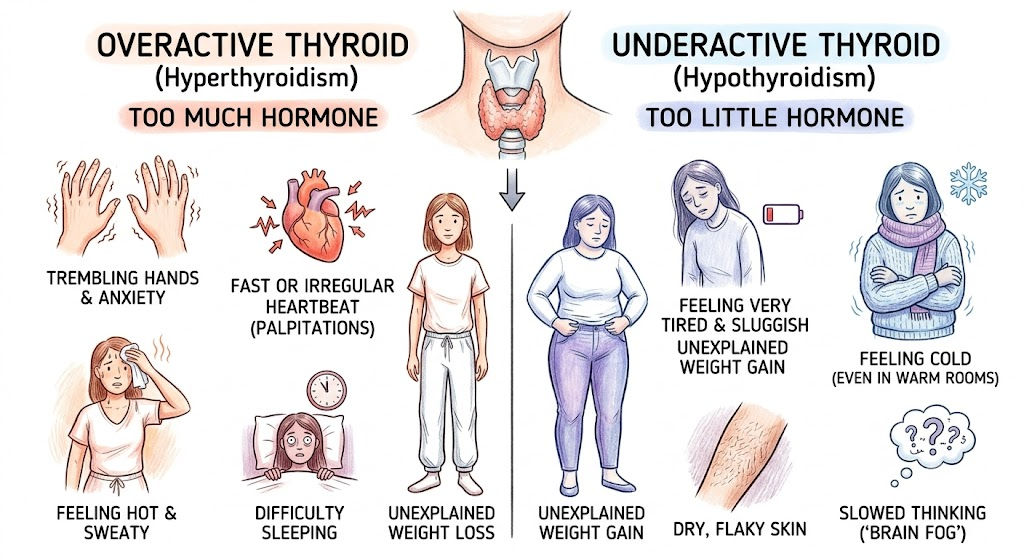
The way thyroiditis affects you often depends on the specific type you have. Some forms cause the gland to leak stored hormones, leading to a period of high thyroid activity. Others may cause the gland to become damaged or underactive, leading to low thyroid activity. In some cases, you might experience both phases one after the other.
Symptoms
The symptoms you experience will depend on whether your thyroid is overactive or underactive at that moment:
- Hyperthyroid phase (too much hormone): You might feel anxious, shaky, or notice a fast or irregular heartbeat (palpitations). You may also lose weight without trying, feel sensitive to heat, or have trouble sleeping.
- Hypothyroid phase (too little hormone): You might feel very tired, sluggish, or notice that you are gaining weight. You may also feel cold even when others are warm, experience dry skin, or feel a bit "foggy" in your thinking.
- Pain and swelling: Some types of thyroiditis, particularly those triggered by viral infections, can cause a painful, tender, or swollen feeling in the front of your neck. You might also have a fever or feel like you have a bad case of the flu.
Causes
There are several reasons why the thyroid gland might become inflamed:
- Viral or Subacute Thyroiditis: This is often linked to a recent viral infection. It typically causes a painful, enlarged thyroid and flu-like symptoms.
- Postpartum Thyroiditis: This can happen to some women after giving birth. It is usually painless and often goes through a temporary phase of high activity followed by low activity.
- Autoimmune Thyroiditis (Hashimoto’s): This happens when your immune system, which usually protects you from germs, mistakenly attacks your thyroid gland. This can lead to long-term damage and an underactive thyroid.
- Drug-induced: Certain medications, such as those used for heart rhythm issues or mood disorders, can sometimes trigger inflammation in the thyroid.
- Radiation: Exposure to radiation therapy can occasionally cause the gland to become inflamed.
Diagnosis and Investigations
If you are worried about your thyroid, a doctor will look at your medical history and perform a physical examination to check for any swelling or tenderness in your neck.
Diagnosis
During your appointment, your doctor will ask about your symptoms, such as changes in your energy, weight, or mood. They will gently feel your neck to see if the thyroid gland feels larger than normal or if it is painful to the touch. They will also look for signs of a fast heart rate or tremors in your hands.
Investigations
Blood tests are the most important tool for checking your thyroid health:
- TSH (Thyroid Stimulating Hormone): This is the main test to see how well your thyroid is working. If this level is abnormal, your doctor will look at other markers.
- FT4 and FT3: These are the actual thyroid hormones. Measuring these helps confirm if your thyroid is overactive or underactive.
- Antibody tests: These tests look for specific proteins that show if your immune system is attacking the thyroid.
- Thyroid scan: In some cases, a special scan using a tiny amount of radioactive material can show how the thyroid is working. If the gland is inflamed and leaking, the scan will show that the gland is not "taking up" the material as it normally would.
- Inflammation markers: Tests like ESR or CRP can be used to check for general inflammation in your body, which is often high in subacute (painful) thyroiditis.
Management and Treatment
The treatment for thyroiditis depends on the type and how it is affecting you. Because many forms are temporary, the goal is often to manage your symptoms while the gland heals itself.
- Symptom relief: If you have a painful thyroid, anti-inflammatory medicines (like ibuprofen) can help with pain and swelling. If you have a fast heart rate or tremors, your doctor might suggest beta-blockers, which are medicines that help calm the heart and reduce shakiness.
- Steroids: For severe or persistent pain, a short course of steroid medication may be prescribed to reduce inflammation.
- Hormone replacement: If your thyroid becomes underactive and you feel tired or unwell, you may be prescribed levothyroxine. This is a synthetic version of the hormone your thyroid usually makes. It helps bring your levels back to normal.
- Monitoring: If you are taking levothyroxine, your doctor will check your blood levels regularly. In many cases, especially after pregnancy, this medication can be stopped after a few months to see if your thyroid has recovered on its own.
Prevention
It is not always possible to prevent thyroiditis, especially when it is caused by an autoimmune reaction or a viral illness. However, if you have had postpartum thyroiditis, it is important to let your doctor know if you plan to have more children, as you may have a higher risk of it happening again. If you are taking medications known to affect the thyroid, your doctor will monitor your blood tests regularly to catch any changes early.
Outlook / Prognosis
For many people, the outlook is very positive. Forms of thyroiditis that are caused by viruses or pregnancy are often self-limiting, meaning they go away on their own as the inflammation settles. Most people return to normal thyroid function within a few months.
However, some people may experience long-term changes. For example, a small number of people who have had painful, viral-type thyroiditis may develop a permanently underactive thyroid years later. Similarly, some women who experience postpartum thyroiditis may find that their thyroid does not fully recover, leading to a need for long-term hormone replacement. Because of this, it is common practice to have annual blood tests if you have had these conditions, just to ensure your thyroid remains healthy. If you are diagnosed with autoimmune thyroiditis, you may need to take daily medication to keep your hormone levels balanced, but with this treatment, most people lead full, active, and healthy lives.
Need Expert Advice?
Book a consultation with Mr Ahmad Hariri to discuss your symptoms and treatment options.
Book a Consultation