
Viral Laryngitis

Disclaimer: Disclaimer: This leaflet provides general information and is intended for educational purposes only. It should not be used as a substitute for professional medical advice, diagnosis, or treatment. Always seek the advice of a qualified healthcare professional for any health concerns or before making any decisions related to your health or treatment.
This leaflet may contain links to external websites or resources (e.g. YouTube) for demonstration purposes; however, these links are provided for information only. Clinicol.co.uk is not affiliated with, does not endorse, and is not responsible for the content, accuracy, or copyright compliance of these external sources. Use of these external links is at your own discretion and risk.
Overview
Laryngitis is a condition where your voice box, known as the larynx, becomes swollen and irritated. Your larynx contains your vocal cords—two small, flexible bands of muscle that vibrate to create sound when you speak. When these cords become inflamed, they cannot vibrate as they normally would, which changes the way your voice sounds. This condition is very common and usually affects people of all ages. In most cases, it is a mild, short-term issue that clears up on its own within one to two weeks. While it can be frustrating to lose your voice or feel discomfort in your throat, it is rarely a sign of anything serious.
Symptoms and Causes
Understanding why your throat feels the way it does can help you manage your recovery. Most people notice that symptoms appear quite suddenly and tend to reach their peak intensity within the first two to three days.
Symptoms
The most common sign of this condition is a change in your voice. You might notice your voice sounds raspy, hoarse, or croaky. In some cases, you may lose your voice entirely for a short period, which is known as aphonia. Other symptoms you might experience include:
- A persistent, irritating cough.
- A constant, nagging need to clear your throat.
- A sore or scratchy throat.
- A mild fever.
- Difficulty speaking comfortably.
While the sore throat and fever usually settle down within a week, it is quite normal for the hoarseness and difficulty speaking to linger for an extra week or so as the vocal cords finish healing.
Causes
The most frequent cause of this condition is a viral infection, such as the common cold or the flu. When you have a viral infection, the lining of your throat and larynx becomes inflamed, leading to the symptoms you feel. However, there are other factors that can trigger or worsen this irritation:
- Voice strain: Shouting, singing loudly, or talking for long periods can physically stress the vocal cords.
- Acid reflux: This occurs when stomach acid travels up into the throat, causing irritation and swelling.
- Environmental irritants: Breathing in smoke, dust, or other pollutants can dry out and irritate the delicate tissues of the larynx.
- Allergies: Reactions to airborne particles can cause inflammation in the upper airway.
- Frequent throat clearing: This habit can cause the vocal cords to slam together, leading to further swelling.
Diagnosis and Investigations
Because this condition is usually caused by a simple virus, it is often easy to identify without complex testing. However, if your symptoms are unusual or do not go away, a healthcare professional can help determine the exact cause.
Diagnosis
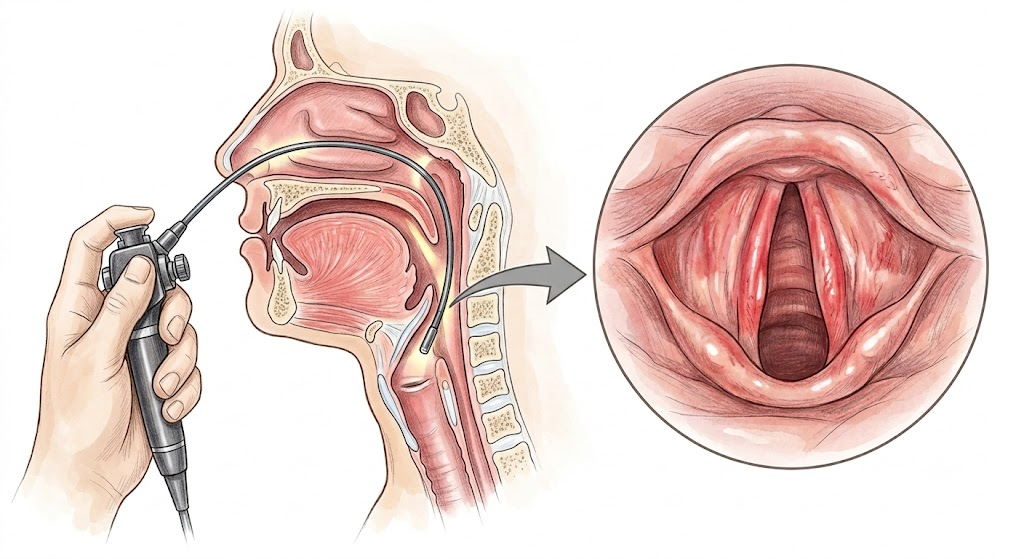
When you see a GP, they will typically ask about your symptoms, how long you have had them, and whether you have been exposed to any illnesses. They will listen to your voice and may look inside your throat using a small light. They are looking for signs of redness or swelling in the larynx. They may also check for other signs of infection, such as swollen glands in your neck or a fever.
Investigations
In the vast majority of cases, no special tests are needed. However, if your symptoms are severe or last longer than three weeks—which is considered chronic laryngitis—your doctor may want to investigate further. This might include a referral to an ENT (Ear, Nose, and Throat) specialist. The specialist might use a small, flexible camera to get a better look at your vocal cords. In some instances, they may order blood tests or a throat swab to rule out other types of infections, though this is not standard for a typical viral case.
Management and Treatment
The most effective way to treat viral laryngitis is to give your body the time and support it needs to heal. Since the cause is usually viral, antibiotics will not help, as they only work against bacteria. Instead, focus on these self-care steps:
- Rest your voice: This is the most important step. Try to speak as little as possible and avoid whispering, as whispering can actually put more strain on your vocal cords than speaking normally.
- Stay hydrated: Drink plenty of water throughout the day. This keeps the throat moist and helps thin out any mucus.
- Humidify the air: Breathing in moist air can soothe your throat. You can do this by sitting in a steamy bathroom or using a humidifier.
- Gargle with salt water: For adults, gargling with warm, slightly salty water can help ease the discomfort of a sore throat.
- Use over-the-counter relief: Your pharmacist can suggest lozenges to soothe the throat, cough syrups, or pain relief like paracetamol or ibuprofen to help with fever and pain.
- Avoid irritants: Stay away from cigarette smoke and smoky environments, as these will dry out your throat and slow down your recovery.
- Limit caffeine and alcohol: Both can be dehydrating, which is the opposite of what your vocal cords need right now.
Prevention
You can reduce your chances of developing laryngitis by protecting your vocal cords and your general health. Good habits go a long way in keeping your throat healthy:
- Practice good hygiene: Wash your hands frequently to avoid catching viruses like the cold or flu.
- Get vaccinated: An annual flu vaccine is a highly effective way to prevent the viral infections that often lead to laryngitis.
- Avoid respiratory infections: Try to stay away from people who are clearly unwell with coughs or colds.
- Manage acid reflux: If you suffer from heartburn, try elevating the head of your bed while you sleep to prevent acid from reaching your throat.
- Use your voice wisely: Avoid shouting or singing loudly for long periods, and try to break the habit of clearing your throat frequently.
- Stay away from smoke and dust: Protecting your airway from irritants helps keep the larynx healthy.
Outlook / Prognosis
The outlook for viral laryngitis is excellent. Most people make a full recovery within one to two weeks without needing any specific medical intervention. Because the condition is self-limiting, your body is usually very good at repairing the inflammation on its own once the virus has passed.
While complications are rare, it is important to be mindful of your vocal health. If you try to force your voice while your cords are still swollen, you risk causing further damage or developing a chronic cough. If your symptoms are severe, if you have any difficulty breathing, or if your hoarseness persists for more than two weeks, you should seek advice from your GP. In the case of children, any difficulty breathing should be treated as a priority and requires immediate medical attention. By resting your voice and following the self-care advice above, you should be back to your normal self very soon.
Need Expert Advice?
Book a consultation with Mr Ahmad Hariri to discuss your symptoms and treatment options.
Book a Consultation