
FESS (Functional Endoscopic Sinus Surgery

Disclaimer: Disclaimer: This leaflet provides general information and is intended for educational purposes only. It should not be used as a substitute for professional medical advice, diagnosis, or treatment. Always seek the advice of a qualified healthcare professional for any health concerns or before making any decisions related to your health or treatment.
This leaflet may contain links to external websites or resources (e.g. YouTube) for demonstration purposes; however, these links are provided for information only. Clinicol.co.uk is not affiliated with, does not endorse, and is not responsible for the content, accuracy, or copyright compliance of these external sources. Use of these external links is at your own discretion and risk.
What is a FESS (Functional Endoscopic Sinus Surgery?
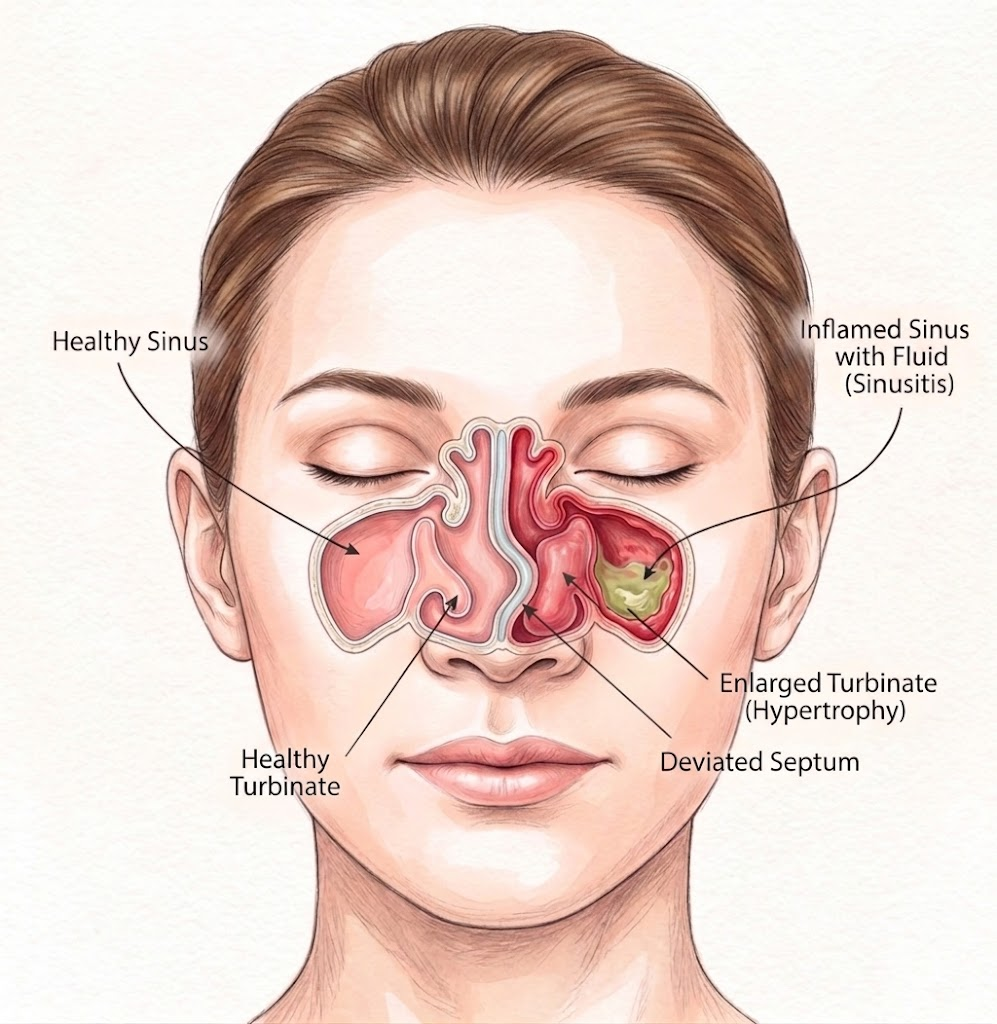
Functional Endoscopic Sinus Surgery, commonly known as FESS, is a surgical procedure designed to help people who suffer from persistent or severe sinus problems. The sinuses are small, air-filled spaces located behind your forehead, eyes, and cheeks. When these spaces become blocked or inflamed, it can lead to significant discomfort and recurring infections.
During this operation, a surgeon uses a thin, flexible tube with a tiny camera on the end, called an endoscope. This allows the surgeon to see clearly inside your nasal passages without needing to make any cuts on the outside of your face. The goal is to clear away blockages—such as small growths called polyps, swollen tissue, or thickened bone—to help your sinuses drain properly and allow air to flow freely again.
Why Might I Need FESS (functional endoscopic sinus surgery?
You may be offered this surgery if you have been struggling with sinus issues that have not improved despite trying other treatments. Often, doctors will first suggest using nasal sprays, drops, or courses of antibiotics to manage your symptoms. If these conservative methods do not provide enough relief, FESS is considered a highly effective next step.
The procedure is typically recommended for conditions such as:
- Chronic sinus infections: Long-term inflammation that keeps coming back.
- Nasal polyps: Soft, painless growths on the lining of your nose or sinuses that can block your breathing.
- Recurrent acute sinusitis: Frequent, intense bouts of sinus infection that disrupt your daily life.
By opening up the natural pathways of your sinuses, the surgery aims to reduce the frequency of infections, improve your ability to breathe through your nose, and help you feel much more comfortable in your day-to-day life.
What Happens Before Surgery?
Preparing for your operation is a step-by-step process designed to ensure you are in the best possible health for the procedure.
- Initial Consultation: You will first meet with your ENT specialist to discuss your symptoms and medical history. If surgery is the right path, you will be scheduled for a pre-assessment clinic visit.
- Pre-Assessment: During this visit, the team will perform a few routine checks to make sure you are fit for general anaesthesia (the medicine that puts you to sleep). This usually includes blood tests, an ECG (a simple test to check your heart rhythm), and a screening for MRSA (a type of bacteria that can cause infections).
- Fasting Guidelines: To keep you safe while under anaesthesia, you must follow strict fasting rules. You should have nothing to eat for 6 hours before your surgery time. You may drink clear fluids (like water) up until 2 hours before your operation.
- Arrival: On the day of your surgery, you will check into the hospital ward. A nurse will confirm your details and prepare you for the theatre.
What Happens During Surgery?
The operation is performed under general anaesthesia, meaning you will be asleep and feel no pain throughout the procedure. It typically lasts between 30 and 60 minutes.
Once you are asleep, the surgeon inserts the endoscope into your nostrils. Because the camera provides a high-definition view on a screen, the surgeon can work with great precision. They use specialized, delicate instruments to carefully remove any diseased tissue, polyps, or small pieces of bone that are blocking your sinus openings. The procedure is entirely internal, so you will have no visible scars or cuts on your face. In some cases, the surgeon may place a dissolvable nasal pack inside your nose to help with healing; these usually melt away on their own as you use your nasal rinses after the operation.
What Happens After Surgery?
Your recovery begins as soon as you wake up in the recovery room. You will be monitored closely by the nursing staff before being moved back to the ward. Most patients are able to go home on the same day.
The First Few Days:
- You may feel like your nose is blocked, similar to a heavy cold.
- It is normal to have some blood-stained, watery discharge from your nose for up to two weeks.
- You will be given painkillers to manage any discomfort for the first 7 to 10 days.
Recovery at Home:
- Nasal Care: Use your prescribed sinus rinse 3 to 4 times a day for the first few weeks to keep the area clean. If you are prescribed steroid nose drops, use these twice daily by tilting your head back.
- Nose Blowing: Do not blow your nose for the first few days. After that, you may blow very gently, one side at a time. If you need to sneeze, do so with your mouth open to avoid putting pressure on your nose.
- Activity: Avoid heavy lifting, strenuous exercise, and contact sports for at least two weeks. Avoid hot fluids and alcohol for the first two weeks as well.
- Work and Travel: Most people need 1 to 2 weeks off work. Avoid flying for at least four weeks after your surgery.
What are the Potential Risks and Complications?
While FESS is a routine and generally safe procedure, all surgery carries some risks. It is important to be aware of these:
- Bleeding: Some minor bleeding is expected. Occasionally, if bleeding is heavier, the surgeon may need to place a temporary pack inside the nose to stop it.
- Infection: There is a small risk of infection, which may require a course of antibiotics.
- Rare Complications: In very rare instances, there is a risk of damage to the thin bone separating the sinuses from the eye socket or the brain. This could lead to complications like bruising around the eye or, in extreme cases, a leak of the fluid that surrounds the brain. Your surgeon will take every precaution to avoid these issues.
Long-Term Outlook
Most people find that their breathing improves significantly and their sinus infections become much less frequent. Recovery is a gradual process, and your surgeon will want to see you for a follow-up appointment, usually 4 to 8 weeks after your operation. During this visit, they will use a telescope to check how well your sinuses are healing and clean away any crusting.
When to seek urgent help: Please contact your hospital ward or seek medical advice immediately if you experience any of the following:
- Heavy, persistent bleeding that does not stop.
- A high temperature or fever.
- Increasing pain or swelling that gets worse rather than better.
- A clear, watery discharge from the nose.
- A severe headache or a stiff neck.
- Any changes to your vision or swelling around your eyes.
By following your post-operative instructions and attending your follow-up appointments, you give yourself the best chance for a smooth and successful recovery.
Ready to Take the Next Step?
Book a consultation with Mr Ahmad Hariri to discuss your specific needs and treatment options.
Book a Consultation