
Grommet Insertion

Disclaimer: Disclaimer: This leaflet provides general information and is intended for educational purposes only. It should not be used as a substitute for professional medical advice, diagnosis, or treatment. Always seek the advice of a qualified healthcare professional for any health concerns or before making any decisions related to your health or treatment.
This leaflet may contain links to external websites or resources (e.g. YouTube) for demonstration purposes; however, these links are provided for information only. Clinicol.co.uk is not affiliated with, does not endorse, and is not responsible for the content, accuracy, or copyright compliance of these external sources. Use of these external links is at your own discretion and risk.
What is a Grommet Insertion?
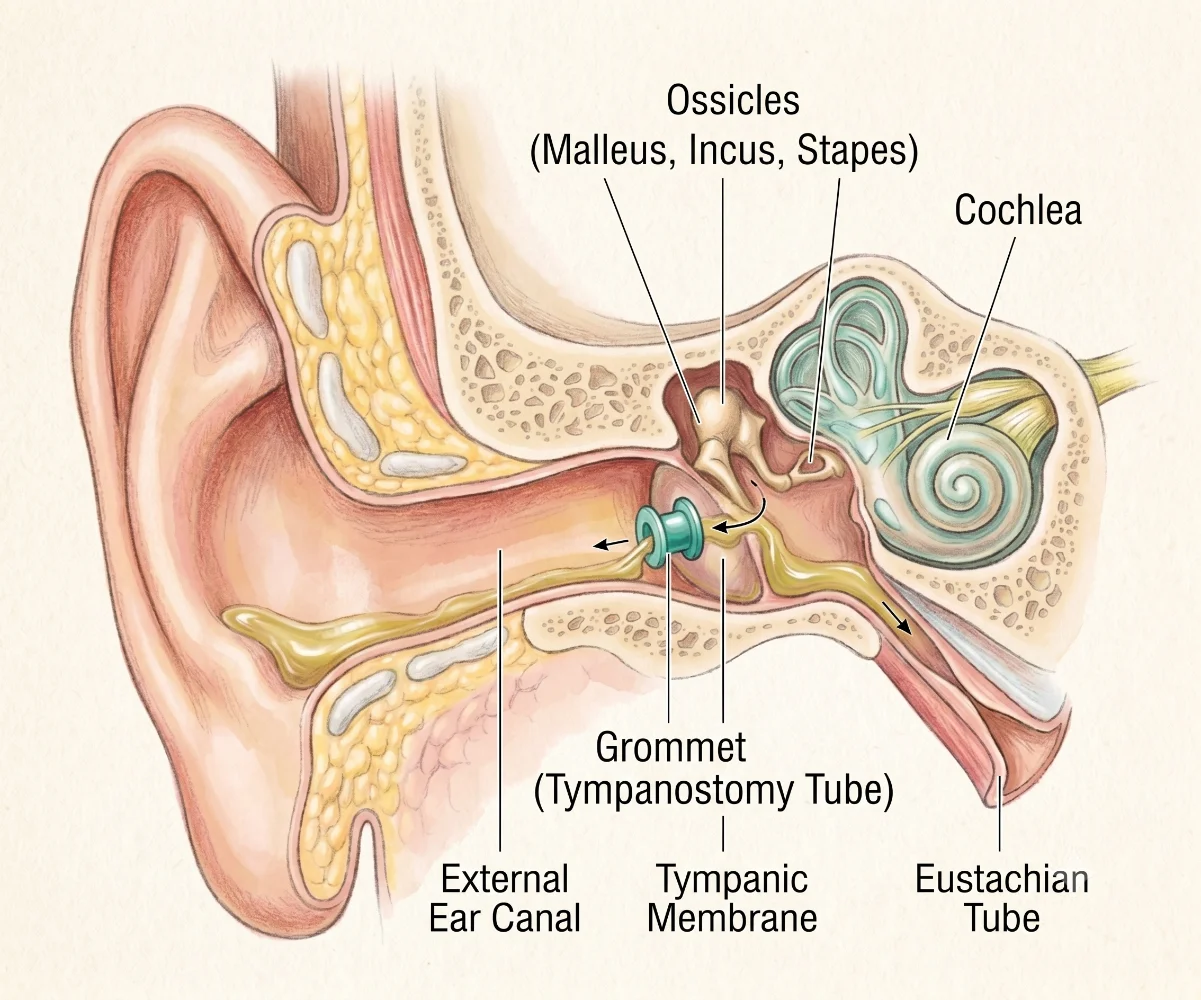
Grommet insertion is a common and straightforward surgical procedure involving the placement of tiny, hollow tubes, known as grommets or ventilation tubes, into your eardrum. These tubes are usually made of plastic or titanium and are very small.
The main purpose of a grommet is to create a small opening in the eardrum, allowing air to flow freely into and out of the middle ear. This helps to equalise the pressure inside the ear with the pressure outside, much like opening a window to air out a room. When the pressure is balanced, it prevents fluid from building up behind the eardrum, which is often referred to as 'glue ear'. By allowing air in, the grommet helps the middle ear to function correctly, which can significantly improve hearing.
Grommets are designed to stay in place for a certain period, typically lasting anywhere from three months to one year, or sometimes between six to eighteen months. They usually fall out naturally and painlessly as the eardrum heals and pushes them out. Once a grommet extrudes (falls out), the small hole in the eardrum usually closes up on its own.
Why Might I Need Grommet Insertion?
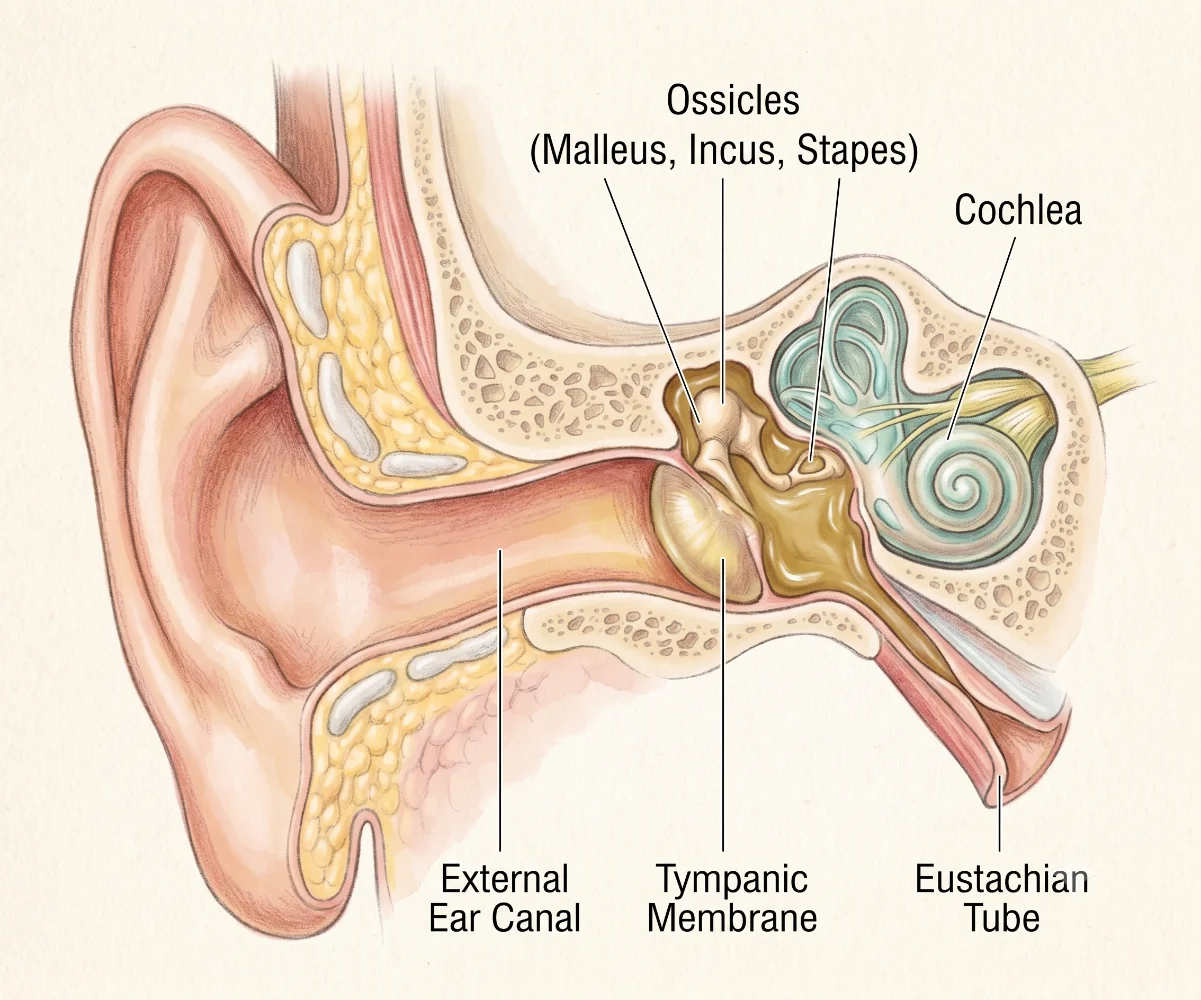
Grommet insertion is primarily recommended to address problems caused by fluid buildup in the middle ear, a condition often called 'glue ear' or Otitis Media with Effusion (OME). This fluid can lead to hearing difficulties and other issues. The procedure aims to improve hearing and reduce the frequency of ear infections.
For Children:
- Persistent Glue Ear (Otitis Media with Effusion - OME): This is the most common reason for grommet insertion in children. Glue ear occurs when sticky fluid fills the middle ear, leading to temporary conductive deafness. This condition is very common, affecting about one in five pre-school children in the UK. While glue ear often clears up by itself, persistent cases can cause significant problems.
- Hearing Loss: If glue ear leads to hearing loss that affects a child's speech development, language skills, behaviour, or progress at school, grommets may be considered. This is especially true if the hearing loss is associated with the OME and has been present for at least three months, despite a period of active observation (watchful waiting) and trying non-surgical options like hearing aids or auto-inflation.
- Recurrent Ear Infections: Children who experience frequent or numerous ear infections may benefit from grommets. When grommets are in place, any ear infections that do occur are typically less painful and easier to treat with antibiotic eardrops, rather than oral antibiotics.
For Adults:
While grommet insertion is less common in adults and its outcomes are not as clear-cut as in children, it may be considered for specific reasons:
- Disabling Conductive Hearing Loss: If you experience significant hearing loss due to persistent fluid in your middle ear (bilateral OME) that has been documented over a three-month period, and your hearing level is 25–30 dBHL or worse, grommets might be an option. This is usually after a period of watchful waiting and if you have been offered auto-inflation techniques.
- Unilateral Middle Ear Effusion: If you have fluid in only one ear, grommet insertion might be performed to allow for a biopsy of the post-nasal space (the area behind your nose) to rule out any serious underlying conditions, such as malignancy.
- Recurrent Acute Otitis Media: Similar to children, adults who suffer from repeated acute ear infections may find relief with grommets.
- Atrophic Tympanic Membranes: This refers to thinning of the eardrum. In some cases, grommets may be used to manage issues related to this condition.
- Access for Medication: Grommets can provide a way to deliver medication directly into the middle ear (transtympanic medication instillation) for certain conditions.
- Investigation of Unilateral Glue Ear: If you have glue ear in only one ear, grommets might be used as part of the investigation process to understand the cause.
For adults, an assessment by an ENT specialist and a specialist audiologist is always required before considering this procedure.
What Happens Before Surgery?
Preparing for grommet insertion involves several steps, designed to ensure you or your child are ready for the procedure and that all your questions are answered. This process typically begins weeks or months before the actual surgery.
Initial Consultations and Decisions (Weeks to Months Before)
- Diagnosis and Observation: If you or your child are experiencing symptoms of glue ear, your GP or audiologist will likely refer you to an ENT specialist. For children, NICE guidelines recommend a period of active observation, usually three months, before considering surgery. During this time, non-surgical options like hearing aids or auto-inflation (a technique where you blow up a balloon through your nose to help clear the ears) may be offered. For adults, persistent bilateral glue ear must be documented over a three-month period, with a hearing level of 25–30 dBHL or worse, and watchful waiting with auto-inflation offered, before surgery is considered.
- Specialist Assessments: Adults will undergo a thorough assessment by an ENT specialist and a specialist audiologist to confirm the diagnosis and suitability for the procedure.
- Discussion and Consent: The ENT specialist will discuss the operation in detail with you or your child's parents, explaining what it involves, the expected benefits, and potential risks. You will have the opportunity to ask any questions you have. If you decide to proceed, you will be asked to sign a consent form. This form confirms that you understand the procedure and agree to it.
- Medical History and Medications: It's crucial to disclose any allergies you or your child may have, as well as all current medications, including over-the-counter drugs, supplements, and herbal remedies. This information helps the medical team plan for a safe procedure.
Pre-assessment Clinic (Days to Weeks Before)
- Health Check: For adults, you will typically attend a pre-assessment clinic. This visit involves a general health check to ensure you are fit for surgery. This might include blood tests, an electrocardiogram (ECG) to check your heart, and other routine checks.
- MRSA Screening: You may undergo screening for MRSA (Methicillin-resistant Staphylococcus aureus), a type of bacteria, to prevent hospital-acquired infections.
- Meeting the Team: You will have further discussions with members of the surgical team and the anaesthetist. The anaesthetist will talk to you about the type of anaesthetic that will be used and answer any questions you have about it.
The Day Before Surgery
- Fasting Instructions: You will receive specific instructions about when to stop eating and drinking before the surgery. It is very important to follow these instructions carefully to ensure your safety during the anaesthetic. Generally, you will need to fast for six hours before surgery, meaning no food during this time. Clear fluids (like water, clear apple juice, or black tea/coffee without milk) are usually allowed up to two hours before the procedure.
On the Day of Surgery
- Arrival and Check-in: You will be asked to arrive at the hospital at a specific time. Once checked in, you will be shown to a ward or waiting area.
- Final Checks: The nursing staff will complete some final checks, including confirming your identity, the procedure you are having, and any allergies. The surgeon may also see you again to answer any last-minute questions.
- Preparation for Theatre: You or your child will be asked to change into a hospital gown. For children, parents will usually accompany them to the anaesthetic room.
What Happens During Surgery?
Grommet insertion is a relatively quick and common procedure. It is usually performed as a day case, meaning you or your child will typically go home on the same day.
Anaesthesia
- For Children: Grommet insertion for children is always performed under a general anaesthetic. This means your child will be completely asleep and will not feel any pain or remember the procedure.
- For Adults: For adults, the procedure is most commonly performed under a general anaesthetic. However, in some cases, it can be done under a local anaesthetic, where only the ear area is numbed, and you remain awake. Your anaesthetist will discuss the best option for you during your pre-assessment.
The Surgical Procedure
Once the anaesthetic has taken effect, the surgeon will begin the procedure. Here's a step-by-step description:
- Accessing the Eardrum: The surgeon will work through the ear canal, using a special operating microscope to get a very clear and magnified view of the eardrum. This allows for extreme precision.
- Making an Incision: A tiny cut, known as a myringotomy, is made in the eardrum. This incision is very small and precise.
- Fluid Removal: If there is fluid (glue ear) behind the eardrum, it will be gently aspirated, or sucked out, using a fine suction device. This clears the middle ear space.
- Grommet Insertion: A small grommet tube is then carefully inserted into the tiny hole in the eardrum. The grommet acts like a tiny vent, keeping the hole open and allowing air to enter and leave the middle ear. This helps to equalise the pressure and prevent fluid from building up again.
- Optional Ear Drops: In some cases, particularly for children, the surgeon may consider administering a single dose of ciprofloxacin ear drops into the ear during the operation. This is done to help prevent ear discharge (otorrhoea) and blockage of the grommet, although it is considered an 'off-label' use.
Duration
The operation itself is very quick, typically taking only about 10 to 15 minutes per ear. If both ears are being treated, the total surgical time will be slightly longer.
What Happens After Surgery?
After your grommet insertion, you or your child will begin the recovery process. This section outlines what to expect immediately after the operation, during your hospital stay, and once you return home.
Immediately After Surgery (Recovery Room)
- Waking Up: After a general anaesthetic, you or your child will be taken to a recovery room to wake up. Nurses will monitor your vital signs closely. It's normal to feel a bit drowsy or disoriented as the anaesthetic wears off.
- Pain Management: You might experience some mild pain or discomfort in the ear. This is usually manageable with simple pain relief medications like paracetamol or ibuprofen, which the nurses can provide.
On the Ward (Day of Surgery)
- Observation: Once you are fully awake and stable, you will be moved to a ward. Nurses will continue to monitor you. For adults who had a local anaesthetic, you might only need to stay for about two hours post-procedure.
- Ear Discharge: It's quite normal to notice a small amount of mild ear oozing or slight bleeding from the outer ear for a day or two after the operation. For adults, this might appear as a slight clear discharge. This is usually nothing to worry about. You should clean any discharge from the outer ear gently, but do not attempt to clean inside the ear canal.
- Ear Drops: In some cases, you may be prescribed ear drops to use after the surgery. The nurses will explain how and when to use them.
- Discharge Criteria: As this is typically a day case procedure, you or your child will usually be able to go home once you are fully recovered from the anaesthetic, have had something to eat and drink, and are comfortable.
The First Few Days at Home
- Pain Relief: Continue to use paracetamol or ibuprofen as needed to manage any mild pain or discomfort.
- Activity: For adults, returning to work is generally possible one day after a general anaesthetic. Children should take it easy for a day or two but can usually return to school or nursery quite quickly, often within 24-48 hours, depending on how they feel.
- Keeping the Ear Dry (Water Precautions): This is a crucial part of post-operative care to prevent infection.
- Strict Precautions: You must keep the ear canal dry. Strict water precautions are advised for at least two weeks, and sometimes up to six weeks, until your follow-up appointment.
- Bathing and Hair Washing: When bathing or washing hair, take great care to keep water out of the ear. You can do this by placing a piece of cotton wool coated with petroleum jelly (Vaseline) into the outer ear opening. Special earplugs can also be used.
- Swimming: Avoid swimming completely for at least two to four weeks, and sometimes up to six weeks. After this initial period, gentle swimming may be permitted with the use of earplugs, but diving is strictly prohibited.
Long-Term Recovery and Follow-up
- Grommet Extrusion: Grommets are designed to fall out naturally as the eardrum heals, usually within 3 months to 1 year, or 6 to 18 months. This process is typically painless, and you might not even notice when it happens.
- Follow-up Appointment: You or your child will usually have a follow-up appointment with the ENT specialist, often around six weeks after the surgery. This appointment is to check that the grommets are in place and working correctly, and to assess hearing improvement.
What are the Potential Risks and Complications?
While grommet insertion is a very common and generally safe procedure, like all surgeries, it carries some potential risks and complications. Your surgical team will discuss these with you in detail before the operation.
General Surgical and Anaesthetic Risks
Any procedure involving anaesthesia carries a very small risk of complications, which your anaesthetist will discuss with you. These can include allergic reactions to medications, breathing problems, or issues related to existing health conditions.
Specific Risks Related to Grommet Insertion
- Bleeding: It is normal to experience minimal bleeding or slight clear discharge from the ear for a day or two after the operation. Significant bleeding is rare.
- Infection: There is a risk of infection around the grommet or in the middle ear. If this occurs, you might notice discharge or fluid leaking from the ear, which can be treated with antibiotic ear drops prescribed by your GP or specialist. In some cases, a persistent infection might necessitate the removal of the grommet. Overuse of antibiotics can also contribute to antibiotic resistance.
- Persistent Hole in the Eardrum (Perforation): After the grommet falls out, the small hole in the eardrum usually heals and closes on its own. However, in a small number of cases, the hole may persist. If this happens, it can sometimes lead to ongoing hearing problems or increase the risk of ear infections. A persistent hole may require a further surgical procedure called a myringoplasty to repair the eardrum.
- Scarring of the Eardrum: The eardrum may develop some scarring where the grommet was inserted. This scarring is usually minor and does not typically affect hearing.
- Grommet Blockage: Occasionally, the grommet can become blocked with wax or discharge, preventing it from ventilating the ear effectively. This can sometimes be cleared with ear drops.
- Grommet Extrusion and Re-insertion: Grommets are designed to fall out naturally. However, if hearing problems return after a grommet has extruded, or if the glue ear comes back, a re-insertion of grommets might be needed.
- Permanent Hearing Loss: While grommets are intended to improve hearing, there is a very small risk of permanent hearing loss resulting from severe or recurrent ear infections, even with grommets in place.
- Otorrhoea (Ear Discharge): This is a common complication, especially in children, where fluid leaks from the ear. While intraoperative ciprofloxacin ear drops may be considered to prevent this, it can still occur and usually requires treatment with ear drops.
Your medical team will take every precaution to minimise these risks and will provide you with detailed instructions for post-operative care to help ensure a smooth recovery.
Long-Term Outlook
The long-term outlook after grommet insertion is generally very positive, especially for children experiencing glue ear and associated hearing loss. The procedure aims to provide significant relief from symptoms and improve quality of life.
Expected Recovery Timeline
- Immediate Improvement: Many patients, particularly children, experience an immediate improvement in hearing once the fluid is drained and the grommets are in place. This can lead to noticeable changes in speech, language development, and behaviour.
- Grommet Lifespan: Grommets typically remain in place for 3 months to 1 year, or sometimes 6 to 18 months, before they naturally extrude (fall out) as the eardrum heals. This process is usually painless and often goes unnoticed.
- Eardrum Healing: After the grommet extrudes, the small hole in the eardrum usually closes up on its own within a few weeks or months.
Long-Term Outcomes
- Improved Hearing: The primary benefit is improved hearing, which allows the middle ear to function correctly by preventing fluid buildup and equalising pressure. This can have a profound positive impact on a child's development and learning.
- Reduced Infections: Grommets can significantly reduce the frequency and severity of middle ear infections. If infections do occur, they are often less painful and can be treated more easily with antibiotic ear drops.
- Potential for Recurrence: While grommets are very effective, glue ear can sometimes return after the grommets have fallen out. If this happens and continues to cause significant problems, a second set of grommets might be considered.
- Eardrum Integrity: Most eardrums heal completely after grommet extrusion. However, as mentioned in the risks section, a small percentage of patients may be left with a persistent hole in the eardrum, which might require further surgical repair (myringoplasty) in the future. Scarring of the eardrum is also possible but rarely causes problems.
Follow-up Schedule
You or your child will typically have a follow-up appointment with the ENT specialist a few weeks or months after the surgery. This appointment is crucial to:
- Check that the grommets are still in place and functioning correctly.
- Assess hearing levels to ensure the desired improvement has been achieved.
- Discuss any concerns or questions you may have about the recovery or the grommets.
- Plan any further steps if the glue ear returns or if there are any complications.
When to Seek Urgent Medical Attention
While complications are rare, it's important to know when to seek medical advice. You should contact your GP, the ENT department, or seek urgent medical attention if you or your child experience any of the following:
- Excessive or Foul-Smelling Discharge: While some clear or slightly bloody discharge is normal initially, a heavy, discoloured, or foul-smelling discharge from the ear could indicate an infection.
- Increased Pain: Worsening ear pain that is not relieved by standard pain medication.
- Fever: A high temperature or fever, especially if accompanied by other symptoms of infection.
- Sudden Worsening of Hearing: If hearing suddenly deteriorates again after an initial improvement.
- Signs of Allergic Reaction: Such as a rash, swelling, or difficulty breathing.
Your healthcare team is there to support you throughout the recovery process. Do not hesitate to contact them if you have any concerns.
Ready to Take the Next Step?
Book a consultation with Mr Ahmad Hariri to discuss your specific needs and treatment options.
Book a Consultation