
Parathyroidectomy

Disclaimer: Disclaimer: This leaflet provides general information and is intended for educational purposes only. It should not be used as a substitute for professional medical advice, diagnosis, or treatment. Always seek the advice of a qualified healthcare professional for any health concerns or before making any decisions related to your health or treatment.
This leaflet may contain links to external websites or resources (e.g. YouTube) for demonstration purposes; however, these links are provided for information only. Clinicol.co.uk is not affiliated with, does not endorse, and is not responsible for the content, accuracy, or copyright compliance of these external sources. Use of these external links is at your own discretion and risk.
What is a Parathyroidectomy?
A parathyroidectomy is a surgical operation performed to remove one or more overactive parathyroid glands. These are usually four small glands, each about the size of a pea, located in your neck, often behind or very close to your thyroid gland. Their main job is to produce parathyroid hormone (PTH), which helps control the amount of calcium in your blood.
When these glands become overactive, they produce too much PTH. This leads to high levels of calcium in your blood, a condition known as hyperparathyroidism. High blood calcium can cause a range of health problems throughout your body. The aim of a parathyroidectomy is to remove the faulty gland(s) to bring your PTH and calcium levels back to normal, improving your health and preventing further complications.
Why Might I Need Parathyroidectomy?
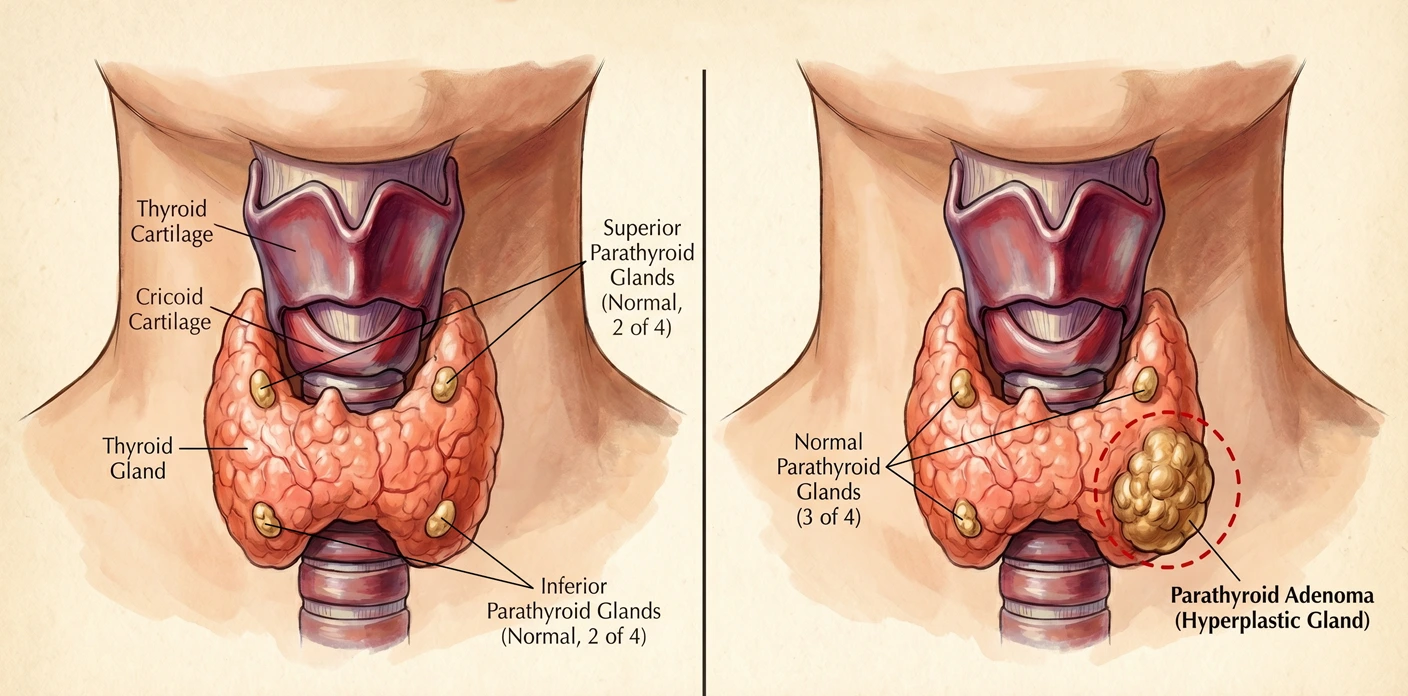
You might need a parathyroidectomy if your parathyroid glands are producing too much parathyroid hormone (PTH), leading to high levels of calcium in your blood. This condition is called hyperparathyroidism, and it can occur in a few ways:
- Primary Hyperparathyroidism: This is the most common reason for surgery. It happens when one or more of your parathyroid glands become overactive on their own, usually due to a benign (non-cancerous) growth called an adenoma, or sometimes due to enlargement of all four glands. Surgery is the only definitive cure for primary hyperparathyroidism.
- Secondary or Tertiary Hyperparathyroidism: This often affects people with long-standing chronic kidney disease (CKD). When your kidneys don't work properly, they can't process calcium and vitamin D effectively, which can cause your parathyroid glands to work harder and become overactive. If other treatments, such as medication, are not enough to control the condition, or if it becomes severe and long-lasting, surgery may be recommended.
High blood calcium levels, whether from primary, secondary, or tertiary hyperparathyroidism, can cause a variety of symptoms and long-term health problems. You might experience:
- Bone Problems: High calcium can weaken your bones, making them more prone to pain and fractures. This is because the excess PTH pulls calcium out of your bones.
- Kidney Issues: You may develop kidney stones, which can be very painful, or other kidney problems.
- General Symptoms: Many people feel tired, have a low mood, experience memory problems, or find it hard to concentrate. Other common symptoms include increased thirst, frequent urination, and constipation.
- Cardiovascular Risks: Over time, high calcium levels can increase your risk of heart and blood vessel problems.
Your doctor may recommend surgery if your calcium levels are significantly high, if you are experiencing symptoms, or even if you are over 50 and have no obvious symptoms, to prevent long-term damage to your bones and kidneys. In some urgent cases, surgery may be needed if your blood calcium levels are dangerously high. Successful surgery can lead to stronger bones, a reduced risk of kidney stones and fractures, and often an improvement in your energy levels, mood, and memory.
What Happens Before Surgery?
Preparing for a parathyroidectomy involves several steps to ensure you are as healthy as possible for the operation and that the surgical team has all the necessary information. This process usually begins weeks before your actual surgery date.
Initial Consultations and Assessments
You will have discussions with your surgeon about the benefits of the operation and any potential complications. You will also attend a pre-assessment clinic, where a hospital team will thoroughly check your general health and fitness for a general anaesthetic (the medication that puts you to sleep during surgery). This involves:
- Medical History Review: The team will ask about your past and current health conditions, as well as any previous operations.
- Medication Review: It's crucial to tell the team about all medications you are currently taking, including over-the-counter drugs, supplements, and herbal remedies. You will receive specific instructions on which medications to stop or adjust before surgery.
- Blood Tests: These are essential to check your general health, including your kidney function, blood count, and current calcium and parathyroid hormone (PTH) levels.
- Other Tests: You may have other tests like an electrocardiogram (ECG) to check your heart, or lung function tests.
Locating the Overactive Gland(s)
To help the surgeon plan the operation, you will usually have imaging scans to locate the overactive parathyroid gland(s). These might include:
- Ultrasound Scan: This uses sound waves to create images of your neck and can often show enlarged parathyroid glands.
- Sestamibi Scan: This involves injecting a small amount of a radioactive tracer that is absorbed by overactive parathyroid glands, making them visible on a special scan.
- Other Scans: Sometimes, X-rays or bone density scans may be performed to assess the overall health of your bones and help plan your treatment.
It's important to know that even with these scans, it can sometimes be difficult to pinpoint the exact location of the abnormal gland(s). In about 20-30% of cases, scans may not clearly show the problem.
Specific Preparations for Certain Patients
- Hydration: You will be encouraged to drink plenty of water in the days leading up to your surgery. This helps to keep you well-hydrated and can help prevent calcium deposits from forming.
- Vitamin D Correction: If your vitamin D levels are low, your doctor may prescribe supplements to correct this before your surgery.
- Patients with Chronic Kidney Disease (Tertiary Hyperparathyroidism): If you are undergoing a total parathyroidectomy (removal of all four glands) due to chronic kidney disease, your renal (kidney) team will be involved in your pre-operative care. You will likely need to take oral calcium supplements (such as Calvive) and a form of vitamin D (alfacalcidol) for at least 3 days, and sometimes for two weeks, before your surgery. The renal team will ensure you are properly prepared for the operation.
The Day Before and Day of Surgery
You will receive clear instructions on when to stop eating and drinking before your surgery. This is very important for your safety during the general anaesthetic. Typically, you will be asked not to eat for at least six hours and not to drink clear fluids for two hours before your operation. On the day of your surgery, you will check into the hospital, and the nursing staff will help you prepare for the procedure.
What Happens During Surgery?
A parathyroidectomy is performed by a highly skilled surgeon, usually an ENT (Ear, Nose, and Throat) surgeon or an endocrine surgeon, who specialises in operations on glands like the parathyroid and thyroid.
Anaesthesia
The procedure is typically carried out under a general anaesthetic. This means you will be completely asleep and will not feel any pain or be aware of the operation taking place.
The Incision
The surgeon will make a small cut (incision) in your neck. This incision is usually made horizontally in a natural skin crease in your neck, which helps to make any resulting scar less noticeable. The size of the incision depends on the surgical approach:
- Minimally Invasive Parathyroidectomy (Keyhole Surgery): If scans have clearly located a single overactive gland, your surgeon may be able to perform a minimally invasive procedure. This involves a smaller cut, often less than 3cm long. This approach allows for a more focused operation. During this type of surgery, the surgeon may use a special blood test during the operation to measure your PTH levels. A significant drop in PTH confirms that the overactive gland has been successfully removed.
- Bilateral Neck Exploration: If the scans were inconclusive, or if there is a suspicion that more than one gland is overactive, the surgeon may need to perform a bilateral neck exploration. This involves a slightly larger incision, typically around 5cm, to allow the surgeon to carefully examine all four parathyroid glands and identify which ones are abnormal.
The Procedure
Once the incision is made, the surgeon will carefully move aside the muscles and tissues in your neck to reach the parathyroid glands. They will then identify and remove the overactive gland or glands. To help protect your voice, a special monitoring device may be used during the operation. This device helps the surgeon keep track of the recurrent laryngeal nerve, which controls your vocal cords and runs very close to the parathyroid glands.
After the abnormal gland(s) have been removed, the surgeon will close the incision with stitches, which may be dissolvable or may need to be removed later. Sometimes, a small, thin tube called a surgical drain may be placed in the wound to help remove any excess fluid or blood that might collect after the operation. This drain is usually removed a day or two after surgery.
Duration
The operation itself usually takes between 1 to 3 hours, depending on the complexity and the number of glands that need to be removed.
What Happens After Surgery?
Your recovery from a parathyroidectomy begins immediately after the operation and continues for several weeks. The hospital team will monitor you closely to ensure a smooth recovery.
Immediately After Surgery (Recovery Room)
When you wake up from the general anaesthetic, you will be in the recovery room. You may feel a bit drowsy or disoriented. You will likely have some discomfort or soreness in your neck, which is normal. The nursing staff will give you pain relief medication to manage this.
Ward Recovery (Day of Surgery and Overnight Stay)
Once you are fully awake and stable, you will be moved to a ward. You might notice some swelling or bruising around your neck incision. Most patients are able to start eating and drinking normally soon after the operation. Depending on the type of surgery you had and how quickly you recover, you might be able to go home the same day, especially after a minimally invasive procedure. However, many patients stay overnight for observation.
The surgical dressing over your wound will typically be removed after about 48 hours. If you had a surgical drain inserted, it will usually be removed a day or two after surgery once the fluid drainage has significantly reduced.
Monitoring Calcium Levels
A crucial part of your post-operative care involves monitoring your blood calcium and parathyroid hormone (PTH) levels. Blood tests will be done the day after your surgery, and sometimes more frequently, to check these levels.
It is very common for blood calcium levels to drop after parathyroidectomy, a condition called hypocalcaemia (low blood calcium). This can happen because your remaining parathyroid glands may take some time to adjust, or because your bones, which have been deprived of calcium for a long time, start to rapidly absorb calcium from your blood. This rapid absorption is sometimes called 'hungry bones syndrome'.
Symptoms of low calcium include:
- Tingling or numbness in your fingers, toes, or around your mouth.
- Muscle cramps or spasms.
If your calcium levels drop too low or if you experience these symptoms, you will be given calcium supplements, usually in tablet form (such as Calvive), and sometimes a form of vitamin D (like alfacalcidol) to help your body absorb calcium. For patients who had a total parathyroidectomy, especially those with chronic kidney disease, the drop in calcium can be more dramatic and persistent. You may need higher doses of oral calcium and alfacalcidol, and your calcium levels will be closely monitored by a renal (kidney) physician. In severe cases of hypocalcaemia, you might need intravenous calcium (given directly into a vein), and you may be monitored in a high dependency unit (HDU).
Going Home and Early Recovery
You will be discharged from the hospital once your calcium levels are stable and you are managing your pain well. You will receive instructions on how to care for your wound, manage any pain with medication, and when to take your calcium and vitamin D supplements. It's normal to feel tired for a while after surgery, so plan to take it easy. You can generally resume normal daily activities fairly quickly, but avoid strenuous activities or heavy lifting for a few weeks. You should also ensure you can safely drive and inform your insurance company before getting back behind the wheel.
Follow-up Care
You will have a follow-up appointment with your surgeon, usually about two weeks after your surgery, to check your wound and review your recovery. Further follow-up appointments will be scheduled to monitor your calcium and PTH levels and adjust any medication as needed. If you are a renal patient, firm arrangements will be made for ongoing follow-up with your renal team.
What are the Potential Risks and Complications?
Like any surgical procedure, parathyroidectomy carries some potential risks and complications. Your surgical team will discuss these with you in detail before your operation.
General Risks of Surgery and Anaesthesia
- Bleeding: There is a small risk of bleeding during or after the operation. In rare cases, this might require further surgery to stop the bleeding.
- Infection: Any surgical wound can become infected. You will be given advice on how to keep your wound clean, and antibiotics may be prescribed if an infection develops.
- Reactions to Anaesthesia: While rare, some people can have adverse reactions to the general anaesthetic. The pre-assessment clinic helps to minimise these risks.
Specific Risks of Parathyroidectomy
- Scarring: You will have a small scar on your neck where the incision was made. Surgeons try to place the incision in a natural skin crease to make the scar as inconspicuous as possible, but its appearance can vary from person to person.
- Neck Pain and Stiffness: It's common to experience some pain, discomfort, or stiffness in your neck after the operation. This is usually managed effectively with pain relief medication and typically improves over time.
- Voice Changes: The recurrent laryngeal nerve, which controls your vocal cords, runs very close to the parathyroid glands. Although your surgeon uses monitoring to protect this nerve, there is a small risk of it being bruised or, very rarely, permanently damaged during surgery. This can lead to temporary hoarseness or changes in your voice, which usually resolves within a few weeks or months. Permanent voice changes are very uncommon.
- Hypocalcaemia (Low Blood Calcium): This is a common complication, as discussed in the "What Happens After Surgery?" section. It occurs when your remaining parathyroid glands take time to recover or if your bones rapidly absorb calcium. Symptoms include tingling in your lips, fingers, or toes, and muscle cramps. This usually requires calcium and sometimes vitamin D supplements, which may be needed temporarily or, in some cases (especially if multiple glands are removed), on a long-term basis.
- Persistent or Recurrent Hyperparathyroidism: In a small percentage of cases, the operation may not completely cure the problem. This can happen if not all overactive glands were identified and removed, or if new overactive glands develop over time. Further investigations and treatment may be needed in such situations.
- Damage to Other Neck Structures: While rare, there is a very small risk of damage to other structures in the neck, such as the thyroid gland.
Long-Term Outlook
The long-term outlook after a successful parathyroidectomy is generally very positive, with significant improvements in health and quality of life for most patients.
Expected Recovery Timeline
While you can often resume light normal activities fairly quickly, it's important to remember that full recovery takes time. You may experience tiredness for several weeks after the operation, and your body needs time to adjust to normal calcium levels. Most people feel a gradual improvement in their symptoms over the weeks and months following surgery.
Long-Term Outcomes
For the majority of patients, parathyroidectomy is a highly effective treatment. Successful surgery leads to:
- Normalised Calcium Levels: Your blood calcium levels should return to a healthy range, which is the primary goal of the operation.
- Improved Bone Health: Your bones will start to absorb calcium properly again, leading to improved bone density and a reduced risk of fractures.
- Reduced Risk of Kidney Stones: The likelihood of developing new kidney stones will significantly decrease.
- Symptom Relief: Many patients report improvements in their energy levels, mood, memory, and overall well-being. Constipation and excessive thirst often resolve.
It's important to note that your parathyroid hormone (PTH) levels may take some time to fully normalise after surgery. If you required calcium and vitamin D supplements after the operation, your doctor will advise you on how long you need to continue taking them. Some patients, particularly those who had multiple glands removed or who have chronic kidney disease, may need to continue taking these supplements long-term.
Follow-up Schedule
Regular follow-up appointments are crucial to monitor your progress. You will have appointments with your surgeon and/or endocrinologist (a doctor specialising in hormones) to check your blood calcium and PTH levels. If you are a renal patient, your kidney team will also be closely involved in your ongoing care to manage your calcium and vitamin D needs.
When to Seek Urgent Medical Attention
While complications are uncommon, it's important to know when to seek medical advice. You should contact your GP or the hospital team immediately if you experience any of the following:
- Symptoms of Low Calcium: Tingling or numbness in your fingers, toes, or around your mouth, or muscle cramps. These symptoms, especially if severe or occurring 24-48 hours after discharge, require urgent medical attention.
- Signs of Infection: Increasing redness, swelling, warmth, or pus around your wound.
- Excessive Bleeding: Any significant bleeding from your wound.
- Severe or Worsening Pain: Pain that is not controlled by your prescribed pain relief medication.
- Difficulty Breathing or Swallowing: Although rare, these could indicate swelling in your neck.
By following your post-operative instructions and attending all your follow-up appointments, you can help ensure the best possible long-term outcome from your parathyroidectomy.
Ready to Take the Next Step?
Book a consultation with Mr Ahmad Hariri to discuss your specific needs and treatment options.
Book a Consultation