
Pharyngeal Pouch Surgery

Disclaimer: Disclaimer: This leaflet provides general information and is intended for educational purposes only. It should not be used as a substitute for professional medical advice, diagnosis, or treatment. Always seek the advice of a qualified healthcare professional for any health concerns or before making any decisions related to your health or treatment.
This leaflet may contain links to external websites or resources (e.g. YouTube) for demonstration purposes; however, these links are provided for information only. Clinicol.co.uk is not affiliated with, does not endorse, and is not responsible for the content, accuracy, or copyright compliance of these external sources. Use of these external links is at your own discretion and risk.
What is a Pharyngeal Pouch Surgery?
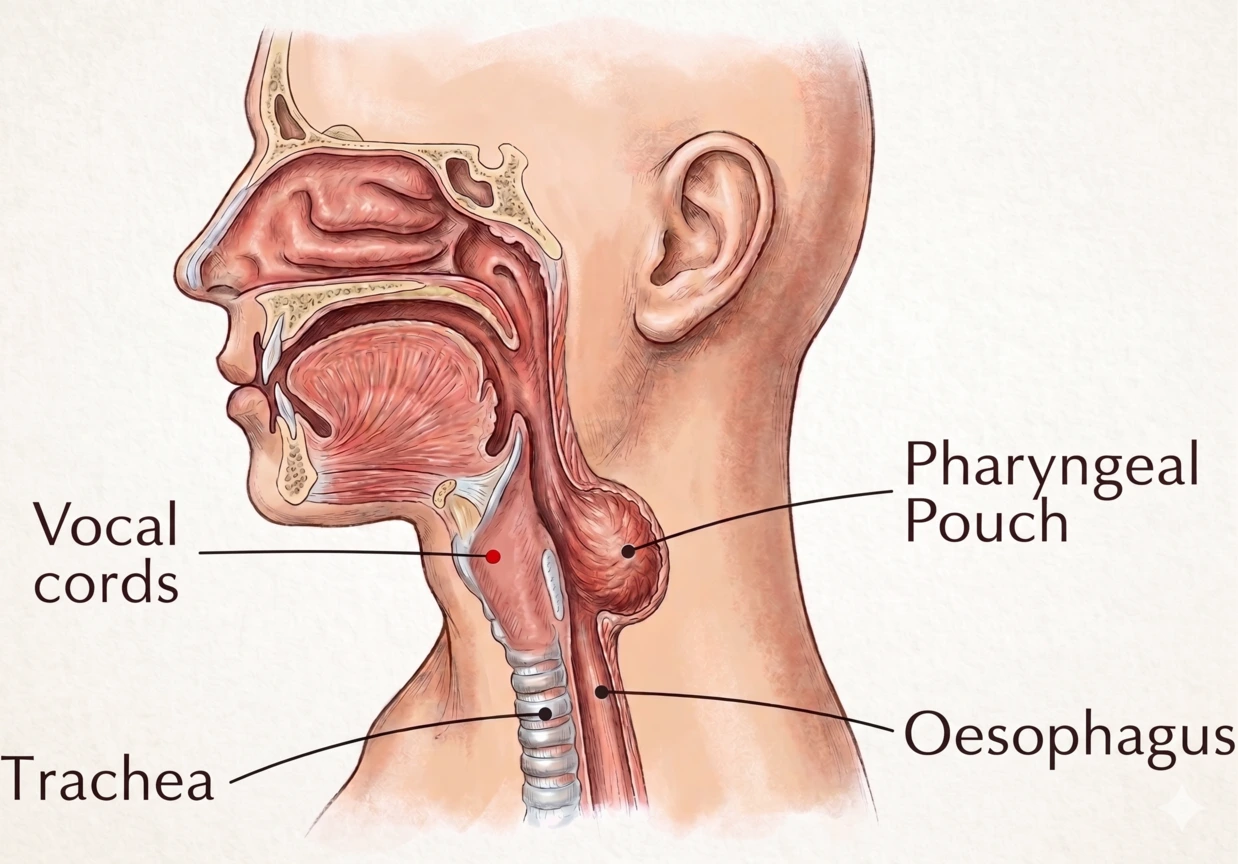
Pharyngeal pouch surgery is an operation to fix a small pocket or sac that forms in the wall of your gullet (also known as the oesophagus or food pipe), specifically in the upper part. This condition is sometimes called a Zenker's diverticulum. This pouch develops because of a weakness in the muscles of the upper gullet, which means they don't relax as effectively as they should when you swallow. Over time, this can cause a bulge in the lining of your throat.
Food and drink can get caught in this pouch instead of passing smoothly down into your stomach. This problem is more common in older individuals, particularly those over 70, and tends to affect men more often than women. The main goal of the surgery is to address this pocket, allowing food to pass freely and improving your ability to swallow, while also preventing potential complications like chest infections.
There are a few different ways this surgery can be performed, and the choice depends on factors like the size of your pouch, your general health, and what your doctors see during pre-operative tests. The most common approach is called endoscopic stapling, which is done through your mouth without needing an external cut. Other options include cricopharyngeal myotomy, which involves cutting a specific muscle, or excision diverticulectomy, which is an open surgery where the pouch is removed through a cut in your neck.
Why Might I Need Pharyngeal Pouch Surgery?
You might need pharyngeal pouch surgery if you are experiencing symptoms because food and drink are getting trapped in the pouch in your gullet. The aim of the surgery is to significantly improve these symptoms and prevent more serious health issues. Here are the main reasons why this procedure might be recommended for you:
- Difficulty Swallowing (Dysphagia): This is one of the most common and bothersome symptoms. You might feel like food is getting stuck in your throat or that it's hard to get it down.
- Regurgitation: Food that has been swallowed can come back up, often hours after eating, and it might be undigested. This can be particularly unpleasant and can happen even when you're lying down.
- Gurgling Noises: You might hear gurgling sounds coming from your throat as food and liquid move in and out of the pouch.
- Lump Sensation: Some people describe feeling a persistent lump in their throat, even when they haven't eaten.
- Choking and Coughing: Food or liquid getting caught in the pouch can sometimes spill over into your windpipe, leading to choking or coughing, especially after eating.
- Bad Breath (Halitosis): Trapped food in the pouch can decompose, causing an unpleasant smell.
- Hoarseness and Chronic Cough: Irritation from regurgitated contents can sometimes affect your voice or cause a persistent cough.
- Weight Loss: If swallowing becomes very difficult or uncomfortable, you might start to eat less, leading to unintended weight loss.
- Increased Risk of Chest Infections: When food or liquid from the pouch spills into your lungs, it can cause serious chest infections, such as pneumonia. This is a significant concern, particularly for older individuals, and surgery aims to prevent these potentially life-threatening complications.
If left untreated, these symptoms can worsen over time, leading to ongoing discomfort, malnutrition, and recurrent lung problems. In very rare cases, a pharyngeal pouch can even be associated with a slightly increased risk of cancer. For small pouches that aren't causing any symptoms, your doctor might suggest monitoring them rather than immediate surgery. However, if your symptoms are affecting your quality of life or posing a risk to your health, surgery is usually the most effective treatment to improve your swallowing and prevent future complications.
What Happens Before Surgery?
Preparing for pharyngeal pouch surgery involves several important steps to ensure you are fit for the procedure and that everything runs smoothly. This process usually starts a few weeks before your operation date.
Initial Outpatient Consultation and Diagnosis
Your journey typically begins with an outpatient appointment where your symptoms are discussed, and a physical examination is performed. To confirm the diagnosis of a pharyngeal pouch and assess its size and location, you will usually have a special X-ray called a barium swallow scan. During this test, you drink a liquid containing barium, which shows up on X-rays, allowing doctors to see how it moves down your gullet and if it collects in a pouch. This scan is crucial for planning the best surgical approach for you.
Pre-operative Assessment (1-2 Weeks Before Surgery)
About one to two weeks before your scheduled surgery, you will attend a pre-operative assessment appointment. This is a comprehensive health check to make sure you are well enough for a general anaesthetic and the operation itself. During this appointment, a nurse or doctor will:
- Take a detailed medical history, asking about any past illnesses, operations, and current health conditions.
- Perform a physical examination.
- Carry out various tests, which may include:
- Blood tests: To check your general health, blood count, kidney function, and blood clotting ability.
- X-rays: Often a chest X-ray to check your lungs and heart.
- ECG (electrocardiogram): To check your heart's electrical activity.
- Discuss your regular medications. It is very important to tell them about all medicines you are taking, including over-the-counter drugs, supplements, and herbal remedies.
- Provide specific instructions regarding blood-thinning medications (e.g., Warfarin, Aspirin, Clopidogrel). You will likely be advised to stop these a certain number of days before surgery to reduce the risk of bleeding. Always follow these instructions carefully.
- Explain the different surgical choices available to you (endoscopic stapling, cricopharyngeal myotomy, or excision diverticulectomy) and discuss which option is most suitable based on your barium swallow findings, pouch size, age, and overall health.
- Give you a consent form to read and sign. This form confirms that you understand the procedure, its benefits, and its potential risks, and that you agree to the surgery.
- Provide you with detailed instructions about fasting before surgery.
The Day Before Surgery
You will be given clear instructions on when to stop eating and drinking before your operation. Typically, you will need to stop eating solid food at least six hours before your surgery and stop drinking clear fluids (like water, black tea, or clear apple juice) at least two hours before. It is crucial to follow these fasting instructions precisely to ensure your stomach is empty, which reduces the risk of complications during anaesthesia.
On the Morning of Surgery
You will be asked to come to the hospital on the morning of your surgery. Once you arrive, you will be checked in and shown to your ward or preparation area. A nurse will take your vital signs (temperature, pulse, blood pressure) and confirm your details. You will also meet your surgeon and the anaesthetist. The anaesthetist will discuss the general anaesthetic with you, answer any questions you may have, and ensure you are comfortable and ready for the procedure.
What Happens During Surgery?
Pharyngeal pouch surgery is performed under a general anaesthetic, meaning you will be completely asleep and will not feel any pain during the procedure. The operation typically lasts about an hour, though this can vary depending on the specific technique used.
There are a few different surgical approaches, and the one chosen for you will have been discussed during your pre-operative assessment:
1. Endoscopic Stapling (Most Common Approach)
This is the most frequently used method and is considered less invasive. Your surgeon will:
- Pass a rigid metal tube, called an endoscope (a type of telescope), through your mouth and down into your throat. This allows them to clearly see the pharyngeal pouch.
- Once the pouch is clearly visible, a special stapling device or stapling gun is inserted through the endoscope.
- This device is used to cut and staple the wall that separates the pouch from your main gullet. This effectively creates a common cavity, opening up the neck of the pouch so that food and drink can drain freely into your gullet instead of getting trapped.
- During this process, the cricopharyngeal muscle (a sphincter or ring-like muscle at the top of your gullet) is also cut. This helps to relax the muscle, which is often too tight and contributes to the formation of the pouch, thereby reducing the chance of the problem coming back.
2. Cricopharyngeal Myotomy
This procedure specifically involves dividing the cricopharyngeal muscle to relax it. It is often suitable for smaller pouches where the main issue is the muscle not relaxing properly. This can sometimes be done as part of the endoscopic stapling procedure or as a standalone operation.
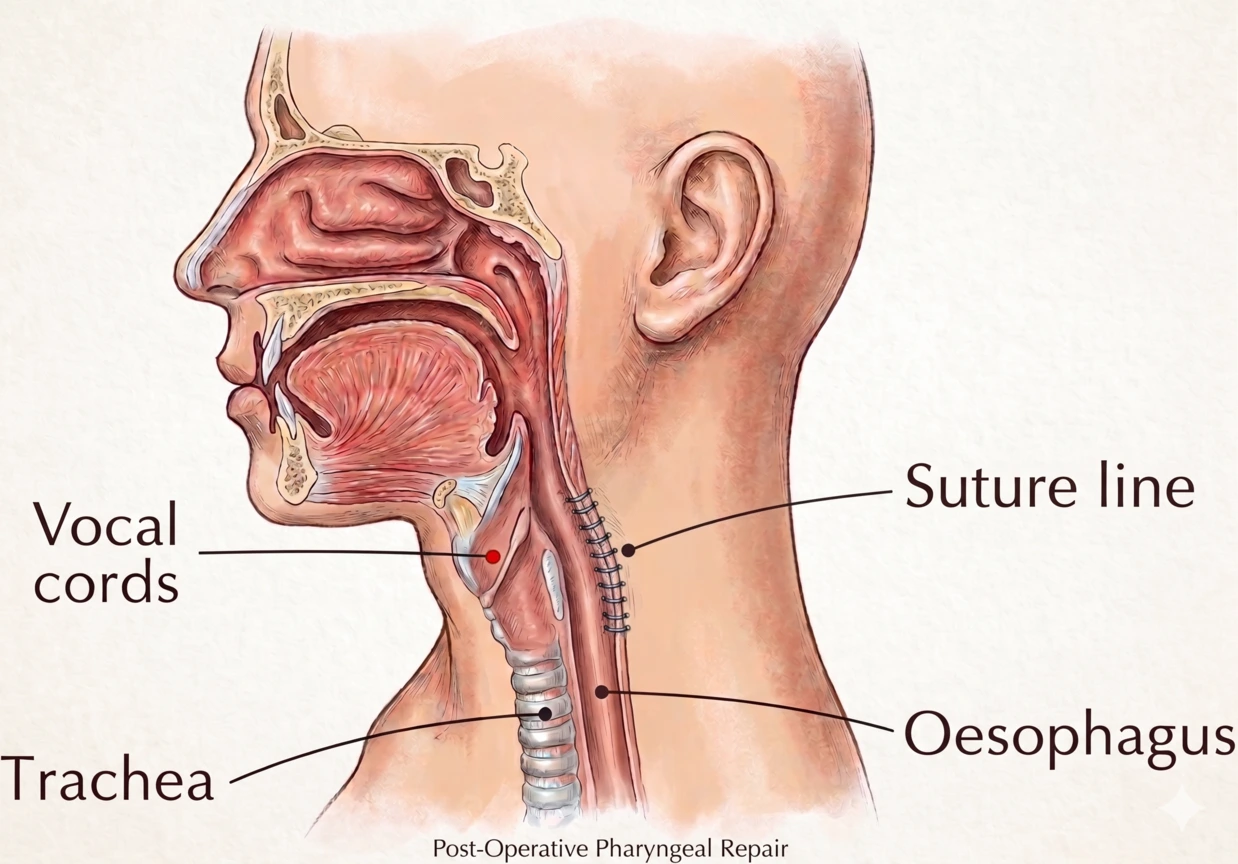
3. Excision Diverticulectomy (Open Surgery)
This approach is typically reserved for larger pouches or when endoscopic access is difficult. It involves:
- Making a small incision (cut) in your neck.
- Through this incision, the surgeon carefully locates the pharyngeal pouch.
- The pouch is then completely removed (excised).
- The opening where the pouch was attached to the gullet is then closed with stitches.
What Happens After Surgery?
Your recovery begins immediately after your pharyngeal pouch surgery. The post-operative period involves careful monitoring, a gradual return to eating, pain management, and specific instructions for your recovery at home.
Immediately After the Operation (Recovery Room)
When you wake up from the general anaesthetic, you will be in the recovery room. Nurses will monitor your vital signs closely, including your temperature, pulse, and blood pressure. You might feel a bit drowsy or confused initially. You will likely have a sore throat, which is normal after this type of surgery, especially if an endoscope was passed through your mouth.
On the Day of Surgery (Ward Recovery)
Once you are fully awake and stable, you will be moved back to your ward. You will be kept nil by mouth (meaning no food or drink) for approximately four to six hours after the surgery to allow the surgical area to begin healing and to reduce the risk of complications. After this period, if your surgeon and nurses are happy, you will be allowed to start with sips of sterile water. If you tolerate this well, you will gradually progress to other clear fluids.
For patients who had an open procedure (excision diverticulectomy), you may have a small wound drain in your neck, which helps to remove any fluid that collects. You might also have neck clips or sutures (stitches) that will need to be removed later.
The First Few Days in Hospital
Over the next 12 to 24 hours, you will gradually progress from fluids to a soft diet. Most patients are able to start eating soft foods by the next day. It's important to chew your food thoroughly and eat slowly. For some open procedures, a naso-gastric tube (a thin tube passed through your nose into your stomach) might be used for 5-7 days to provide nutrition while the surgical site heals, meaning you won't eat by mouth during this time.
Pain relief will be provided to manage your throat soreness. You may also receive antibiotics for 24-48 hours to prevent infection, and daily Heparin injections (a blood thinner) to prevent blood clots, especially if you had an open procedure or are less mobile.
The length of your hospital stay varies depending on the type of surgery you had:
- Endoscopic stapling: Many patients can go home the same day or the next day.
- Open surgery (excision diverticulectomy): You will typically need to stay in hospital for 5-7 days, or sometimes up to 7-10 days, especially if you had wound drains or a naso-gastric tube. Wound drains are usually removed after 2-3 days.
Discharge Criteria and Going Home
You will be discharged from the hospital once you are comfortable, managing to drink and eat a soft diet, and your medical team is satisfied with your recovery progress. Before you leave, you will receive detailed instructions on wound care (if applicable), pain management, and what to expect during your recovery at home.
Recovery at Home (First Few Weeks)
- Diet: Continue with a soft diet for a few days, gradually reintroducing normal foods as you feel comfortable. Avoid very hard, crunchy, or spicy foods initially.
- Pain Management: Your throat will likely remain sore for a few days. Continue taking prescribed painkillers as advised by your doctor.
- Activity: It is recommended that you refrain from strenuous activity and work for about two weeks to allow your body to heal properly. Listen to your body and gradually increase your activity levels.
- Wound Care (for open procedures): If you had an open procedure, you will be given instructions on how to care for your neck incision. Any neck clips or sutures are usually removed by a nurse at your GP practice or in a hospital clinic 7-10 days after surgery.
Long-Term Recovery and Follow-up
Full recovery typically takes about two weeks, after which most people can return to their normal activities and work. You will usually have a follow-up appointment with your surgeon about 4-6 weeks after your discharge to check on your progress and ensure there are no ongoing issues.
What are the Potential Risks and Complications?
As with any surgical procedure, pharyngeal pouch surgery carries potential risks and complications. Your surgical team will discuss these with you in detail before your operation, ensuring you understand them fully. It's important to remember that serious complications are rare.
General Anaesthetic Risks
Before your surgery, the anaesthetist will discuss the risks associated with general anaesthesia. These risks are generally low, but can be higher for individuals with existing medical conditions. Potential general risks include:
- Blood clots: In the legs (deep vein thrombosis, DVT) or lungs (pulmonary embolism).
- Heart problems: Such as a heart attack.
- Chest infection: Including pneumonia.
- Stroke.
- Allergic reaction to anaesthetic drugs.
- In very rare cases, death.
Specific Risks of Pharyngeal Pouch Surgery
- Gullet (Oesophageal) Perforation or Tear: This is a serious but rare complication, occurring in just over 2% of cases. It means a small hole or tear develops in the wall of your gullet or throat during or after the procedure. If this happens, food or liquid can leak into your chest cavity, leading to a severe chest infection called mediastinitis. This complication can be life-threatening and may require:
- Insertion of drainage tubes.
- Temporary feeding tubes (e.g., nasogastric tube).
- Strong antibiotics.
- A prolonged hospital stay.
- Further surgery to repair the tear.
- Bleeding: A small amount of bleeding is normal, but significant bleeding requiring a blood transfusion is rare (less than 1% of cases.
- Infection: There is a low risk of infection at the surgical site (1-2%), or a neck abscess (a collection of pus) if you had an open procedure. Antibiotics are often given to help prevent this.
- Damage to Teeth, Gums, or Lips: This can occur when the endoscope is passed through your mouth, especially if you have fragile teeth or dental work. Your surgeon will take precautions to minimise this risk.
- Sore Throat: A sore throat is very common after surgery, particularly with endoscopic approaches, and can last for several days. This is usually managed with painkillers.
- Recurrence of Swallowing Problems: Although the surgery aims to resolve the symptoms, there is a small chance that swallowing difficulties or the pouch itself could recur over time.
- Stenosis (Narrowing): In rare cases, the surgical site can heal by forming scar tissue that narrows the gullet, making swallowing difficult again. This may require further procedures to widen the area.
- Fistula: An abnormal connection between the gullet and another structure (e.g., the windpipe) is a very rare complication.
- Chest Infection/Pneumonia: Even without a perforation, there's a small risk of developing a chest infection after surgery, especially if you have other health conditions.
- Voice Changes: In very rare instances, particularly with open neck surgery, there can be temporary or, even more rarely, permanent changes to your voice due to irritation or injury to nearby nerves.
Your medical team will take every precaution to minimise these risks and will monitor you closely for any signs of complications after your surgery.
Long-Term Outlook
The long-term outlook after pharyngeal pouch surgery is generally very positive, with most patients experiencing significant improvement in their swallowing and a resolution of their symptoms.
Expected Recovery Timeline
While your initial hospital stay might be short (especially for endoscopic procedures), the full recovery process takes a little longer:
- First few days: You will be focused on managing your sore throat and gradually progressing your diet from fluids to soft foods.
- First two weeks: Most people will need to take about two weeks off from work and avoid strenuous activities to allow the surgical area to heal completely. During this time, you should continue to eat a soft diet and avoid anything that might irritate your throat.
- Beyond two weeks: You should be able to gradually return to your normal diet and activities. You will likely notice a significant improvement in your swallowing, and symptoms like regurgitation, gurgling, and coughing after eating should resolve.
Long-Term Outcomes
The primary goal of pharyngeal pouch surgery is to improve your swallowing and prevent serious complications like chest infections. For the vast majority of patients, the surgery is successful in achieving these aims, leading to a much better quality of life. The cutting of the cricopharyngeal muscle during endoscopic stapling is specifically designed to reduce the chance of the pouch recurring.
Follow-up Schedule
You will typically have a follow-up appointment with your surgeon approximately 4 to 6 weeks after you are discharged from the hospital. This appointment is important for your surgeon to check on your recovery, ensure that your symptoms have improved, and address any concerns you might have. They will assess the healing of the surgical site and discuss your long-term progress.
When to Seek Urgent Medical Attention
While serious complications are rare, it is crucial to be aware of the signs that might indicate a problem. You should contact your hospital or seek urgent medical attention immediately if, after discharge, you experience any of the following:
- Severe chest or back pain.
- A high fever (temperature above 38°C).
- Difficulty breathing or shortness of breath.
- Increasing pain in your throat or neck that is not relieved by painkillers.
- New or worsening difficulty swallowing.
- Any signs of infection around a neck incision (if you had open surgery), such as redness, swelling, warmth, or pus.
- Feeling generally unwell, much worse than expected during recovery.
These symptoms could indicate a serious complication, such as a leak or infection, and require prompt medical assessment.
Ready to Take the Next Step?
Book a consultation with Mr Ahmad Hariri to discuss your specific needs and treatment options.
Book a Consultation