
Septoplasty

Disclaimer: Disclaimer: This leaflet provides general information and is intended for educational purposes only. It should not be used as a substitute for professional medical advice, diagnosis, or treatment. Always seek the advice of a qualified healthcare professional for any health concerns or before making any decisions related to your health or treatment.
This leaflet may contain links to external websites or resources (e.g. YouTube) for demonstration purposes; however, these links are provided for information only. Clinicol.co.uk is not affiliated with, does not endorse, and is not responsible for the content, accuracy, or copyright compliance of these external sources. Use of these external links is at your own discretion and risk.
What is a Septoplasty?
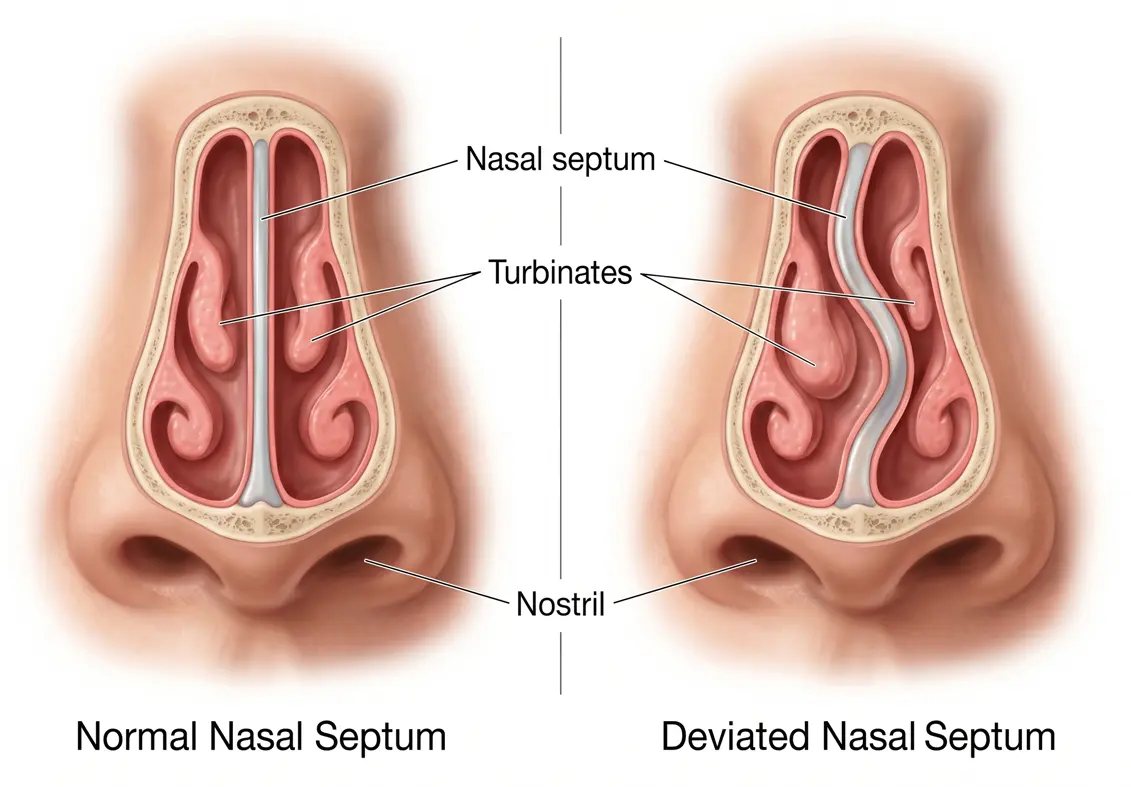
A septoplasty is a common operation designed to straighten the nasal septum. The nasal septum is the wall of cartilage and bone that divides your two nostrils inside your nose. Think of it like a partition wall in a house; ideally, it should be straight down the middle, creating two equally sized passages. However, for many people, this wall can be bent, twisted, or off-centre, which is known as a deviated septum.
This procedure is performed entirely internally, meaning the surgeon works through your nostrils, so there are no cuts or scars on the outside of your nose. This also means you won't experience external bruising or swelling on your face from the surgery itself. The main goal of a septoplasty is to improve the function of your nose, primarily your breathing, by correcting this internal deviation.
The operation is typically carried out under a general anaesthetic, which means you will be completely asleep and won't feel anything during the procedure. It usually takes between 30 to 45 minutes to complete. During this time, your surgeon will carefully make small internal cuts to access the septum, gently reshape or remove parts of the cartilage and bone that are causing the blockage, and then reposition the septum to a straighter position. While the aim is to make the septum as straight as possible, sometimes a complete, perfectly straight result isn't achievable, but significant improvement is usually expected.
After the septum has been straightened, dissolvable stitches are used inside your nose to hold everything in place. In some cases, your surgeon might decide to place soft nasal packs inside your nose temporarily. These packs help to prevent bleeding and support the newly straightened septum. If used, these packs are usually removed within a few hours or the next morning before you go home.
Why Might I Need Septoplasty?
You might be considering a septoplasty if you experience ongoing problems due to a bent or twisted nasal septum. The primary reason for this operation is to improve the function of your nose, making it easier for you to breathe and addressing other related health issues. It's important to understand that septoplasty is not a cosmetic procedure; its purpose is to correct internal structural problems, not to change the external appearance of your nose, unless it's combined with a different operation called a septorhinoplasty.
Here are the main reasons why your doctor might recommend a septoplasty:
- Persistent Blocked Nose or Difficulty Breathing: If you have a continuous feeling of a blocked nose or struggle to breathe through your nose due to a severely deviated septum, and this hasn't improved after trying other treatments for at least three months. These other treatments might include nasal steroid sprays or saline (saltwater) rinses, which aim to reduce swelling and clear your nasal passages.
- Recurrent Nosebleeds (Epistaxis): If you experience repeated nosebleeds that are directly linked to the bend or twist in your septum. A sharp bend can expose blood vessels to drying air or trauma, making them more prone to bleeding.
- Repeated Sinus Infections (Sinusitis): If you suffer from recurrent sinus infections that haven't gotten better after at least three months of medical treatment, such as intranasal steroid sprays and saline irrigation. A deviated septum can block the natural drainage pathways of your sinuses, leading to a build-up of mucus and making you more susceptible to infection. By straightening the septum, the surgeon can open up these pathways, allowing your sinuses to drain properly.
- To Create Space for Other Procedures: Sometimes, a septoplasty is performed to create more space inside your nose, which is necessary for other operations, such as sinus surgery to treat nasal polyps or chronic sinusitis. For example, if you have nasal polyps that haven't responded to at least six months of maximal medical treatment, a septoplasty might be done first to allow better access for polyp removal.
Before surgery is considered, your doctor will have thoroughly investigated your symptoms and documented that conservative measures have been tried and haven't provided sufficient relief. This ensures that surgery is the most appropriate next step for your specific condition.
What Happens Before Surgery?
Preparing for your septoplasty involves several important steps, designed to ensure you are fit for surgery and that everything runs smoothly. Here's a chronological guide to what you can expect:
- Initial Consultation and Diagnosis: This is where your journey begins. You will have met with an ENT specialist who will have examined your nose, discussed your symptoms, and confirmed that a deviated septum is the cause of your problems. They will have explored non-surgical options with you, such as nasal sprays or saline rinses, and documented their effectiveness (or lack thereof).
- Decision for Surgery and Funding Approval: Once it's clear that surgery is the best course of action, your doctor will discuss the procedure with you in detail. For NHS patients, your doctor will need to seek approval for the funding of your operation, often through a system like Blueteq, to ensure that your procedure meets specific clinical criteria set by NHS England.
- Pre-assessment Clinic Appointment: A few weeks before your operation, you will be invited to attend a pre-assessment clinic. This is a crucial appointment where a nurse or doctor will check your general health to make sure you are well enough for surgery and a general anaesthetic. During this visit, you can expect:
- Medical History Review: They will ask about your past and current health conditions, any medications you are taking (including over-the-counter drugs, supplements, and herbal remedies), and any allergies you have.
- Physical Examination: This might include checking your blood pressure, pulse, and breathing.
- Tests: You may have some routine tests, such as blood tests (to check for things like anaemia or infection), an ECG (electrocardiogram) to check your heart's electrical activity, and screening for MRSA (a type of bacteria).
- Discussion about Medications: You will be advised which medications to stop taking before surgery (e.g., blood thinners) and which ones to continue. It's vital to follow these instructions carefully.
- Opportunity to Ask Questions: This is your chance to ask any remaining questions you have about the surgery or your recovery.
- The Day Before Surgery: You will usually be given specific instructions regarding food and drink. It's very important to follow these instructions to ensure your stomach is empty before the anaesthetic, which reduces the risk of complications. Generally, you will need to stop eating solid food for at least 6 hours before your operation and stop drinking clear fluids (like water, black tea/coffee without milk, clear apple juice) for at least 2 hours before.
- On the Morning of Surgery: You will be asked to arrive at the hospital at a specific time. Please bring any medications you regularly take, comfortable clothing, and any necessary paperwork. A nurse will check you in, and you'll have a chance to speak with your surgeon and the anaestestist before the procedure. They will confirm your understanding of the operation and answer any last-minute questions.
What Happens During Surgery?
On the day of your septoplasty, once you have been checked in and prepared, you will be taken to the operating theatre. Here’s what generally happens:
- General Anaesthetic: The first step is to administer the general anaesthetic. An anaesthetist will be with you throughout the procedure to ensure you are completely asleep and comfortable. They will monitor your vital signs closely. You will drift off to sleep and won't be aware of anything until you wake up in the recovery room.
- The Surgical Procedure: Once you are asleep, your surgeon will begin the operation. As mentioned, septoplasty is an internal procedure, meaning there are no cuts made on the outside of your nose, so you won't have any external scars.
- The surgeon works through your nostrils, using small internal incisions to access the cartilage and bone that form your nasal septum.
- They will carefully lift the lining of the septum to expose the bent or twisted parts of the cartilage and bone.
- The surgeon will then reshape, trim, or remove the sections of the septum that are causing the blockage or deviation. The aim is to reposition the septum into a straighter, more central position, improving the airflow through your nasal passages. It's important to understand that while the goal is to achieve the best possible straightness, sometimes a perfectly straight septum isn't entirely achievable, but significant functional improvement is expected.
- Once the septum is straightened, the lining is carefully put back in place, and dissolvable stitches are used internally to hold everything together. These stitches will naturally disappear over time, so you won't need to have them removed.
- Nasal Packing (if needed): In some cases, your surgeon might decide to place soft, temporary packs inside your nose at the end of the operation. These packs are designed to help stop any bleeding and provide support to the newly straightened septum while it begins to heal. If packs are used, they will cause your nose to feel completely blocked, similar to a very heavy cold. These packs are usually removed within a few hours of your surgery or the following morning before you are discharged.
- Duration: The entire operation typically takes between 30 to 45 minutes.
After the surgery is complete, you will be gently woken up and taken to the recovery room.
What Happens After Surgery?
Your recovery journey begins immediately after your septoplasty. Here’s a detailed guide to what you can expect, from waking up to long-term healing:
- Immediately After Surgery (Recovery Room):
- When you wake up from the anaesthetic, you will be in the recovery room. You might feel a bit groggy or disoriented at first.
- Your nose will likely feel blocked, similar to having a heavy cold, especially if nasal packs have been used.
- You may experience some mild discomfort or tenderness in your nose, and possibly a headache. The nursing staff will offer you pain relief, such as paracetamol or ibuprofen, to manage this.
- If you have nasal packs, you might notice some blood-stained fluid draining from your nose. This is normal.
- On the Ward (Day of Surgery):
- Once you are fully awake and stable, you will be moved to the ward.
- If you have nasal packs, they will usually be removed within a few hours or the next morning. This might cause a small amount of bleeding, which should settle within about 30 minutes.
- You will be encouraged to drink clear fluids and, if you feel up to it, eat a light meal. It's best to avoid very hot food and drinks for the first 48 hours, as these can increase the risk of bleeding.
- Most septoplasty procedures are performed as a day case, meaning you can usually go home on the same day, provided you are feeling well and have someone to take you home and stay with you for the first 24 hours.
- Before you leave, the nursing staff will give you detailed discharge instructions, including information on pain management, wound care, and what to do if you have any concerns. You may be prescribed nasal drops, sprays, or antibiotic cream to help with healing and prevent infection.
- The First Few Days at Home:
- Rest: It's crucial to rest for the first 48 hours after surgery. Avoid any strenuous activity. Sleeping with your head slightly elevated (e.g., using extra pillows) can help reduce swelling and discomfort.
- Pain Management: Continue to take paracetamol or ibuprofen as advised by your healthcare team to manage any discomfort or headaches.
- Nasal Care:
- You will likely experience some mild blood-stained watery fluid or mucus from your nose for up to two weeks. This is normal.
- Do NOT blow your nose for the first 24-48 hours. After this, you can start to blow your nose very gently for the first week. Blowing too hard can cause bleeding or disrupt the healing process.
- If you need to sneeze, try to do so with your mouth open. This reduces the pressure inside your nose.
- Use any prescribed nasal drops, sprays, or douches as directed to keep your nasal passages clean and moist.
- Avoid hot, steamy showers or baths for the first 48 hours, as the heat can increase the risk of bleeding. Keep the nasal area clean.
- Diet and Alcohol: You can resume your normal diet. However, it's important to avoid or minimise alcohol consumption for at least one week, as alcohol can increase the risk of bleeding.
- Environment: Try to avoid dusty, smoky, or crowded environments for about a week. These can irritate your nose and increase the risk of infection.
- Driving: You can usually resume driving 48 hours after your operation, provided you feel well and are not taking strong pain medication that could impair your judgment.
- The First Few Weeks (2-4 Weeks Post-Op):
- Activity Restrictions:
- Avoid heavy lifting and strenuous exercise for at least two weeks. Gentle walking is encouraged, but anything that raises your heart rate significantly or puts strain on your body should be avoided for 2-3 weeks to prevent discomfort and bleeding.
- Contact sports (e.g., rugby, football) must be avoided for at least four weeks to protect your healing nose from injury.
- Swimming is prohibited for at least a month due to the risk of infection from water entering your nasal passages.
- Work: Most people require 10 to 14 days off work, depending on the nature of their job. If your job involves heavy physical activity or exposure to dust, you may need more time off. You can get a sick note from the hospital ward or your GP.
- Flying: It's generally recommended to avoid flying for a minimum of 21 days, and ideally up to six weeks, after septoplasty. The dry, recirculated air in planes can irritate your nasal passages and increase the risk of infection or discomfort due to pressure changes.
- Smoking: If you smoke, it's strongly advised to stop. Smoking irritates the nose, slows down the healing process, and increases the risk of complications.
- Nasal Congestion: Your nose will likely feel blocked, similar to a heavy cold, for 10 to 14 days as it heals. This is normal and will gradually improve.
- Longer-Term Recovery:
- Your internal stitches are dissolvable and will disappear on their own.
- You may have a follow-up appointment with your surgeon, typically 4 to 8 weeks after your operation, to check on your healing and discuss your progress. However, if your recovery is straightforward, some patients may not require a routine outpatient follow-up.
What are the Potential Risks and Complications?
While septoplasty is generally a safe and routine procedure, like all surgeries, it carries some potential risks and complications. Your surgical team will take every precaution to minimise these, but it's important for you to be aware of them:
- General Anaesthetic Risks: Although rare, there are risks associated with general anaesthesia, such as allergic reactions, breathing problems, or heart issues. Your anaesthetist will discuss these with you before your surgery.
- Bleeding:
- Initial Bleeding: It's normal to have some blood-stained watery fluid or mild nosebleeds in the first couple of weeks after surgery.
- Persistent or Heavy Bleeding: Occasionally, bleeding can be more significant and may require you to return to the hospital. In rare cases, nasal packs might need to be reinserted to control the bleeding.
- Septal Haematoma: This is a rare complication where a collection of blood forms under the lining of the septum. If this happens, it usually needs to be drained to prevent further problems.
- Infection: Infection is rare but can be serious. Signs of an infection include increasing pain, a fever (high temperature), and a discharge from your nose that is thick, yellow, or green. If you notice these symptoms, you should contact your doctor immediately.
- Septal Perforation (Hole in the Septum): Very rarely, a hole can develop in the septum. This can sometimes cause a whistling sound when you breathe, crusting inside the nose, or recurrent nosebleeds. However, many septal perforations cause no symptoms at all and go unnoticed.
- Numbness of Teeth: You might experience some temporary numbness in your upper front teeth or gums after the surgery. This usually settles down on its own over time as the nerves recover.
- Recurrence of Deviation: Sometimes, despite the surgeon's best efforts, the septum may re-bend or shift slightly as it heals. If this happens and continues to cause significant symptoms, further treatment might be considered.
- No Improvement in Symptoms: While septoplasty aims to significantly improve your breathing and related symptoms, surgery is not always 100% successful in completely resolving all symptoms. There is a small chance that your symptoms may not improve as much as hoped.
Your surgical team will discuss these risks with you in detail before your operation and answer any questions you may have.
Long-Term Outlook
After your septoplasty, most people experience a significant improvement in their nasal breathing and a reduction in related symptoms. However, it's important to have realistic expectations and understand the typical recovery timeline and potential long-term outcomes.
- Initial Recovery:
- Your nose will feel blocked, similar to a heavy cold, for about 10 to 14 days as the internal swelling settles and healing progresses.
- You can expect mild blood-stained mucus or discharge for up to two weeks.
- Most individuals need to take 10 to 14 days off work, depending on the physical demands of their job.
- Resuming Activities:
- Gentle activities like walking can be resumed after a few days.
- Strenuous activities, sports, and heavy lifting should be avoided for 2 to 3 weeks.
- Contact sports require a longer break, typically four weeks, to protect your healing nose from injury.
- Swimming should be avoided for at least one month to prevent infection.
- Flying is generally not recommended for a minimum of 21 days, and ideally six weeks, due to potential discomfort from pressure changes and the risk of irritation from dry cabin air.
- Follow-up Care:
- You will usually have a follow-up appointment with your surgeon about 4 to 8 weeks after your operation. This is to check on your healing, assess your breathing, and discuss your progress.
- In some cases, if your recovery is straightforward and you are doing well, a routine outpatient follow-up may not be necessary.
- Expected Outcomes:
- The primary goal of septoplasty is to improve your nasal breathing by straightening the internal structure of your nose. Many patients report a significant improvement in airflow and a reduction in symptoms like recurrent nosebleeds or chronic sinusitis.
- It's important to remember that while the aim is to achieve the best possible result, sometimes the septum may re-bend slightly over time, or symptoms may not completely resolve. If this happens and causes ongoing problems, further treatment options can be discussed.
- When to Seek Urgent Medical Attention:
While complications are rare, it's crucial to know when to seek immediate medical advice. You should contact your GP, the hospital ward, or attend your nearest Accident and Emergency (A&E) department if you experience any of the following: - Heavy, Fresh Bleeding: If you experience fresh, steady bleeding from your nose that does not stop after pinching the fleshy part of your nose, leaning forward, and applying ice to your forehead/bridge of your nose for 30 minutes.
- Signs of Infection: Increasing pain in your nose or face, a high temperature (fever), or a thick, discoloured discharge from your nose.
- Severe or Worsening Pain: Pain that is not controlled by your prescribed pain relief.
- Any other sudden and concerning symptoms.
Your healthcare team is there to support you throughout your recovery. Do not hesitate to contact them if you have any worries or questions.
Ready to Take the Next Step?
Book a consultation with Mr Ahmad Hariri to discuss your specific needs and treatment options.
Book a Consultation