
Total Thyroidectomy

Disclaimer: Disclaimer: This leaflet provides general information and is intended for educational purposes only. It should not be used as a substitute for professional medical advice, diagnosis, or treatment. Always seek the advice of a qualified healthcare professional for any health concerns or before making any decisions related to your health or treatment.
This leaflet may contain links to external websites or resources (e.g. YouTube) for demonstration purposes; however, these links are provided for information only. Clinicol.co.uk is not affiliated with, does not endorse, and is not responsible for the content, accuracy, or copyright compliance of these external sources. Use of these external links is at your own discretion and risk.
What is the Thyroid Gland and What Does It Do?
The thyroid gland is a small, butterfly-shaped endocrine gland located in the lower part of the front of your neck, just below your Adam's apple (or where it would be). It has two lobes, one on each side of your windpipe (trachea), which are connected by a narrow bridge of tissue called the isthmus.
The main job of the thyroid gland is to produce thyroid hormones, primarily thyroxine (T4) and triiodothyronine (T3). These hormones are released into your bloodstream and travel to all parts of your body. They play a crucial role in regulating your body's metabolism – the speed at which your body cells and functions work. If your thyroid produces too much hormone (hyperthyroidism or thyrotoxicosis), your body's processes speed up. If it produces too little hormone (hypothyroidism), your body's processes slow down.
What is a Total Thyroidectomy?
A total thyroidectomy is a surgical operation to remove your entire thyroid gland

Why Might I Need a Total Thyroidectomy?
Surgery to remove the entire thyroid gland is recommended for several reasons, including:
- Thyroid Cancer: If you have been diagnosed with thyroid cancer (e.g., papillary, follicular or medullary thyroid cancer), a total thyroidectomy is occasionally the primary treatment. Sometimes, this may also involve removing lymph nodes in the neck (neck dissection).
- Suspicious Thyroid Nodules or Swellings: If you have a nodule or swelling in your thyroid where cancer cannot be definitively ruled out by tests like biopsies, your surgeon may recommend a total thyroidectomy to make a diagnosis and provide treatment.
- Large Goitre (Enlarged Thyroid Gland): If your thyroid gland is significantly enlarged (a goitre) and is causing symptoms such as:
- Difficulty breathing (compressing the windpipe).
- Difficulty swallowing (compressing the gullet/oesophagus).
- An unsightly appearance.
- Graves' Disease (Hyperthyroidism): If you have an overactive thyroid gland due to Graves' disease, and other treatments (like medication or radioactive iodine) have not been effective, are unsuitable, or if you prefer surgery.
- Multi-nodular Goitre: If you have multiple nodules in your thyroid gland that are causing problems or are suspicious, and total removal is considered the best approach.
- Your surgeon will discuss the specific reasons for recommending a total thyroidectomy in your case.

What Happens Before Surgery?
Before your operation, several steps will be taken:
- Outpatient Consultation: You will have an appointment with your surgeon to discuss the operation in detail, including the reasons for it, the procedure itself, potential risks, and what to expect. You will also have the opportunity to meet a clinical nurse specialist who can provide further information and support. This is the time to ask any questions you have.
- Informed Consent: Your surgeon will ensure you understand the operation and will ask for your informed consent to proceed.
- Pre-operative Assessment: Usually one to two weeks before your surgery, you will attend a pre-operative assessment clinic. A specialist nurse will:
- Review your general health and medical history.
- Ask about any medications you are currently taking (please bring a list).
Arrange any necessary tests, such as:
- Routine blood tests (including thyroid function and calcium levels).
- ECG (electrocardiogram or heart trace).
- MRSA (methicillin-resistant Staphylococcus aureus) skin test.
- You may also be seen by an anaesthetist or a doctor if needed.
- Voice Assessment: Your surgeon may check your vocal cord function before surgery, especially if your voice is critical for your profession or if there are concerns about pre-existing voice issues.
- Medication Adjustments: You will be advised if you need to stop any medications before surgery, such as aspirin, anti-inflammatory drugs, or blood thinners (e.g., Warfarin). Special arrangements will be made if you are on Warfarin.
- Smoking: If you smoke, it is strongly advised to stop, or at least reduce, smoking as far in advance of the surgery as possible, and for at least 24 hours before your anaesthetic. This helps with healing and reduces anaesthetic risks.
- Fasting: You will be given specific instructions about when to stop eating and drinking before your operation (usually at least 6 hours for food and sometimes a shorter period for clear fluids).
What Happens During Surgery?
The operation is performed under a general anaesthetic, meaning you will be asleep throughout the procedure.
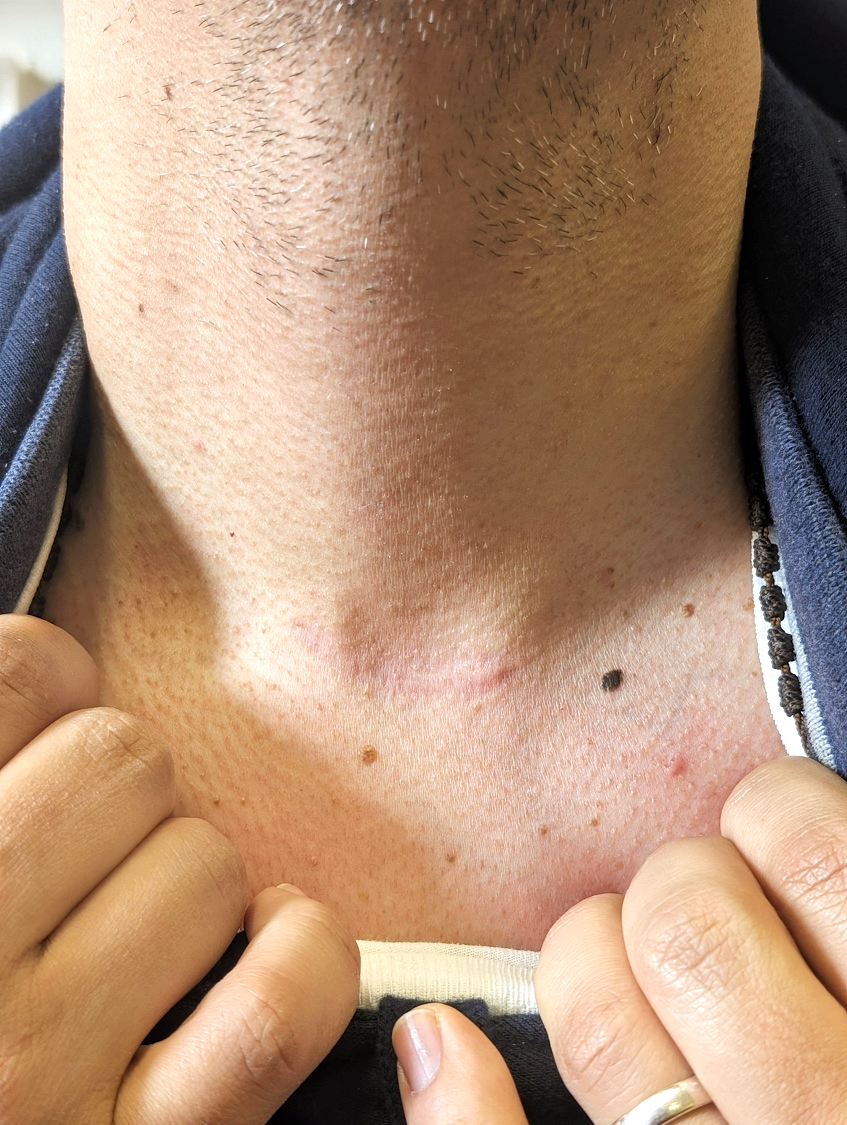
- Incision: The surgeon will make a cut (incision) in a natural skin crease in the lower part of your neck. This is typically a few centimetres long.
- Procedure: The surgeon will carefully identify and protect important structures in your neck, including:
- The recurrent laryngeal nerves, which control your voice box.
- The parathyroid glands, which are four tiny glands (usually located behind or near the thyroid) that control your body's calcium levels. Every effort is made to preserve these glands and their blood supply.
- Major blood vessels.
- Removal of Thyroid: The entire thyroid gland is then carefully removed.
- Wound Closure: The incision will be closed. This is often done using dissolvable sutures (stitches) underneath the skin, and the skin surface may be closed with surgical glue or sometimes fine strips of sticky tape (Steristrips).
- Drain: Occasionally, a small plastic tube (drain) may be placed in the wound to remove any excess fluid or blood that might collect after surgery. This is usually removed a day or two later.
- Duration: A total thyroidectomy typically takes around 2 hours, but this can vary depending on the complexity of your case (e.g., if a neck dissection is also performed).
What Happens After Surgery?
After your operation, you will be taken to a recovery area and then back to the ward.
- Observation: Nurses will monitor you closely, checking your blood pressure, pulse, oxygen levels, and observing your wound.
- Pain Relief: You may feel some discomfort or soreness in your neck. You will be given regular pain relief medication (e.g., paracetamol, and stronger options if needed) to keep you comfortable. Pain is usually minimal and often related to the breathing tube used during anaesthesia.
- Position: You will likely be encouraged to sit fairly upright in bed, supported by pillows, to help reduce swelling.
- Voice: Your voice may sound hoarse, weak, or different immediately after surgery. This is common and usually temporary, often improving within a few days or weeks.
- Calcium Levels: Because the parathyroid glands can be affected during a total thyroidectomy, your blood calcium levels will be monitored closely with blood tests.
- Low Calcium (Hypocalcaemia): If your calcium levels drop, you might experience tingling in your lips, fingers, or toes, or muscle cramps. It is very important to tell your nurse or doctor immediately if you experience these symptoms. You will be given calcium and/or Vitamin D supplements (tablets or sometimes an infusion) if needed.
- Eating and Drinking: You can usually start sipping fluids soon after the operation, as long as you are not feeling sick. You can eat as soon as you feel able, though you might prefer softer foods initially if your throat is sore.
- Drain Removal: If a drain was placed, it will be removed by a nurse once the drainage is minimal (usually within 24-48 hours). This is generally not painful.
- Mobilisation: You will be encouraged to get out of bed and walk around as soon as you feel able, usually starting the day after surgery (with assistance at first).
- Hospital Stay: Most patients stay in the hospital for 1 to 2 nights after a total thyroidectomy. This can be longer if there are any complications or if your calcium levels need more time to stabilize.
- Discharge: Before you go home, your nurse will give you instructions on wound care, any medications you need to take (including thyroid hormone replacement and possibly calcium/Vitamin D), and details for your follow-up appointment.
What are the Potential Risks and Complications?
All operations carry some risk. Your surgeon will discuss these with you in detail. For a total thyroidectomy, potential risks include:
- General Anaesthetic Risks: These are rare and will be discussed by your anaesthetist.
- Bleeding (Haematoma): A collection of blood under the skin. This is uncommon (around 1 in 100 cases) and usually occurs within the first 12-24 hours. If significant, it might require a return to the operating theatre to stop the bleeding and remove the collection, as it can cause swelling and pressure on the windpipe.
- Wound Infection: This is rare (around 1 in 200 cases) and is usually treatable with antibiotics. Signs include increasing redness, pain, swelling, warmth, or discharge from the wound.
- Scar: You will have a scar on your neck. It is usually placed in a natural skin crease and fades over several months to become a fine line.
- Abnormal Scarring (Keloid or Hypertrophic): Some people may develop a thickened, raised, or red scar. This is more common in certain skin tones but is generally rare.
- Numbness around the scar: This is common and usually improves over time, though a small area of numbness may persist.
- Tightness in the neck: This feeling is common and usually settles over weeks or months.
- Seroma: A collection of clear fluid under the scar. This usually resolves on its own but may occasionally need to be drained with a needle.
- Voice Change (Dysphonia):
- Temporary Hoarseness/Weakness: This is relatively common (up to 10% of patients) and can be due to bruising of the nerves to the voice box (recurrent laryngeal nerves), swelling, or irritation from the breathing tube. The voice usually recovers within a few days to weeks, but can sometimes take up to 6 months.
- Permanent Recurrent Laryngeal Nerve Injury: Damage to one of the recurrent laryngeal nerves occurs in about 1% of cases (1 in 100). This can result in a permanently hoarse, weak, or breathy voice. Often, the other vocal cord can compensate over time.
- Bilateral (Both Sides) Recurrent Laryngeal Nerve Injury: This is extremely rare but very serious, as it can affect breathing and may require a temporary or permanent breathing tube in the neck (tracheostomy).
- Superior Laryngeal Nerve Injury: This nerve affects the ability to project the voice, reach high pitches, and can make the voice sound 'wobbly'. Temporary injury occurs in about 6% of cases and usually recovers within about 4 months. This is particularly important for professional voice users (singers, teachers, etc.) to discuss with their surgeon. If voice problems persist, referral to a speech therapist or a specialist voice clinic may be helpful.
- Low Blood Calcium (Hypocalcaemia) due to Hypoparathyroidism:
- The parathyroid glands control calcium levels. During a total thyroidectomy, their blood supply can be temporarily or permanently affected, or one or more glands might be unavoidably removed or damaged.
- Temporary Hypoparathyroidism: This is common after a total thyroidectomy (up to 30% of patients). The remaining parathyroid glands usually recover their function, often within 6 to 8 weeks. During this time, you will need to take calcium and Vitamin D supplements.
- Permanent Hypoparathyroidism: This occurs in about 5% of patients (1 in 20) after a total thyroidectomy. It means the parathyroid glands do not recover, and you will need to take calcium and Vitamin D supplements for life. Regular blood tests will be needed to monitor your calcium levels. Symptoms of low calcium include tingling in the lips, fingers, or toes, muscle cramps, or twitching. You must report these symptoms to your medical team immediately.
- Difficulty Breathing or Swallowing: This is rare but can occur due to swelling, a haematoma, or very rarely, nerve injury.
- Shoulder Stiffness/Pain: If a neck dissection (removal of lymph nodes) is performed alongside the thyroidectomy, there is a small risk of injury to the accessory nerve, which can affect shoulder movement and cause pain or stiffness. Physiotherapy can help.
Long-Term Outlook
- Lifelong Thyroid Hormone Replacement: After a total thyroidectomy, your body will no longer produce thyroid hormones. You will need to take a daily thyroid hormone replacement tablet called Levothyroxine (T4) for the rest of your life.
- This medication replaces the hormone your thyroid used to make and is essential for your health and well-being.
- Your GP will monitor your thyroid hormone levels with regular blood tests (measuring TSH - Thyroid Stimulating Hormone) and adjust your Levothyroxine dose as needed to keep your levels in the correct range.
- If your surgery was for thyroid cancer, your specialist might aim for a specific TSH level (often suppressed) as part of your ongoing management.
- Calcium and Vitamin D Supplements: If you develop permanent hypoparathyroidism, you will need to take calcium and Vitamin D supplements for life. Regular monitoring of your blood calcium levels will be necessary.
- Follow-up: You will have regular follow-up appointments with your surgeon and/or endocrinologist, especially if your surgery was for cancer.
- Prescription Exemption: In England, patients requiring lifelong Levothyroxine for hypothyroidism or treatment for permanent hypoparathyroidism are entitled to free prescriptions for all their medications. You can obtain an exemption certificate from your GP.
- Most people lead a full and active life after a total thyroidectomy once their hormone levels are stabilized with medication.
Recovery and Returning to Normal Activities
Wound Care:
- You will be given specific instructions on how to care for your wound.
- If surgical glue was used over dissolvable stitches, you can usually shower the day after surgery. Pat the area dry gently; do not rub. The glue will gradually peel off on its own.
- If Steristrips (sticky tapes) were used, try to keep them dry for about a week, or as advised. They may fall off on their own or be removed at your follow-up appointment.
- Once the wound is healed and any dressings/glue are off, you can gently massage an unscented moisturising cream (e.g., E45, aloe vera, or calendula cream) into the scar to help soften it.
- Contact your doctor or the hospital ward if you notice signs of infection: increasing redness, pain, swelling, warmth, or any discharge from the wound.
Rest and Activity:
- Take it easy for the first couple of weeks while your neck wound is healing.
- Avoid strenuous activities, heavy lifting, and vigorous exercise until your surgeon advises it is safe (usually at least 2-4 weeks, possibly longer depending on your job and recovery).
- Your neck may feel stiff initially. Gentle neck exercises, as recommended by your surgeon or a physiotherapist, can help improve movement and reduce stiffness once healing is underway.
- Returning to Work: This depends on your job and how you recover. Most people need around two weeks off work, sometimes longer if the job is physically demanding or if there were complications. Your hospital can provide a sick note for the initial period, and you should see your GP if you need more time off.
- Driving: Discuss with your surgeon when it is safe for you to start driving again. You need to be able to turn your head comfortably and perform an emergency stop.
Follow-up Appointments:
- You will have an outpatient appointment, usually a few weeks after your surgery. Your surgeon will check your wound, discuss the results of the thyroid gland examination (pathology report), and check your hormone and calcium levels.
- If your surgery was for cancer, further treatment or follow-up plans will be discussed.
- You will need ongoing blood tests to monitor your thyroid hormone replacement and calcium levels (if applicable).
Life after a Total Thyroidectomy
Adjusting to life after a total thyroidectomy involves a few key aspects:
- Medication: Taking your Levothyroxine tablets every day as prescribed is crucial. It's usually best to take it at the same time each day, often in the morning on an empty stomach. If you also need calcium/Vitamin D, follow your doctor's instructions carefully regarding timing and dosage.
- Regular Monitoring: Attending appointments for blood tests and check-ups is important to ensure your medication doses are correct and you are feeling well.
- Emotional Well-being: If your surgery was for cancer, coping with the diagnosis and treatment can be challenging. Support is available from your medical team, specialist nurses, and patient support organizations.
- Support Groups: Organizations like the British Thyroid Foundation and Macmillan Cancer Support can provide valuable information, advice, and support for patients and their families.
With proper medication and follow-up, most people who have had a total thyroidectomy can expect to live a normal, healthy, and active life.
Ready to Take the Next Step?
Book a consultation with Mr Ahmad Hariri to discuss your specific needs and treatment options.
Book a Consultation