
Acute Laryngitis Treatment

Disclaimer: Disclaimer: This leaflet provides general information and is intended for educational purposes only. It should not be used as a substitute for professional medical advice, diagnosis, or treatment. Always seek the advice of a qualified healthcare professional for any health concerns or before making any decisions related to your health or treatment.
This leaflet may contain links to external websites or resources (e.g. YouTube) for demonstration purposes; however, these links are provided for information only. Clinicol.co.uk is not affiliated with, does not endorse, and is not responsible for the content, accuracy, or copyright compliance of these external sources. Use of these external links is at your own discretion and risk.
Overview
Acute laryngitis is an inflammation of your voice box, also known as the larynx. The larynx is the part of your throat that houses your vocal cords—two small, delicate folds of tissue that vibrate to create sound when you speak. When these cords become swollen or irritated, they cannot vibrate as they normally would, which changes the sound of your voice.
This condition is very common and is usually a temporary, self-limiting issue, meaning it typically gets better on its own without needing complex medical treatment. Most people find that their symptoms resolve within one to two weeks. While it can affect anyone at any age, it is frequently seen in people who have recently had a cold or flu. It can be frustrating to lose your voice or feel discomfort in your throat, but it is important to remember that for the vast majority of people, this is a short-term problem that will pass with rest and simple care.
Symptoms and Causes
Understanding why your voice has changed can help you manage the condition more effectively. The symptoms usually appear quite suddenly and tend to reach their peak within the first three days of the illness.
Symptoms
The most common sign of laryngitis is a change in your voice. You may notice your voice sounds hoarse, raspy, or breathy. In some cases, you might lose your voice entirely for a short period, a state known as aphonia. Other symptoms you might experience include:
- An irritating, tickly cough.
- A constant need to clear your throat.
- A sore or scratchy throat.
- A mild fever or feeling generally unwell.
If you are caring for a child with these symptoms, keep an eye out for a temperature above 38°C, a loss of appetite, or any signs of difficulty breathing, which should be addressed by a medical professional promptly.
Causes
The most frequent cause of acute laryngitis is a viral infection, such as the common cold or influenza (the flu). When you have a viral infection, the inflammation from your nose and throat can spread down to your vocal cords, causing them to swell.
However, viruses are not the only trigger. Other factors that can irritate your larynx include:
- Voice strain: Shouting, singing loudly, or talking for long periods can physically stress the vocal cords.
- Environmental irritants: Breathing in smoke, dust, or chemical fumes can cause inflammation.
- Acid reflux: Stomach acid rising into the throat can irritate the delicate lining of the larynx.
- Allergies: Reactions to pollen, dust, or pet dander can lead to persistent throat clearing and irritation.
- Habitual throat clearing: Constantly clearing your throat can cause the vocal cords to bang together, leading to further swelling.
Diagnosis and Investigations
Because acute laryngitis is so common and usually linked to a viral infection, your doctor can often diagnose it simply by talking to you and listening to your symptoms.
Diagnosis
When you visit a GP, they will likely ask about how long you have been hoarse and whether you have other symptoms like a cough or fever. They may perform a physical examination, which involves looking into your throat to check for redness or swelling. They will also look for other signs, such as swollen glands in your neck, to rule out other causes for your discomfort.
Investigations
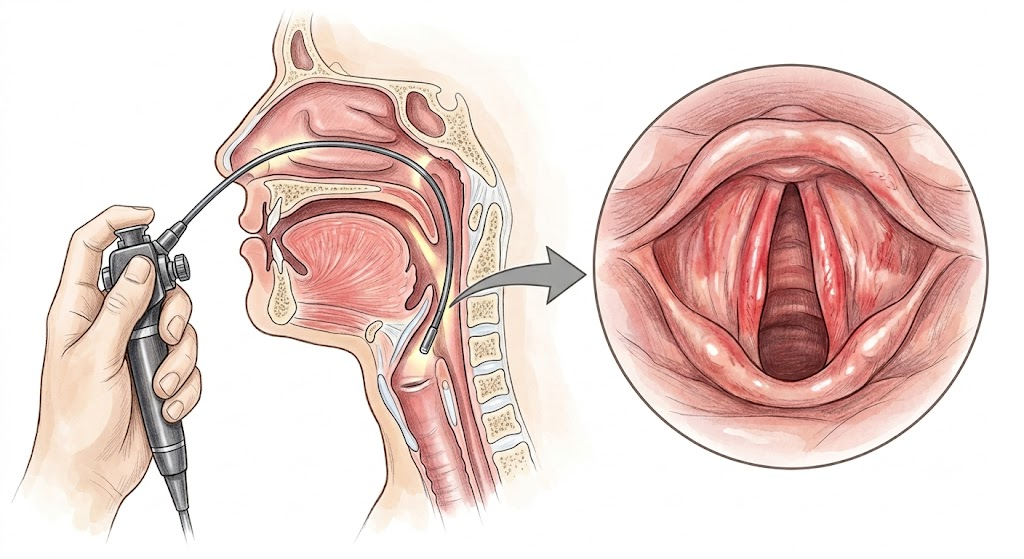
In most cases, no special tests are needed. However, if your symptoms do not start to improve after two weeks, or if they keep coming back, your doctor may refer you to an ENT (Ear, Nose, and Throat) specialist. The specialist might perform a procedure called a laryngoscopy. This involves using a thin, flexible tube with a tiny camera on the end to get a clear view of your vocal cords. This allows the doctor to see if there is any unusual swelling, growths, or signs of irritation that might be causing your voice problems to persist.
Management and Treatment
The most effective way to treat acute laryngitis is to give your voice the rest it needs. Think of your vocal cords like a sprained ankle; they need time to heal, and using them too much will only delay your recovery.
- Voice rest: Try to speak as little as possible. Avoid shouting, singing, or even whispering, as whispering can actually put more strain on your vocal cords than speaking at a normal volume.
- Hydration: Drink plenty of fluids to keep your throat moist. Warm drinks, especially those with lemon and honey, can be very soothing.
- Humidify the air: Breathing in moist air can help reduce irritation. You can do this by sitting in a steamy bathroom or using a humidifier.
- Gargling: For adults, gargling with warm, salty water can help lubricate the throat and ease pain.
- Pain relief: Over-the-counter medications like paracetamol or ibuprofen can help manage throat pain and reduce fever. Always follow the instructions on the packet.
- Avoid irritants: Stay away from cigarette smoke, dusty environments, and excessive caffeine or alcohol, as these can dry out your throat and make inflammation worse.
It is important to note that antibiotics are rarely helpful. Because most cases are caused by viruses, antibiotics—which only kill bacteria—will not speed up your recovery. They are only considered if a doctor suspects a specific bacterial infection.
Prevention
While you cannot always avoid catching a cold, you can take steps to protect your vocal health and reduce the risk of laryngitis returning:
- Practice good hygiene: Wash your hands frequently to avoid picking up viruses.
- Stay up to date with vaccinations: Getting your annual flu jab can help prevent the viral infections that often lead to laryngitis.
- Manage reflux: If you suffer from acid reflux, try raising the head of your bed slightly at night to prevent stomach acid from reaching your throat.
- Avoid vocal strain: If you use your voice a lot for work, try to incorporate relaxation techniques like yoga or swimming to reduce muscle tension in your neck and shoulders.
- Limit irritants: Avoid smoking and vaping, as these are major sources of chronic irritation for the larynx.
Outlook / Prognosis
The outlook for acute laryngitis is excellent. For the vast majority of people, the condition is a minor, short-lived annoyance that clears up completely within a week or two. By following the advice to rest your voice and stay hydrated, you are giving your body the best chance to heal naturally.
Complications are very rare. However, it is important to listen to your body. If you try to force your voice while your cords are still swollen, you risk causing further damage or developing a more persistent, chronic problem. If your symptoms last longer than three weeks, it is important to seek medical advice to ensure there isn't an underlying issue that needs further investigation. By taking care of your voice and avoiding known irritants, you can help ensure your throat stays healthy and your voice remains clear.
Need Expert Advice?
Book a consultation with Mr Ahmad Hariri to discuss your symptoms and treatment options.
Book a Consultation