
How to use nasal drops and nasal sprays

Disclaimer: Disclaimer: This leaflet provides general information and is intended for educational purposes only. It should not be used as a substitute for professional medical advice, diagnosis, or treatment. Always seek the advice of a qualified healthcare professional for any health concerns or before making any decisions related to your health or treatment.
This leaflet may contain links to external websites or resources (e.g. YouTube) for demonstration purposes; however, these links are provided for information only. Clinicol.co.uk is not affiliated with, does not endorse, and is not responsible for the content, accuracy, or copyright compliance of these external sources. Use of these external links is at your own discretion and risk.
Nasal sprays and drops are common and effective treatments for a variety of conditions affecting your nose, such as allergies, ongoing irritation (rhinitis), and even symptoms related to asthma. They work by delivering medication directly into your nostrils to help calm down swelling, reduce mucus, and relieve uncomfortable symptoms like blockage, a runny nose, congestion, and itchiness. Using these medications correctly is really important to make sure they work their best and to help avoid problems like nosebleeds, feeling irritated, or soreness inside your nose.
This leaflet will guide you through the correct way to use both nasal sprays and nasal drops, helping you get the most benefit from your treatment.
Using Your Nasal Spray Correctly
Steroid nasal sprays are often prescribed to reduce swelling and mucus in your nose. They are generally considered safe for long-term use with very few effects on the rest of your body. Following these steps carefully will help the medicine reach the right places and work effectively.
Getting Ready
- Wash Your Hands: Always start by washing your hands thoroughly.
- Clear Your Nose: Gently blow your nose to clear any mucus or blockages. This helps the medicine get where it needs to go.
- Shake the Bottle: Give the nasal spray bottle a good shake.
- Remove the Cap: Take off the protective cap.
- Prime the Spray (If Needed): If you're using a new spray for the first time, or if it hasn't been used for about two weeks, you'll need to "prime" it. This means spraying it into the air a few times until a fine mist appears. Always follow the specific instructions in the manufacturer's leaflet for priming.
Step-by-Step Guide for Nasal Sprays
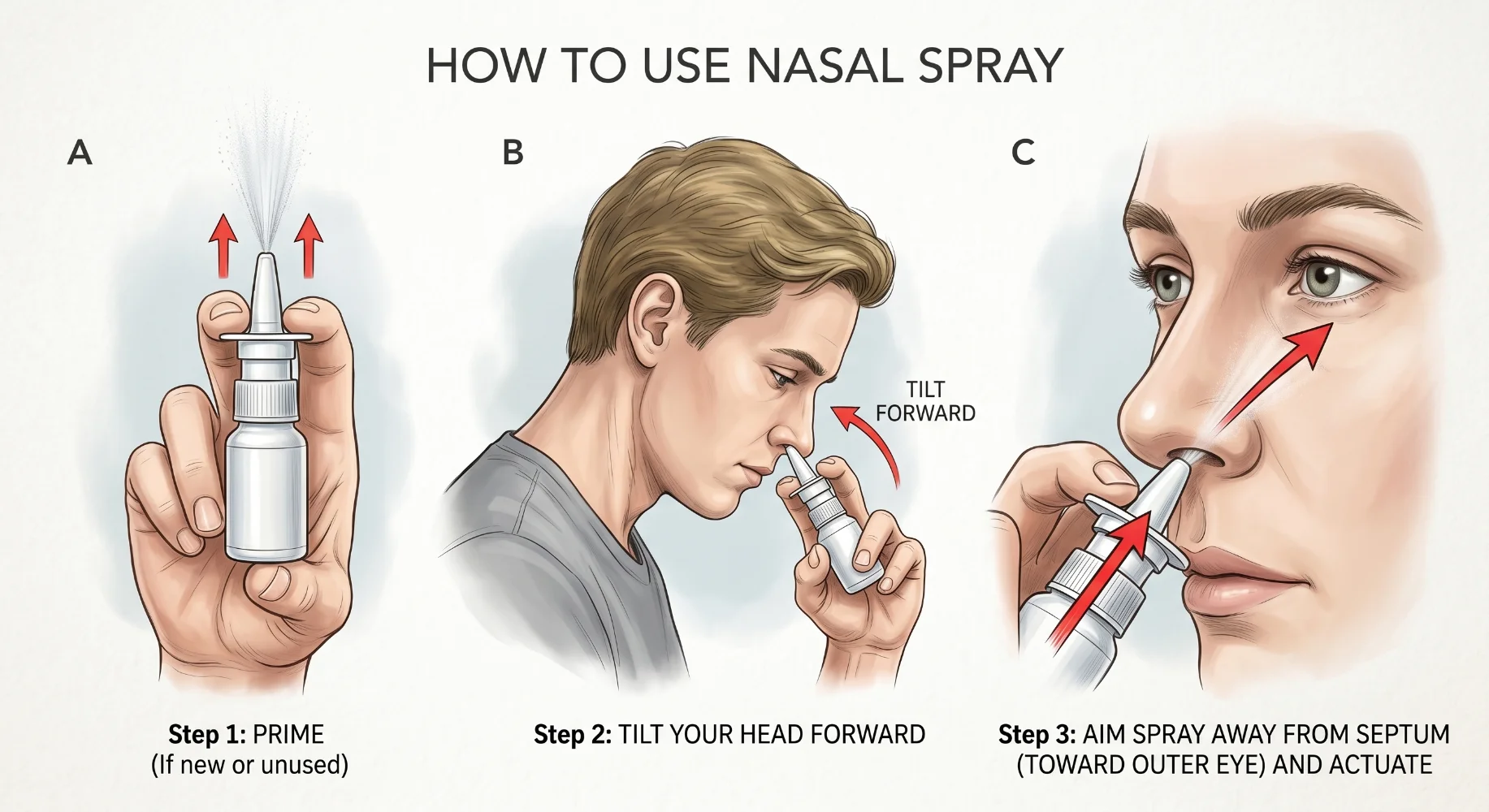
Here’s how to administer your nasal spray:
- Hold it Upright: Hold the spray bottle upright. You can hold it with your index and middle fingers on top and your thumb at the bottom.
- Tilt Your Head: Tilt your head slightly forwards.
- Close One Nostril: Gently close one nostril by pressing a finger against it.
- Insert the Nozzle: Carefully insert the nozzle of the spray just inside the open nostril.
- Aim Correctly: This is a crucial step!
- Aim Outwards: Point the nozzle slightly outwards, away from the nasal septum (this is the wall in the middle that divides your two nostrils). Spraying towards the septum can cause irritation or nosebleeds.
- Use the Opposite Hand: To help you aim away from the septum, it's often helpful to use the hand opposite to the nostril you're spraying. For example, use your left hand to spray into your right nostril, and your right hand for your left nostril.
- Aim Towards Your Ear: Think of aiming towards the ear on the same side as the nostril you're spraying.
- Straight Up: Ensure the spray is directed straight up, so it reaches the back of your nose, rather than just the side or middle.
- Spray and Breathe In: While pressing down firmly on the spray mechanism, breathe in gently and steadily through your nose.
- Avoid Hard Sniffing: Do not sniff hard. Sniffing too hard can cause the medicine to go straight down your throat, which reduces its effectiveness and can leave an unpleasant taste.
- Breathe Out: Remove the nozzle from your nostril and breathe out gently through your mouth.
- Repeat if Needed: If your doctor has prescribed a second spray for that nostril, repeat steps 5-8.
- Switch Nostrils: Repeat the entire process (steps 3-9) for your other nostril.
After You've Sprayed
- Wipe the Nozzle: After you've finished, wipe the nozzle clean with a tissue.
- Replace the Cap: Put the protective cap back on the bottle.
- Clear a Blocked Nozzle: If the nozzle ever gets blocked, you can rinse it under warm water.
Using Your Nasal Drops Correctly
Nasal drops are also used to reduce inflammation in your nose. Getting the drops to spread properly across the inside of your nose, especially the upper areas, is key to them working well. The position you use is very important for this.
Getting Ready
- Wash Your Hands: Always start by washing your hands thoroughly.
- Clear Your Nose: Gently blow your nose to clear any mucus or blockages.
- Shake the Bottle: Give the nasal drops bottle a gentle shake.
- Remove the Cap: Take off the protective cap. If you are using a small single-use container (a 'nasule'), twist off the top to open it.
Step-by-Step Guide for Nasal Drops
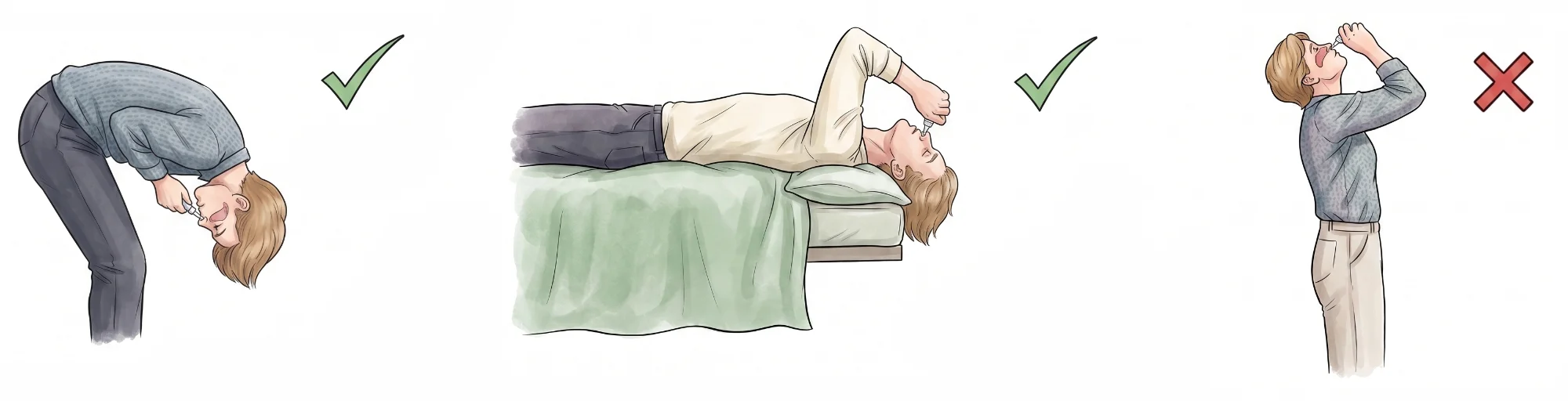
Here’s how to administer your nasal drops:
- Choose the Right Position: This is the most important step for nasal drops. You need to be in a position that allows the drops to stay in your nose and spread effectively, rather than immediately running out or down your throat.
- Lying Down with Head Back: The ideal position is to lie on your back on a bed with your head hanging back over the edge. Your chin should be pointing upwards towards the ceiling.
- Head Forward and Down: Alternatively, you can stand or kneel with your head bent forward and down, so the top of your head points towards the floor.
- Avoid Standing/Sitting with Head Tilted Back: Do not simply tilt your head back while standing or sitting, as this will cause the medicine to flow straight into your throat, making it less effective and potentially causing an unpleasant taste.
- Insert the Dropper: While breathing normally through your mouth, gently insert the tip of the dropper into one nostril.
- Apply the Drops: Squeeze the dropper to apply the prescribed number of drops into your nostril.
- Stay in Position: Remain in your chosen position (head back over the bed or head forward and down) for at least one to two minutes after applying the drops. Some recommend up to three minutes. This allows the medication to spread across the entire inner surface of your nose, including the upper parts, and prevents it from immediately running out or down the back of your throat.
- Repeat for Other Nostril: After the waiting period for the first nostril, repeat steps 2-4 for your other nostril.
- Sit Up: Once you have finished both nostrils and waited the recommended time, you can slowly sit upright.
After You've Used Your Drops
- Wipe the Nozzle: Wipe the nozzle of the dropper clean with a tissue.
- Replace the Cap: Put the protective cap back on the bottle.
- Storage: Store your nasal drops closed in a cool, dark place.
- Discard Date: Always discard the drops after the recommended 'use by' date, which you'll find on the packaging or bottle.
Important Things to Remember
How Long Until I See Results?
It's important to be patient and consistent with your treatment. You might not feel better straight away:
- Gradual Improvement: For nasal sprays, it can take several days to two weeks to notice a significant improvement in your symptoms. For some, it might even take up to six to eight weeks of regular use to feel the full effect.
- Chronic Conditions: If you're using sprays or drops for ongoing (chronic) symptoms, your treatment might continue for up to three months.
- Keep Using Them: Even if your symptoms start to improve, it's really important to continue using your nasal spray or drops exactly as prescribed by your doctor. This helps to maintain control over your symptoms and prevent them from returning.
Dosage and Frequency
- Follow Instructions: Always stick to the dosage and frequency your doctor or pharmacist has advised. Do not use more often or for longer than recommended.
- Typical Spray Dosing: For nasal sprays, an initial dose might be two sprays into each nostril twice a day. Once your symptoms are under control, this might be reduced to one spray into each nostril twice a day.
- Maximum Sprays: Never use more than four sprays into each nostril within a 24-hour period.
Troubleshooting Common Issues
- Unpleasant Taste: If you experience an unpleasant taste, it might mean the medicine has gone down your throat. This can happen if you didn't stay in the correct position for long enough (for drops), sniffed too hard (for sprays), or used too many drops. Drinking some water or a flavoured drink can help to get rid of the taste.
- Soreness or Bleeding: If you notice soreness or a nosebleed, first check your technique. For sprays, make sure you're not pointing the nozzle directly at your nasal septum (the middle wall of your nose) or pressing the container against it. If soreness or bleeding continues, please speak to your doctor or pharmacist.
Important Precautions
- Decongestant Nasal Sprays: Be very careful with decongestant nasal sprays (these are often available over-the-counter and work quickly to clear a blocked nose). You should never use these for more than 5 to 7 days in a row. Using them for too long can actually make your congestion worse, a problem known as 'rebound congestion'.
- Other Medical Conditions: If you have any other medical conditions or are taking other medications, always check with your doctor or pharmacist before starting a new nasal spray or drops.
- Keep Out of Reach: Always store all medications safely out of the sight and reach of children.
- Manufacturer's Leaflet: Always refer to the specific patient information leaflet that comes with your medication for detailed instructions and a full list of potential side effects.
When to Seek Advice
While nasal sprays and drops are generally safe and effective, there are times when you should get advice from a healthcare professional:
- If you experience soreness or nosebleeds that don't go away, even after you've checked and adjusted your technique.
- If your symptoms get worse, or if they don't improve after several weeks of using the medication consistently as prescribed.
- If you have any pre-existing medical conditions and are unsure whether the nasal spray or drops are suitable for you.
- If you experience any unexpected or worrying side effects.
Your doctor or pharmacist is there to help you, so please don't hesitate to reach out if you have any concerns or questions about your treatment.
Need Expert Advice?
Book a consultation with Mr Ahmad Hariri to discuss your symptoms and treatment options.
Book a Consultation