
TMJ Dysfunction Exercises

Disclaimer: Disclaimer: This leaflet provides general information and is intended for educational purposes only. It should not be used as a substitute for professional medical advice, diagnosis, or treatment. Always seek the advice of a qualified healthcare professional for any health concerns or before making any decisions related to your health or treatment.
This leaflet may contain links to external websites or resources (e.g. YouTube) for demonstration purposes; however, these links are provided for information only. Clinicol.co.uk is not affiliated with, does not endorse, and is not responsible for the content, accuracy, or copyright compliance of these external sources. Use of these external links is at your own discretion and risk.
Understanding Your Jaw Pain (Temporomandibular Disorders - TMDs)
Temporomandibular disorders, often shortened to TMDs, are common problems that affect your jaw joint and the muscles around it. This joint, called the temporomandibular joint (TMJ), acts like a sliding hinge, connecting your jawbone to your skull. You have one joint on each side of your head.
If you have a TMD, you might experience pain near your ear, find it difficult to move your jaw fully, or hear clicking sounds when you open or close your mouth. These issues can arise from various factors, including tension in your jaw muscles, overusing your jaw (for example, from excessive chewing), or specific problems within the joint itself.
The good news is that most TMDs tend to get better with simple, conservative treatments. These often include taking painkillers, resting your jaw, and performing gentle jaw exercises. Making some changes to your daily habits and lifestyle is also very important for your recovery.
General Advice and Self-Care for Your Jaw
Taking care of your jaw through simple self-management is a crucial part of treating TMDs. These steps can significantly help to relieve your pain, reduce stiffness, and restore normal movement and function to your jaw. They also empower you to manage your condition effectively.
Managing Pain and Discomfort
- Heat or Ice Packs: Applying either heat or ice to the painful area can provide relief. You can use a hot water bottle, a wheat bag, or an ice pack. Always wrap it in a towel to protect your skin and apply it for 10-15 minutes at a time. Be cautious and avoid using heat or ice if you have any facial numbness or problems with your circulation.
- Pain Relief: Over-the-counter painkillers, as advised by your GP or a pharmacist, can help manage discomfort.
- Gentle Massage: Gently massaging the muscles around your jaw joint can help to ease tension and pain.
Protecting Your Jaw Joint
- Dietary Adjustments: Opt for softer foods and cut tougher foods into smaller, more manageable pieces. This reduces the strain on your jaw.
- Habits to Avoid:
- Try to avoid excessive chewing, such as chewing gum or biting your nails.
- Limit how wide you open your mouth, for example, when yawning.
- Avoid biting your lower lip or your front teeth.
- Do not hold your phone between your shoulder and ear, as this can strain your neck and jaw.
- Try not to sleep face down, as this can put pressure on your jaw.
- Be mindful of jaw clenching or teeth grinding. If you find yourself grinding your teeth, especially during sleep, speak to your dentist. They might suggest a mouthguard to protect your teeth and jaw.
- Posture Awareness: Poor posture can contribute to jaw and neck strain, making your TMD symptoms worse. Try to maintain good posture throughout the day, keeping your head balanced over your shoulders.
- Stress Reduction: Stress can often lead to jaw clenching and increased pain. Exploring stress-reducing therapies or techniques can be very beneficial in managing your symptoms.
- Relaxed Jaw Position: It's important to maintain a relaxed jaw position throughout the day. Your teeth should be slightly apart, with your lips gently together. Your tongue should rest lightly on the roof of your mouth. Your teeth should only touch when you are chewing, swallowing, or speaking. Using reminders, like sticky dots placed around your home or workspace, can help you remember to keep your jaw in this relaxed position.
Preparing for Your Jaw Exercises
Before you begin your exercises, it can be helpful to prepare your jaw muscles. This can make the movements easier and more comfortable.
- Warm-up: Warming the jaw area with a hot water bottle or a wheat bag for a few minutes before you start can help your muscles move more easily.
- Mirror Check: When performing the exercises, it's a good idea to watch your jaw movement in a mirror. This helps you ensure your jaw opens straight without deviating to one side or clicking.
Your Jaw Exercise Programme
These exercises are designed to help prevent jaw clicking, strengthen the muscles that pull your jaw backwards, and relax the muscles that close or move your jaw forward or sideways. The goal is to encourage your jaw to move in a smooth, hinge-like action.
1. Relaxed Jaw Position
This is your starting point for many exercises and a good habit to maintain throughout the day.
- How to do it: Sit upright. Gently close your mouth so your teeth are just touching, but not clenching. Rest the tip of your tongue behind your upper front teeth, then run it backwards towards the soft part of the roof of your mouth. Keep your teeth slightly apart.
- Hold: Maintain this position.
- Repeat: Practice this position regularly as a default resting state for your jaw.
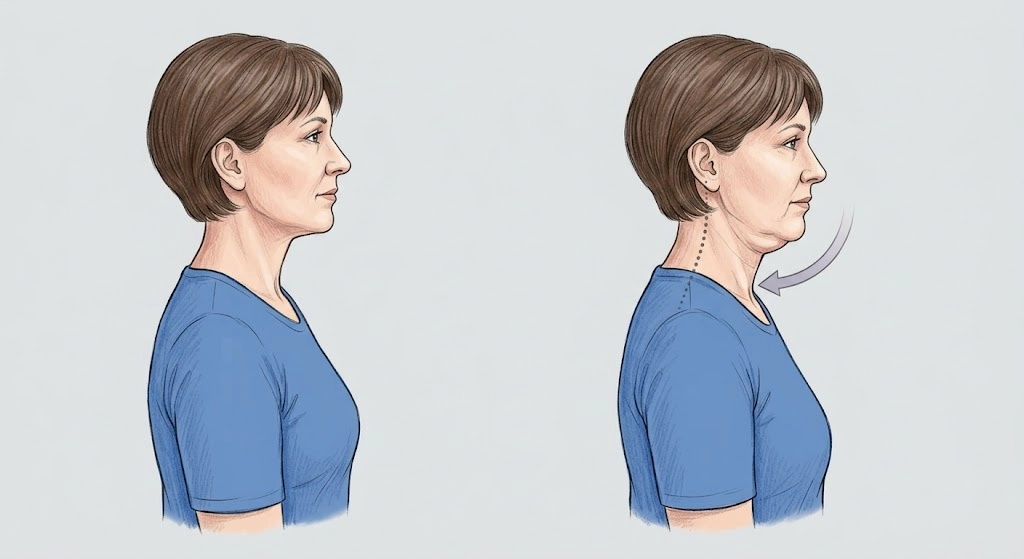
2. Chin Tucks
This exercise helps improve your neck posture, which can reduce strain on your jaw.
- How to do it: Sit or stand tall. Gently draw your chin straight back, as if you are trying to create a "double chin." Keep your head level and avoid tilting it up or down.
- Hold: Hold this position for a few seconds.
- Repeat: Repeat 10 times.
3. Gentle Jaw Opening (Goldfish Exercise)
This exercise helps to guide your jaw into a smooth, controlled opening motion.
- How to do it:
- Sit upright with your mouth closed and your teeth gently touching (not clenching).
- Rest the tip of your tongue behind your upper front teeth, then run it backwards along the roof of your mouth towards the soft palate (the soft part at the back of the roof of your mouth).
- While keeping your tongue in contact with the roof of your mouth, slowly and gently open your mouth. Only open as far as you can without your tongue pulling away from the roof of your mouth.
- You can also place one finger on your temporomandibular joint (just in front of your ear) and another finger on your chin to help guide the gentle opening.
- Hold: Hold this open position for five seconds.
- Repeat: Gently close your mouth and relax. Repeat this procedure for five minutes.
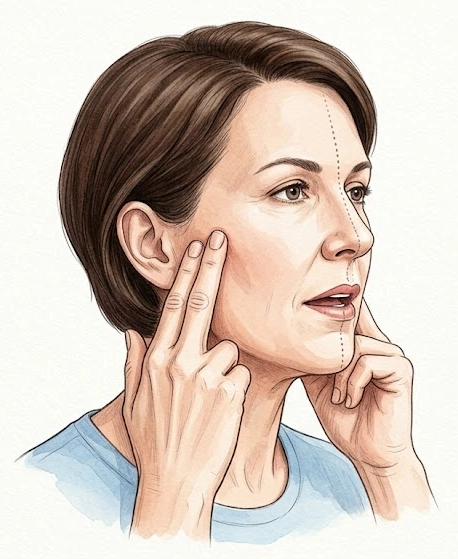
4. Straight Jaw Opening
This exercise focuses on ensuring your jaw opens in a straight line, without deviating to the side.
- How to do it:
- Place your fingers over your jaw joints (just in front of your ears).
- Curl your tongue backwards to the roof of your mouth.
- Keeping your neck straight and your tongue on the roof of your mouth, slowly open your mouth in a straight line. Watch in a mirror to ensure your jaw doesn't move sideways.
- Hold: Hold the open position briefly.
- Repeat: Repeat five times, twice a day.
5. Resisted Jaw Movements (Stabilisation Exercises)
These exercises help to strengthen the muscles that support your jaw and improve its stability.
a. Resisted Opening
- How to do it: Place your hand under your chin. Slowly try to open your mouth while gently resisting the movement with your hand.
- Hold: Hold for five seconds.
- Repeat: Repeat five times daily.
b. Resisted Forward Movement
- How to do it: Place your fingers against the front of your lower jaw. Gently try to move your lower jaw forward while resisting the movement with your fingers.
- Hold: Hold for a few seconds.
- Repeat: Repeat three times.
c. Resisted Sideways Movement
- How to do it: Place your fingers against one side of your lower jaw. Gently try to move your lower jaw sideways towards your fingers while resisting the movement. Repeat on the other side.
- Hold: Hold for a few seconds.
- Repeat: Repeat three times for each side.
d. Resisted Chin Push
- How to do it: Place your tongue on the roof of your mouth. Then, use your fingers to gently push your chin back and down.
- Hold: Hold briefly.
- Repeat: Repeat 10 times.
How Often and For How Long?
Consistency is key when performing these exercises. It's important to complete them regularly to see the best results.
- For the first week, aim to perform your core exercises for five minutes, twice daily.
- After the first week, continue to do them as often as you can throughout the day.
- Specific resisted movements are often recommended to be held for a few seconds and repeated three to five times daily.
What to Expect and When to Seek Further Advice
Most people find that their TMD symptoms improve with self-care and regular exercises. These exercises are designed to help you regain normal jaw function and reduce discomfort.
- Initial Discomfort: It's possible that you might experience a slight increase in pain when you first start the exercises. This is often normal as your muscles begin to retrain, and it should gradually subside as your jaw muscles become stronger and more coordinated.
- Expected Recovery: Many people notice smoother, click-free jaw movement within 2-3 weeks of consistently performing these exercises. Self-care is the most crucial aspect of treatment and significantly enhances the effectiveness of other interventions.
- When to Contact Your GP or Dentist:
Your GP or dentist can offer further advice, assess your progress, and discuss other treatment options if needed, such as physiotherapy or a mouthguard for teeth grinding. - If your pain significantly worsens and does not settle down after a few days of consistent exercise.
- If you do not notice any improvement in your jaw movement or pain after a few weeks of following this advice and exercise programme.
- If you have any new or concerning symptoms.
Need Expert Advice?
Book a consultation with Mr Ahmad Hariri to discuss your symptoms and treatment options.
Book a Consultation